Switch 2 Technical Review – Shocking frame rates exposed!

I haven’t been following the news for some time because what you don’t know can’t hurt you, like the origin of this blood I’ve been coughing up for three months. If ICE comes to send me back to Africa, where I have on good authority all humanity is from, I can let them know I haven’t been following their activity and they will let me go because clandestine police forces with vague accountability are anything but unreasonable. At least that was my experience during my brief internship for Pinochet.

But news of the Switch Deux did somehow make it past the spoons and forks guarding my cave, and like any caveman, I am wowed by shiny things. Yes, I immediately bought the console after deciding I wasn’t going to buy it and ignoring the preorder period while judging the marks who wanted to buy an expensive piece of hardware sight unseen. →  You lost me.

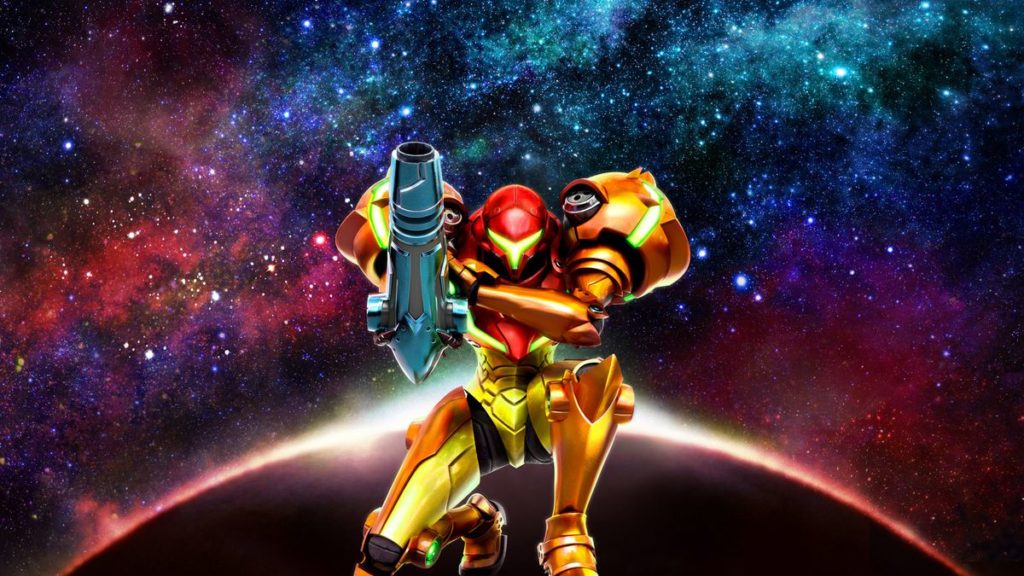
Review of Samus Returns for the 3DS

Samus Returns is a game that wants to be something, but can’t. After all, it is a remake of an existing game, Metroid 2: Return of Samus. On top of that, not only is the original game a beloved classic, but it’s also very old, and runs on a piece of hardware that was outdated even when it was brand new.

All of these factors work to dictate what a game like Samus Returns can and cannot do. By the rules of Modern Videogame Design, the following elements of 1991’s Return of Samus are unacceptable:

  • Its stark, mostly-black backgrounds.
  • It’s creepy chiptune music, despite the fact that it helps to create a certain mood that is absolutely perfect for the game’s setting.
  • The fact that the planet is mysteriously drained of deadly acid as you kill Metroids.
 →  [post launches in virtual reality],[put on your VR headset now],[left click on your mouse to open the remainder of this post in your web browser on your digital computing device]

Counting the Game Industry’s Gold

Like most industries, the gaming industry is bound by the conventional economic wisdom that you must spend money to make money. Historically, that’s meant taking a loss on every game system sold (with the notable exception being most Nintendo consoles) in order to tap into selling game after game to console owners. This measure of success is known as the “attachment rate” or “tie ratio.” A somewhat (November 2008) dated Gamasutra chart shows that the Xbox was in the lead, with 6.6 games/system sold, followed by the Wii at 5.5 and the PS3 at 5.3.

This statistic has historically been a powerful metric for measuring market penetration and overall success for a console. After all, what’s the point of selling a console if you can’t sell game after game? But as with many things in today’s integrated media world, the lines have blurred and traditional metrics don’t necessarily tell the whole story. →  A reader is you.

News We Care About Update 12.29.08

Nintendo to offer streaming videos, just not here
Nintendo is bizarrely slow to adopt some aspects of technology. Their latest console, the Wii (pronounced “Why”), has only cursory online abilities, and lacks both a practical storage device and the ability to function as a time machine.

As a curmudgeon who spouts things like, “Game systems should do nothing but play games” I was once on board with Nintendo’s seemingly similar stance. Their real position, which they have revealed at glacial speed, is game consoles should do a lot of things poorly and much, much later than other game consoles.

Whether this half-assed approach to new technology will be their ultimate undoing as Sony and Microsoft take over your living room in 2010, your wine cellar in 2015 and your apiary in 2020 is yet to be seen. →  Drakenread 2

The Small, White Elephant in the Room

Every month I get game magazines with beautiful characters from HD games splashed across their covers. The latest EGM features the Watchmen, the newest Edge details Little Big Planet and Game Developer dives into downloadable XBLA game The Age of Booty. Roundtable discussions in these magazines with developers and producers invariably focus on HD games and the challenge of creating and bringing them to market.

If you don’t follow the monthly NPD report you probably would have no idea that Nintendo has a significant lead in the American market. While the old guard of gaming press has been slow to downright resistant in accepting the Wii, the blame for the lack of Wii game coverage rests almost entirely on publishers. EGM has a tough time doing a cover story on non-existent games, and, while Babiez Party may be better than Mass Effect, diapers don’t look good on front pages. →  I’ll get a job later, for now I’m going to read this

Sony follows the lonely path

The new PS3 commercial shows a handful of games set to what sounds like a clip from a Gladiator or Braveheart type movie. A warrior with a middle ages accent (ye olde accent) rallies his comrades before a glorious battle. To Sony this console business is a battle, and a bloody $3 billion one so far.

Only declaring war openly and drawing lines in the sand is not what Sony needs to do now. The call for brotherhood in the commercial clearly creates an us-versus-them image but it is this exclusive mentality (remember, the PS3 is like a fine dining experience) that put Sony in third place this generation. Launching at $600 and offering the bleeding edge of movie playing capabilities did not make the PS3 a very accessible machine and these advertisements only reinforce the idea that if I am not hardcore, if I am not willing to join Sony is a vicious battle against its enemies, then the PS3 is not for me. →  You lost me.

Review – Ninja Gaiden II

Ninja Gaiden 2 is not an earth-shattering masterpiece. As much as the fan in me wants to spout absurd levels of hyperbole that put recent GTA4 and MGS4 reviews to shame, and devote five paragraphs to how this game’s Oscar-worthy story made me regret having even existed before its release date, I feel it’s more relevant to discuss why games like this are so important in the current landscape of the video game industry.

The game represents what I consider to be the “Nintendo Legacy.” Back in the Sega & Nintendo days, games were short. A combination of small development groups, limited resources, and hardware abilities of the time meant that games of the era were around 2-5 hours long. So how do you give a player lasting value to justify the price tag for such a short experience? →  Sounds mildly entertaining, I guess.

Playing catch up – River City Ransom

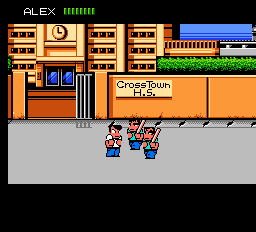
In my attempt to rectify my mostly Nintendo-less childhood I have been purchasing Virtual Console games at an unhealthy rate. Chrono Trigger and Super Mario World both lived up to their legendary reputations so I was excited to finally try River City Ransom (ignore that it’s slightly less popular and on a different console from the other two).

River City Ransom’s similarities to Double Dragon are obvious and I am proud to say it took about a second for me to figure out how to jump kick. (A and B at the same time for all you losers who haven’t played the exact same games as I have). The move set does seem somewhat pared down, though – is it actually possible to headbutt or elbow in River City Ransom? The action is ultimately very similar to earlier Technos games (such as Renegade) if a little less exciting. →  While there is a lower class, I am in it, while there is a criminal element, I am of it, and while there is a soul in prison, I am not gaming.

Apple and Agents (of the Elite Beat variety)

The Apple/Nintendo rumor mill has existed for a few years now, usually popping up quarterly or biannually with either a rumor about the two companies, or simple posturing about them. This leads to armies of geeks believing a merger is imminent, even though there is no proof or even any grumblings from either company about it. People simply look at how similar the two companies are, and somehow put two and two together (even if there is nothing to put together).

But maybe we are getting smarter about this inane trend. This time around, Forbes looks at how the iPhone might kill the Nintendo DS. The article cites the iPhone’s touch screen and accelerometer abilities as combining the features of the Wii and the DS. It also claims that the ability to quickly and easily download software wirelessly will make gaming simple and painless. →  The Lord of the Rings: The Fellowship of the Read

The promise of motion control

Who wrote this unspoken hardcore gamer law that we can’t enjoy a game that engages more than just our brains and fingertips? Just because our hobby has been sedentary in the past, a lot of people seem to want to treat this as some kind of necessary condition to enjoyment of a game. I’ve wondered why so many people scoffed at the notion of actually having to move their arms to play a videogame or, heaven forbid, stand up from the couch. I’ll be the first to admit this may not be conducive to hours long grinds or extended raid sessions, but Nintendo wasn’t looking to give you those kinds of experiences. Thankfully, it seems the emotionally mature members of the gamer demographic have realized this and accepted the Wii for what it is – something that’s striving to give us a very different kind of experience. →  Tell me and I forget. Teach me and I remember. Bore me and I sleep.