Koudelka and Retroid

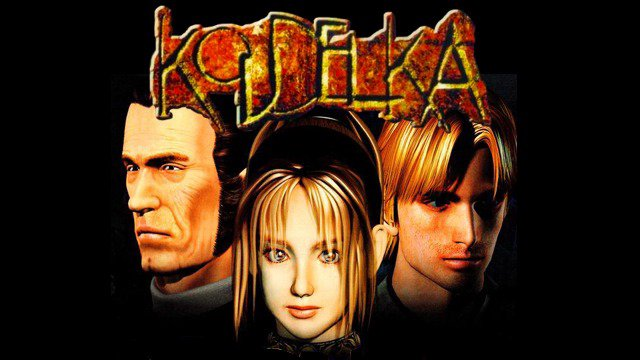
Koudelka is a horror RPG with light tactical battles that appeared on the Playstation in 1999, in the heady days when the massive success of Resident Evil three years prior led to a proliferation of horror games in various genres. I don’t know if SNK was trying to cash in or the market presented Hiroki Kikuta the inspiration he needed to found Sacnoth and direct, write, produce, and compose the game. Either way, Koudelka is an interesting take on all the genres involved and sits alongside Parasite Eve as cool attempts at making horror RPGs in this era.  
I have various lists where I track the games I plan to play someday. Some of them exist in spreadsheets, others in my head or chat logs with friends. Koudelka and the subsequent Shadow Hearts games had always floated around in these lists, but had never risen to the top.  Then in 2022, developers associated with the series and with Wild Arms launched a “double Kickstarter” to fund spiritual successors to both.  →  But the future refused to change.

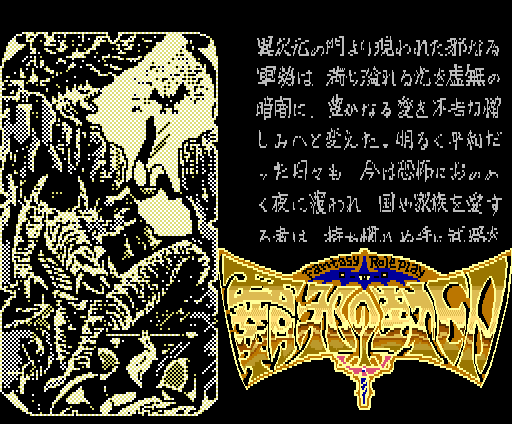
Haja No Fuuin – Not a Miracle

In my post about the MSX2 version of Golvellius I briefly mention that I gave the PC88 version of Miracle Warriors a few minutes of attention before befuddledly giving up. Well, I went back to correct this oversight… and didn’t get much farther in terms of actual progress, though I did spend hours trying. The initial hurdle is getting the game to actually load. The first time I booted it up and read the EGG Console directions the publisher was kind enough to include, I correctly booted the software, created a loading disc, changed to it, changed back to the program disc, and started the game.

Coming back to Haja No Fuuin weeks later, the process mystified me. What I thought I did the first time no longer worked and I spent half an hour messing around with disc swapping and loading. Luckily, the all-katakana directions and error messages were beyond the Google phone app’s ability to translate. Unluckily, I have a few friends so I sent a pic to site admin Chris and he gave me assistance with the Japanese. →  What is a post? A miserable little pile of secrets.

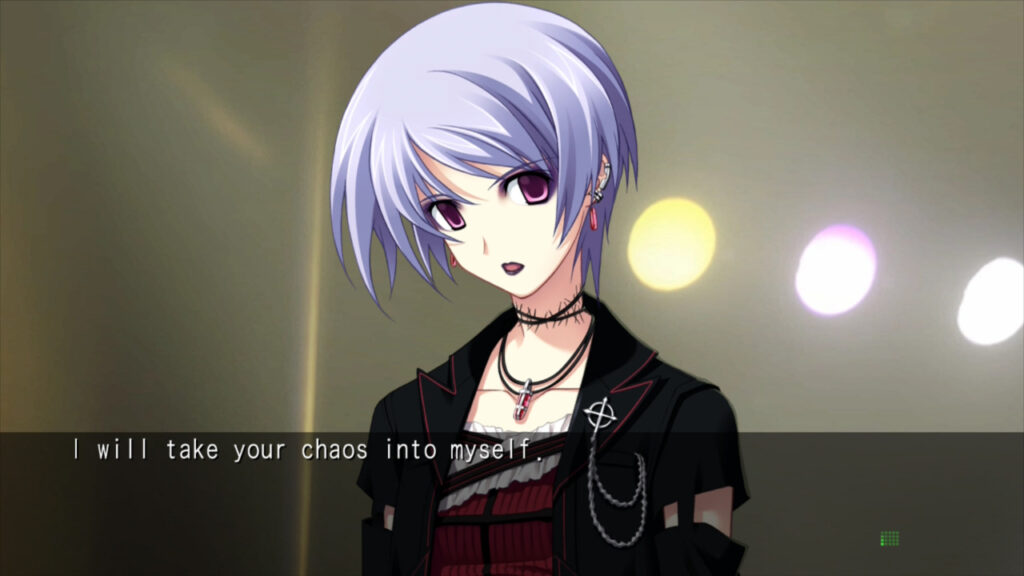
Chaos;Head – The story of a Whiny;Loser

There’s a scene in Wayne’s World, which you’ve seen 9 times if you’re in this site’s target demographic (American, mid-40s, name starting with J) where Wayne laments his misfortune directly to the audience in an unappealing way. “I’m being shit on. Shit on,” he says. The camera begins to pan away from him, the joke being that the audience doesn’t want to waste time with a whining loser. This is my short review for this game – I am the audience and Chaos;Head is Wayne Campbell in the brief moment he is uncool. But I will add some more words for people who demand actual information in their game reviews. You know, nerds.

I started Steins;Gate because it has a reputation as a great visual novel and after Looping Rage, that’s what I needed. But about 3 minutes in I realized that S;G was not the first in its series, so I checked Wikipedia and then my list of ‘eShop games bought on sale I don’t remember I have’ and discovered Chaos; Head on both (the version I played has the word ‘Noah’ appended to the title to designate it as the rerelease with improved graphics, rounder letters, twice the punctuation, etc.). →  Katamari Damaread

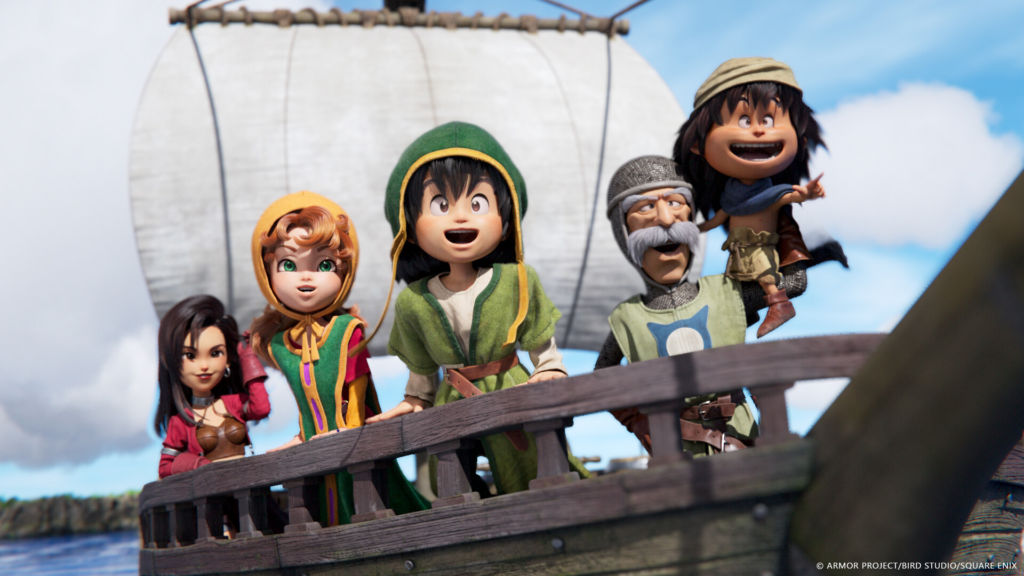
Dragon Quest VII Reimagined – Fragments of a Rearranged Past

I’ve enjoyed nearly every Dragon Quest I’ve played, but it took me decades and a streamlined version to finally complete Dragon Quest VII. I might be the exact target audience for VII Reimagined – busy, a fan of the series, and dangerously prone to nostalgia. But I feel VII Reimagined ultimately drops the ball by overly simplifying dungeons while not addressing some core issues with a disconnected structure and lack of character development.

The main problem I have with the changes to dungeons in DQ7R is that things have been made too effortless. The classic “Dragon Quest loop” (or if you prefer just a “classic JRPG loop”) is one of attrition – in battles you have to determine the most efficient way to make use of limited resources (primarily MP, but also things like rare revive items or, early on, HP recovery items). In Reimagined, HP and MP are restored on level-up, and additional save statues which restore MP have been added at the start and end of most dungeons (in all difficulty levels). →  [send private information]

Shin Maou Golvellius – A Valley of Quality

videolamer’s Chris sent me a link to a sale on EGG Console games the other day. For well-adjusted people who don’t know what I’m talking about, the EGG Console is a line of old Japanese computer games rereleased for modern consoles. So like Hamster’s Arcade Archives line but for Japan only games that generally require actual reading (in Japanese) as the collection is of computer stuff. I had looked at the EGG titles years ago when it first surfaced in North America and was composed mostly of Hydlide and Xanadu but then lost track of the releases. Luckily for me, Chris knows what sort of garbage I’m into and he noticed Golvellius on the list of games on sale. I immediately bought it and then spent an hour looking into the other EGG Console games, even the ones not on sale because I am fiscally irresponsible.

The Japanese version of Miracle Warriors, my beloved mediocre Master System RPG, was apparently released on the ol’ EGG in late 2025. →  All I want for Christmas is my PSP.

Reviewmancing Saga – Romancing SaGa 2: Revenge of the Seven

I often feel that things I have missed out on are better than things I have experienced. I’ll occasionally read a breathless article about a game I haven’t heard of that does something unique, and I want to experience it. Trying to stay on top of modern games coming out is difficult on its own, to say nothing of entire backlogs’ worth of games that we never saw even back when the United States wasn’t a dystopia. This odd form of nostalgia-FOMO is often unwarranted. I’ll occasionally pick up one of these games to find it isn’t particularly compelling compared to what we got, but the feeling remains. Romancing SaGa 2, though, is worth the play, particularly in its remake form.

The Romancing SaGa series, originally on SNES, has been fully accessible since its remasters about a decade ago, but they are dense games at best, convoluted at the worst.. My experience with the Romancing SaGa 2 remaster was initially positive, but it is a difficult game to understand, it has very frequent combat, and it requires quite a bit of fiddling with each generational change (which can happen at least a dozen times). →  It might come in handy if you, the master of reading, take it with you.

Almost Famous – Dice, Scavengers, and Bastards

The idea that publishers and platform-holders determine the games the vast majority of people are aware of through marketing, promotion, and their ensuing hype is appealing to a critic of consumerism such as myself. What appears to be freedom of choice is actually a heavily curated set of options presented by million and billion dollar corporations; our choice is largely an illusion. But at the back of my mind, I worry that this may be overly simplistic and the argument that quality games will be found by an audience seems compelling. And then I find a game like Circadian Dice, which reinforces the initial premise – an awesome, smartly designed game that never found the large audience it deserves.

This is the first post in a series on unpopular indies and will be driven by the pursuit of discovering more Circadian Dices – more games that should be much bigger than they are. Perhaps it will be a fruitless endeavor, maybe we will discover almost all worthwhile games are surfaced and I managed to find a needle in a hay stack, or we will learn production values are tied to game quality so intrinsically that it’s almost impossible for a small, niche game to be amazing when it looks bad and controls terribly. →  Sounds mildly entertaining, I guess.

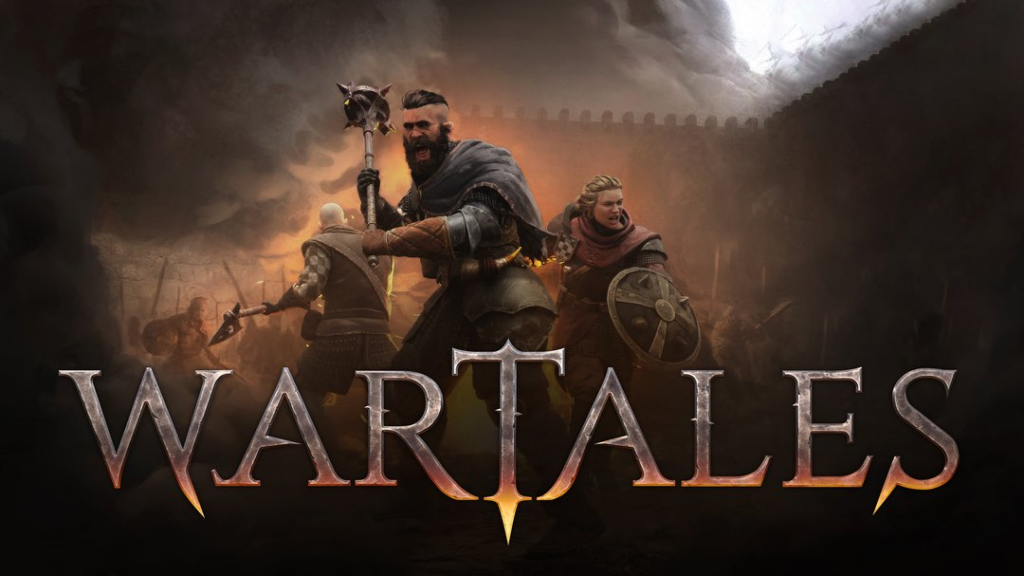
Waving the White Flag – Wartales

On the surface, Wartales looks a lot like other games I like. I enjoy large-scale simulations, I like fiddly minigames with bonus rewards, I love RPGs, and I even sometimes play tactical games.  But in the end I stopped playing Wartales before getting to the second town, waving the white flag of freedom after 15 hours.

There are a few different reasons for this. One is that it’s not possible to focus on just a single aspect of the game. While you have the freedom to, for example, forge weaponry for your squad using the blacksmith “profession”, the materials required to do it must either be purchased in limited quantity or mined from nodes that respawn at unpredictable intervals and are spread throughout the map.  While traveling between those spots, you’ll be accosted by brigands or boars, forcing battles that are unavoidable and unskippable. So yes, you can forge equipment, and you should forge equipment since it’s so useful, but you can make maybe two or three pieces every few hours of gameplay before you need to spend more time traveling and fighting. →  U R Not lamE.

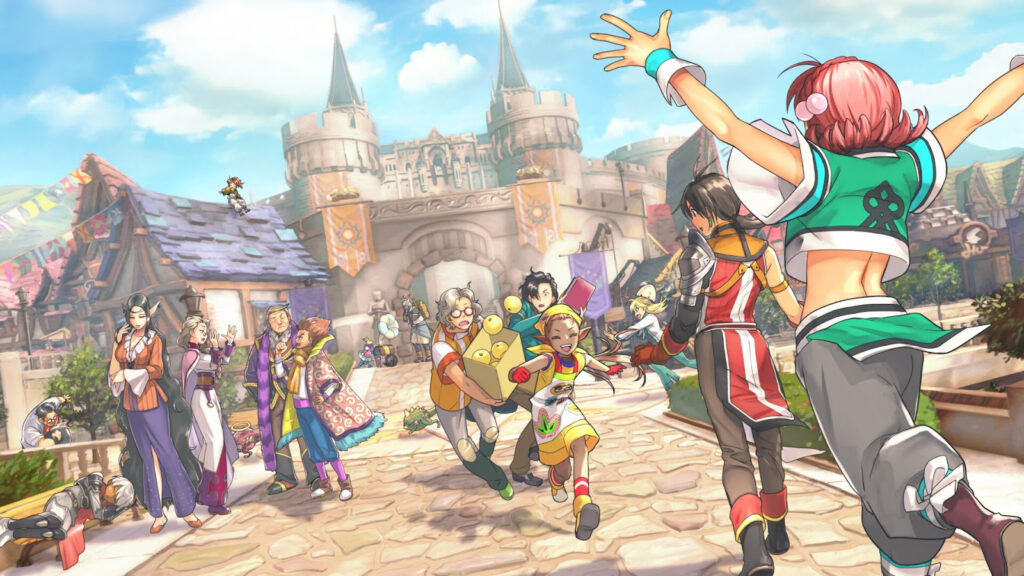
Eiyuden Chronicle: Hundred Heroes

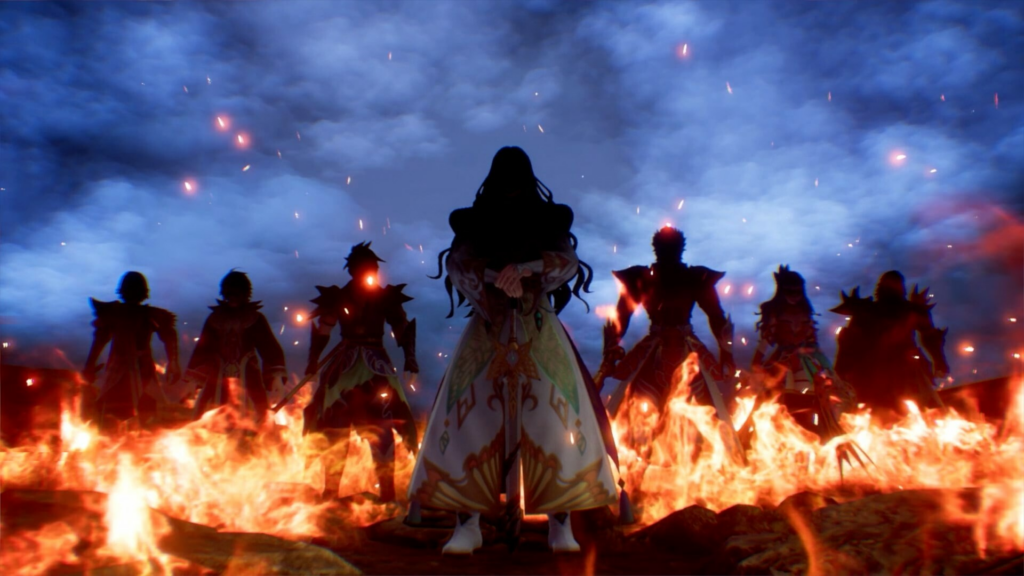
It’s hard to confine everything I felt as I played Eiyuden Chronicle: Hundred Heroes to a single post. Or even to the written word. A mixture of relief, frustration, sadness, and joy in different measures and different times will have to do. It took me months to gather my thoughts enough to write about it and months more to refine it and each time I have revised I’ve felt a little different.

Here’s a little bit of history, since this is the backdrop for my experience with the Kickstarter. You may know the original writer behind Suikoden (Yoshitaka Murayama) left the video game industry for years. I heard he specifically wanted to limit his time at Konami and it was an amicable split. Two more Suikoden games and three more spinoffs were made afterward, and they were still pretty decent games. I’ve long been a fan of the series – their eastern flavor, their heartfelt moments, their fun and varied cast of characters and attention to both large and small scale are a breath of fresh air in a genre that mostly sticks to smaller groups, bigger stakes, and plot twists with maximal shock value. →  SaGa 3: Shadow or Write

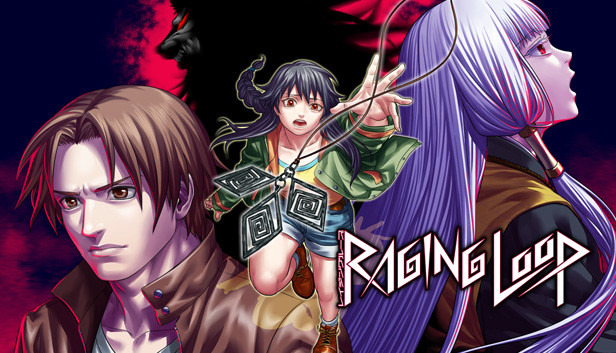
Raging Loop – More Rage than Loop

It had been a while since I played a visual novel. Root Letter had left an unpleasant musty and earthy taste in my mouth, and only a crack gumshoe can predict when the next Jake Hunter will come out. Raging Loop has fairly good reviews and seemed somewhat well regarded by fans, who I learned too late I should deeply distrust because a huge swath of them are pervy weebs looking for hot anime girlfriends. Raging L, which I will hereby refer to as R Loop for brevity, is a horror themed Japanese visual novel with very limited gameplay – basically just selecting the answer to a question every hour or two. This is fine to me but may put off people who have played a video game or read a book. I have a few positive things to say about R Loop and a lot of negative stuff, including one or two things I think completely pacify the rage… cross the loop? →  I am become game, destroyer of words.