Reviewmancing Saga – Romancing SaGa 2: Revenge of the Seven

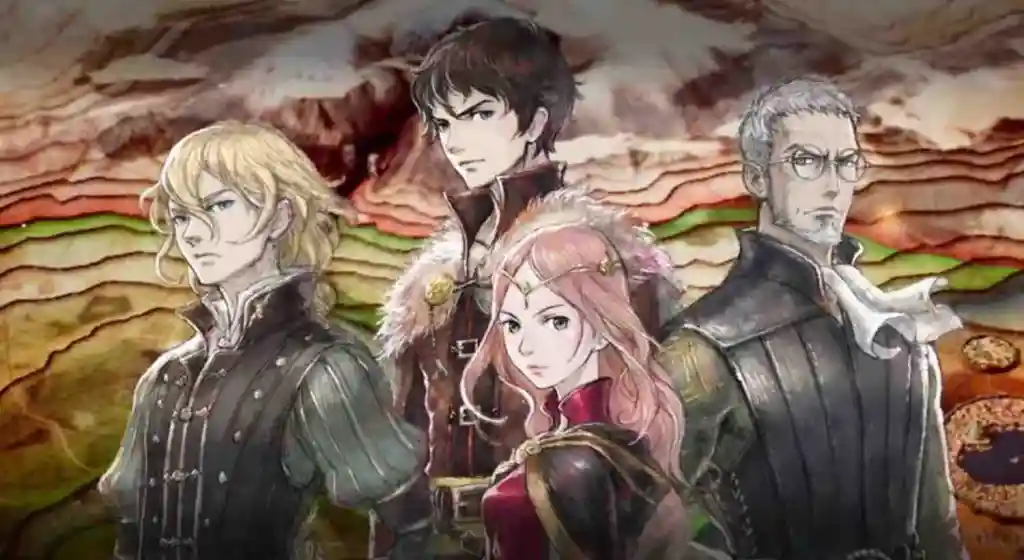
I often feel that things I have missed out on are better than things I have experienced. I’ll occasionally read a breathless article about a game I haven’t heard of that does something unique, and I want to experience it. Trying to stay on top of modern games coming out is difficult on its own, to say nothing of entire backlogs’ worth of games that we never saw even back when the United States wasn’t a dystopia. This odd form of nostalgia-FOMO is often unwarranted. I’ll occasionally pick up one of these games to find it isn’t particularly compelling compared to what we got, but the feeling remains. Romancing SaGa 2, though, is worth the play, particularly in its remake form.

The Romancing SaGa series, originally on SNES, has been fully accessible since its remasters about a decade ago, but they are dense games at best, convoluted at the worst.. My experience with the Romancing SaGa 2 remaster was initially positive, but it is a difficult game to understand, it has very frequent combat, and it requires quite a bit of fiddling with each generational change (which can happen at least a dozen times). →  This post are sick.

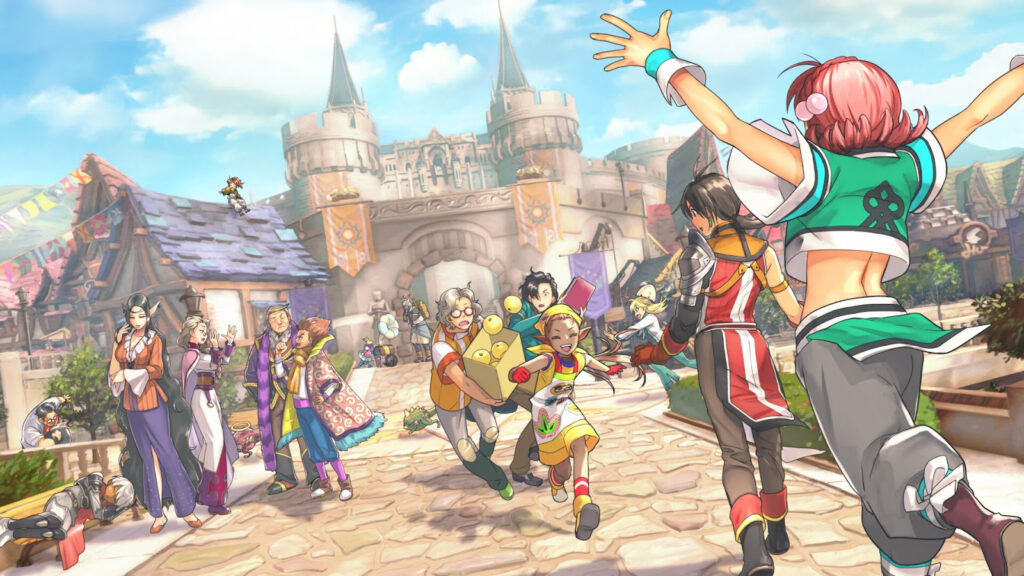
Eiyuden Chronicle: Hundred Heroes

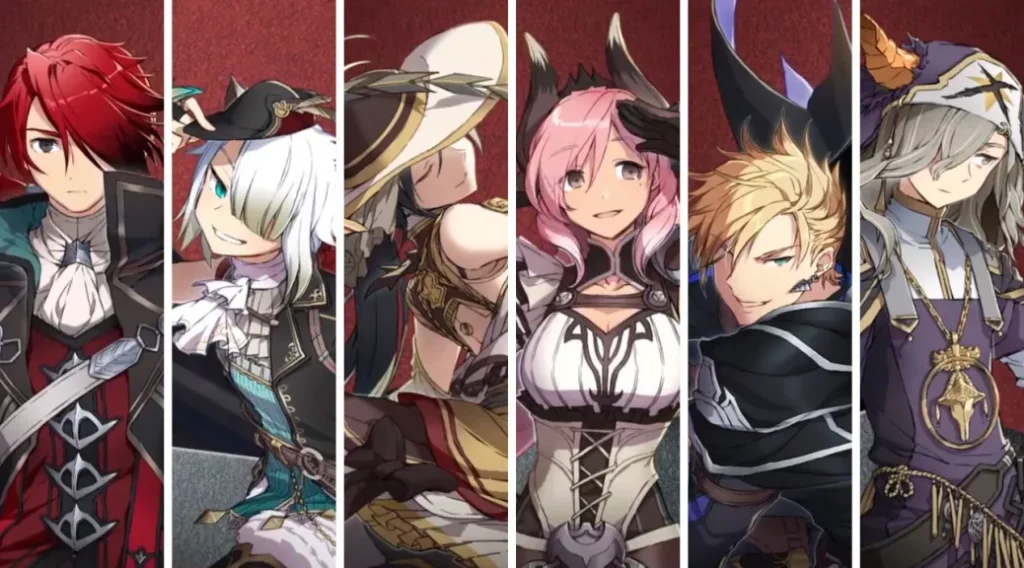
It’s hard to confine everything I felt as I played Eiyuden Chronicle: Hundred Heroes to a single post. Or even to the written word. A mixture of relief, frustration, sadness, and joy in different measures and different times will have to do. It took me months to gather my thoughts enough to write about it and months more to refine it and each time I have revised I’ve felt a little different.

Here’s a little bit of history, since this is the backdrop for my experience with the Kickstarter. You may know the original writer behind Suikoden (Yoshitaka Murayama) left the video game industry for years. I heard he specifically wanted to limit his time at Konami and it was an amicable split. Two more Suikoden games and three more spinoffs were made afterward, and they were still pretty decent games. I’ve long been a fan of the series – their eastern flavor, their heartfelt moments, their fun and varied cast of characters and attention to both large and small scale are a breath of fresh air in a genre that mostly sticks to smaller groups, bigger stakes, and plot twists with maximal shock value. →  Show me the reading!

Waiting for Arc the Lad – PlayStation RPG Memories

In the early months of 1995 my friends and I poured over every drop of PlayStation information we came across, whether it be a magazine ad with Polygon Man telling us the system was more powerful than god, Sony suggesting we were UR NOT E, or the giant cardboard cutout of whip wielding Sofia at the local Palmer Video that still managed to be half an hour away. The older consoles were looking less appealing by the day (thanks, Vectorman), especially when compared to generation-defining beauty such as the widely advertised Battle Arena Toshinden (Sofia wore leather, you see, which really pops when rendered in cardboard).

By the midpoint of the 90s my friends and I were all 13 and desired a higher caliber of digital entertainment regardless of platform – the RPG. The first one previewed for the upcoming PlayStation console was called Arc the Lad and we all eagerly anticipated the game and expected it would be available soon after the system, at this point having no concept of localization, publishers, and all the messy stuff at the rotten core of the game industry. →  Are you ready for some readball?

Triangle Strategy is Better than Fire Emblem: Three Houses

For no apparent reason, I have pitted (often unrelated) things against each other since I was a child. Well, probably for deeply disturbing psychological reasons. Sega had to be universally better than Nintendo, chocolate better than vanilla, coffee better than tea, and orange juice with pulp truer to nature than that pulp-free orange water drink. No Country for Old Men is a better movie than There Will Be Blood, and Shenmue is just superior to Yakuza. In a weird variant of this psychosis, I once told a friend that Meshuggah should be a melodic metal band like the other bands from Sweden and not whatever rhythm based, incorrect metal they were. Lines must be drawn and sides must be taken, damn it.

It is in this spirit I bring you a comparison between Fire Emblem: Three Houses and Triangle Strategy. Both are SRPGs (tactical RPGs according to Chris, who has chosen different battles to fight than I) on the Switch. Both tell grand stories and are something of a throwback (one of them deliberately, the other because it kind of just looks shitty). →  Read, I am your father!

White Flag – Giving up on Saga Scarlet Grace and Monster Train

I recently came to the conclusion that only chumps play every game until completion. And so here is the first entry in what will likely be a long, if not entertaining, series of posts on games I gave up on. I got lucky in that both are very good games that just couldn’t hold my attention until the credits rolled.

Saga Scarlet Grace: Ambitions

Scarlet Grace is the best Saga game I have played, which is similar to being the smartest Qanon believer. The series has managed to improve in stature amongst people who care about long running JRPGs, no doubt assisted by Jeremy Parish’s constant Kawazu fawning. I am happy the games exist because having something weird and different is preferable to not having it, but the games do not really come together from what I have experienced. Yet in a twist I did not see coming, Scarlet Grace is actually pretty good.

The game is like a nice gift wrapped in the obituary section of a newspaper – combat is a lot of fun, but the plot, characters, and questing is all off putting. →  The Lord of the Rings: The Fellowship of the Read

Review – Ys IX: Monstrum Nox

So I just beat Ys IX. It was… better than I was expecting, but not as good as it could be. It takes nearly every feature and system from Ys VIII – features and systems, mind you, that were new and specifically built to work in that game’s very particular setting – and brings them whole hog into this new game, with a very different setting. Suffice to say that it doesn’t really work.

For example, in Ys VIII it made sense to earn rewards for mapping out the island, since it was literally uncharted. But it seems insane to be rewarded for mapping out a centuries old city (under the guise of “finding the places that tourists would be most interested in”).

Similarly, it made sense to have a crafting system on an island with no shops, and a bartering system that allows you to refine low grade crafting materials by essentially trading for them. But Ys IX has so many different shops – with so much good gear – that forging your own weapons usually isn’t worth it (meanwhile, you refine items by interacting with a magic lantern. →  For I have come to turn a man against his father, a daughter against her mother, a gamer against their game.

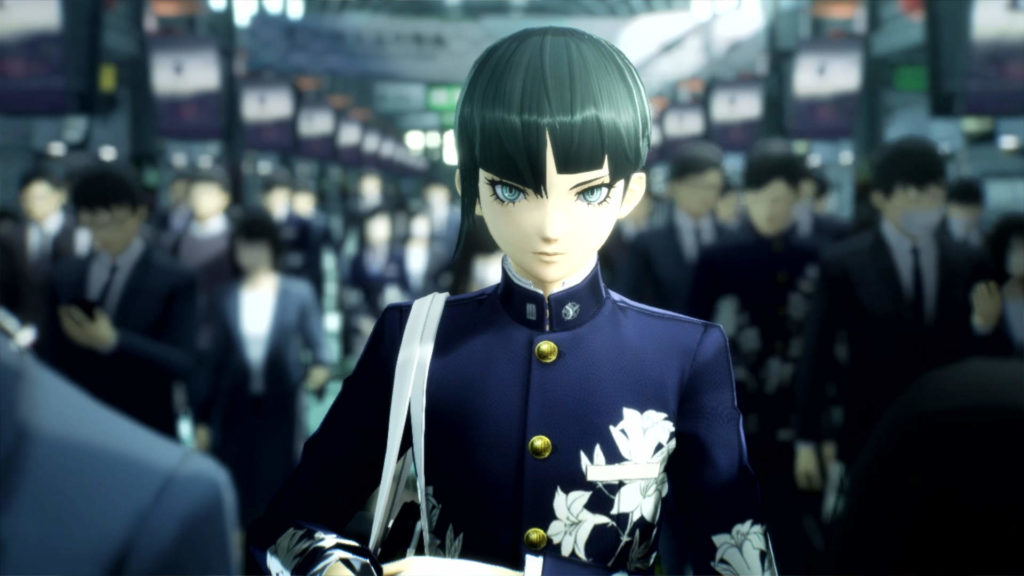
Shin Megami Tensei V, from the perspective of an SMT “fan”

I’ll start all this off with a long caveat. Shin Megami Tensei 4 on the 3DS was the first real SMT game I finished. But since Persona 1 came out on PS1, I’ve played pretty much every SMT spinoff. The core series has such an iconic identity among RPG fans – “The Dark Souls of JRPGs,” (because Souls and SMT are both accessible, you just have to put up with a lot of deaths).

Except that last part is also ironic, because the first two SMTs are (legally) inaccessible in English unless you installed them on an early Apple device years ago before they got pulled. Anyway, what I’m trying to say is that I’m the kind of person a true SMT fan hates, while anyone who’s not a true SMT fan thinks is an SMT fan. Which includes me. I’m an SMT fan.

I played and dropped Shin Megami Tensei 3: Nocturne (this one weird trick will get true SMT fans to hate you). →  And so it games…

Final Thoughts on Final Fantasy VIII

In Part 3 of this 3 Part series about Final Fantasy VIII (that I never intended to be a 3 Part series about Final Fantasy VIII – Part 1 here and Part 2 here), I want to go into a bit more detail about my personal history with this game. I fully admit that this is more for me than anyone else, a sort of final bit of therapy to help me put it in the past and move on.

Final Fantasy VIII is a game I first played at launch back in 1999. I didn’t get very far.

I tried playing it again a few years later. This time I was serious about beating it. But I didn’t.

I tried again a few years after that. And again a few years after that.

I tried it twice more after rebuying it on PSP.

Then I stopped for many, many years, until they remastered it for modern consoles, complete with “hacks” that allow you to do things like turn off random battles and play at 3x speed. →  Just read it.

Final Fantasy VIII is a Weird Game

There are countless examples of games that were trashed at release, only to have their reputations rehabilitated years later upon being (re)discovered by retro game enthusiasts. Usually this is because the game in question was misunderstood or otherwise ahead of its time, both revelations which are only revealed with the hindsight and context provided by the future.

On the flip side, there are games that were beloved at release, only to be trashed years later as retro gamers discover that it didn’t age well, or that launch-day opinions were misinformed, or whatever the case may be.

But there’s a third option as well, one in which the initial impression of Game X was accurate, and remains accurate once it hits retro status. In my (admittedly limited) experience, this is the rarest take of all. This is probably due to the simple fact that tastes and opinions change as we age, though it isn’t uncommon for people to change their minds for other reasons (for example, to better align with the opinions of their peers, or to adopt a contrarian opinion for the sake of attention). →  Katamari Damaread

How Not to Remake: Langrisser Edition

I’ve been a fan of the Langrisser series for a long time. The series’ debut entry, Warsong, is the only one that received an official localization until recently. Unfortunately, the Langrisser 1&2 remake available on most platforms is not only missing much of what makes Warsong special, it’s not even a particularly good game in its own right.

There are several things included in the remake that are actually good changes. It includes a fully viewable class change chart, with “secret” final classes spelled out (much of this was hidden in the original games). The skill system is actually a great addition as well. It gives more customization options and incentivizes exploring the tree a little more. It also gives a little more flavor to characters that are otherwise very similar, like Thorne and Hawking. Likewise, route branching is more clear – for example, you can see that things can change later on if you leave certain enemies alive in scenarios. →  Read Read Revolution: Disney Channel Edition