
Waving the White Flag – Wartales

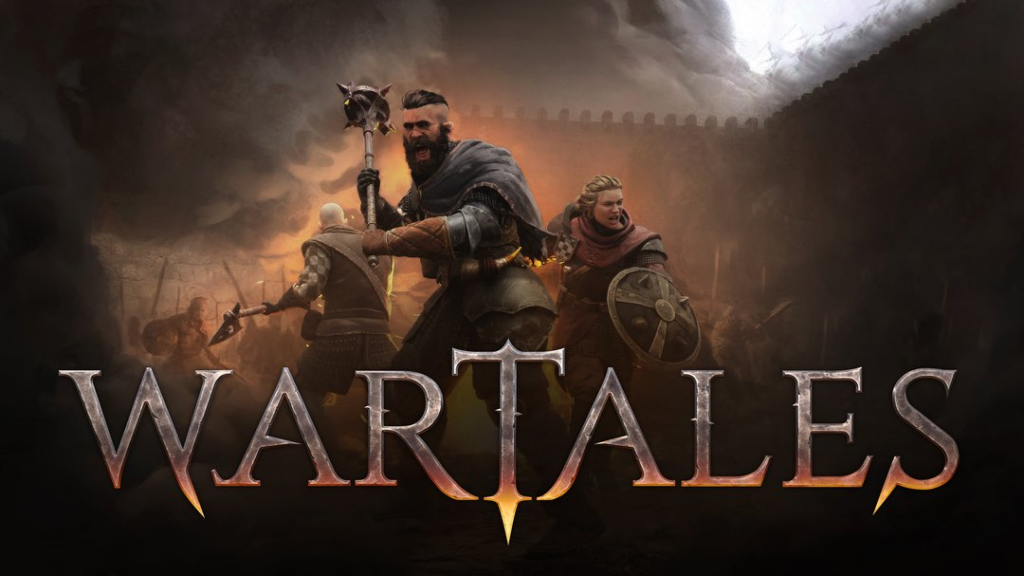
On the surface, Wartales looks a lot like other games I like. I enjoy large-scale simulations, I like fiddly minigames with bonus rewards, I love RPGs, and I even sometimes play tactical games.  But in the end I stopped playing Wartales before getting to the second town, waving the white flag of freedom after 15 hours.

There are a few different reasons for this. One is that it’s not possible to focus on just a single aspect of the game. While you have the freedom to, for example, forge weaponry for your squad using the blacksmith “profession”, the materials required to do it must either be purchased in limited quantity or mined from nodes that respawn at unpredictable intervals and are spread throughout the map.  →  We are what we pretend to be, so we must be careful about what we play.

Eiyuden Chronicle: Hundred Heroes

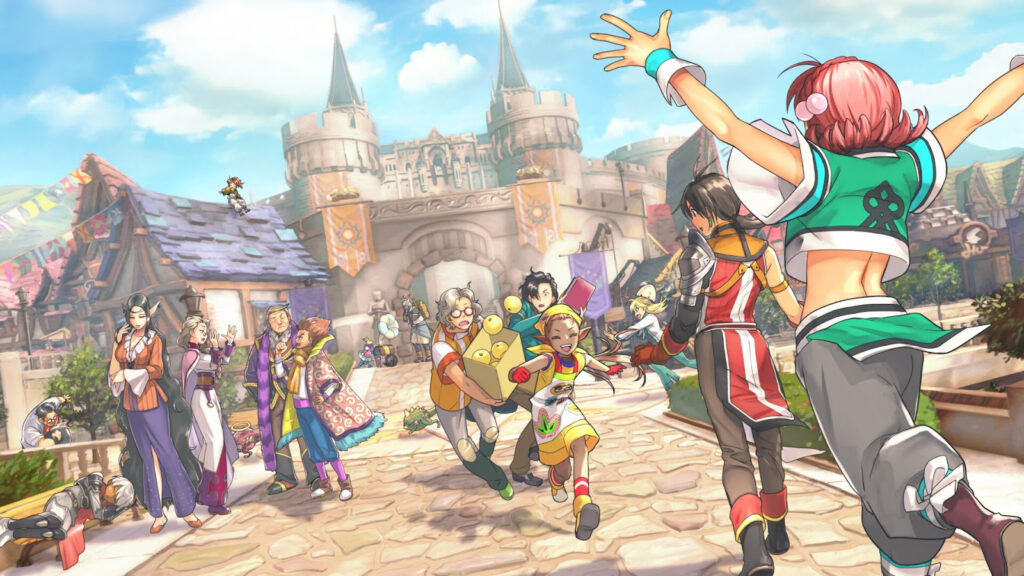
It’s hard to confine everything I felt as I played Eiyuden Chronicle: Hundred Heroes to a single post. Or even to the written word. A mixture of relief, frustration, sadness, and joy in different measures and different times will have to do. It took me months to gather my thoughts enough to write about it and months more to refine it and each time I have revised I’ve felt a little different.

Here’s a little bit of history, since this is the backdrop for my experience with the Kickstarter. You may know the original writer behind Suikoden (Yoshitaka Murayama) left the video game industry for years. I heard he specifically wanted to limit his time at Konami and it was an amicable split. →  Silent Post 2

Mount & Blade II: Bannerlord – More Mounts, More Blades, Less Fun

The original Mount & Blade was the very first game I wrote about on videolamer. I was really impressed by the sandbox approach it used. The world advances, in real time, as you move from place to place (in a kind of real-time-with-pause simulation style). This has been done before, for example in Uncharted Waters or the excellent Space Rangers series. Mount & Blade adds excellent combat mechanics that incentivized (but didn’t require) a shield and allowed for seamless, interesting mounted combat. It also brings in a character growth system that extends to companions in your party. While other games might see you becoming a “superman” in a few hours, in Mount & Blade you max out at “mighty” – and will always be vulnerable to an enemy’s morningstar or crossbow. →  And so it games…

A New Ratings System: A Framework for Inertia, Flow, and Satisfaction

I did not enjoy Clair Obscur: Expedition 33.  Playing it felt like a chore much of the time.  I was satisfied, though, when I finished it.  This juxtaposition made me think more about how I feel about games and gaming.

There are games that I enjoy playing and that make me feel satisfied when I finish them (most RPGs).  There are also games that I enjoy playing that leave me feeling unsatisfied when I finish them (Roguelites).  Many games are somewhere in the middle – for example, grand strategy games such as Europa Universalis IV or Civilization get me into a flowstate, and there is satisfaction in seeing a nation develop over the course of a 10-hour multi-session save.  →  It’s not you, it’s me.

Old Disappointments Revisited: JRR Tolkien’s Lord of the Rings, Volume 1 (SNES)

Over the past decade or so, I’ve tried to play every SNES RPG I can find, even if I don’t beat them all. I played most of them at some point via rentals, and I have fond memories of many of them (even Lagoon). Over the years, I have built my collection to include as many as I can reasonably justify (ex: I might pick up Brain Lord, but I’m probably not getting Dragon View). Even the most mediocre of these games has had some redeeming quality, but I’m here today to tell you about one that really doesn’t. J.R.R. Tolkien’s Lord of the Rings, Volume 1, which should probably have been named “Volume 1 of 1” in retrospect, really doesn’t have that much going for it. →  Readius III and IV

“Revived” Franchises and Kickstarters

It’s no secret that I like Suikoden a lot.  Even the bad ones.  The series’ spiritual successor the Eiyuden Chronicles: Hundred Heroes got yet another trailer recently.  The creators are mostly saying the right things, indicating they’re focusing on things that Suikoden did differently from most games – having a large cast, involving that cast in the story (appropriately), and a relatively realistic and political scenario.

I’m a little worried, though, because past crowdfunded games that focused too much on recapturing an existing series’ magic lost sight of being their own thing, and end up being known as inferior copies.  Mighty No. 9 is probably the most notorious, but it’s definitely not alone in this.  Been there, got the t-shirt, still wear it ironically (probably), but honestly haven’t played the game.  →  Holy crap, show me more!

Review – Tyranny

Not long ago – it feels like yesterday – I put Tyranny on my New Year’s resolution list.  It’s still 2022, right?  I’m happy to report that I completed Tyranny.  I’m not sure I’m happy that I chose it for my list.  It looks unique, and starts out feeling different from other CRPGs, but by the end it feels like a reskin of other games.

Tyranny starts out on a high note – the animated style of the narration and Conquest portion of character creation mesh to give a very different feel from the typical beginning of a CRPG.  The backstory (fleshed out in Conquest), in which you are effectively middle management for the conquering despot Kyros, also feels fresh.  →  OutRun 2006: Post to Post

Gacha by the Nostalgia – Fanservice, or Predation?

I’ve played Gacha games – only four or five total – off and on for years.  I’ve rarely spent money on them, but I know they are – by design – predatory.  I find them relaxing and they offer just the right level of engagement for 10-30 minutes a day – sometimes more, sometimes less.

On some level, I know it’s a bad idea to play them.  Having played for years, I know the feeling of spending all your “free currency” on summons and getting nothing of value (where value can mean either a useful unit or a favorite unit).  It was tempting to spend real money – maybe $5 or $10 – to “support the game” and try for one last chance to get something good,but I managed to resist the temptation.  →  Ratchet & Read

Some Itch.io Game Reviews

Around a year ago, I joined a fortnight-ly Itch.io game club after picking up the Palestinian Aid Bundle.  The club leader would post a (semi-curated) random game, and everyone would play through it.

The large itch.io bundles are perfect for buying entirely more games (and sprites, and rulebooks, and engines) than you need, while feeling like you’re helping to make the world a less terrible place.  It’s the perfect way to build up a crushing, overwhelming backlog and get some unusual games without a large investment.

Here’s a sampling of the games I played and enjoyed from the bundle:

Closed Hands 

This is an interesting visual novel about a terrorist attack in the UK and political/social reactions to it, told from five different perspectives.  →  2 h4rdc0r3 4 U.

Review – Eiyuden Chronicle: Rising

Eiyuden Chronicle: Rising is a “companion game” to the core game Eiyuden Chronicle: Hundred Heroes, which is still in development. Hundred Heroes is a Kickstarter headlined by Yoshitaka Murayama (story) and Junko Kawano (art), veterans of the original Suikoden. The Kickstarter is clearly designed to invoke the feel of the Suikoden series. Eiyuden Chronicle: Rising serves as a kind of teaser for the game world as well as a standalone, relatively casual, action RPG. As a teaser for a future game, it works reasonably well. Isolated from that context, I’m not sure it’s a great action RPG, although I did enjoy it.

As Jay observed in a comment on a prior post, Eiyuden Chronicle: Rising is similar to Ys III (not just because many of the environments line up – that’s just a happy coincidence). →  Ring of Read