Thinking about the Genesis library: Part I

The Genesis of the Idea

I’ve been sitting with an unfinished version of this post for half a year. Making up incorrect theories about the Master System is fun because few people actually care enough to be mad at me, but the Genesis is the big leagues. I’ve settled on splitting the ideas I have about the Genesis library into two main parts, one about their first party output and one about third party support. This gets a little muddled because I cover internally developed, developed by a company Sega owns, and at times third party games published by Sega in this first post that’s supposed to be on first party efforts, but I try to clarify what is being discussed.

Similarly to the thesis of my Master System writeup, Sega did the majority of work supporting the Genesis with games – Sega developed 80 titles internally for the Genesis, while Nintendo internally developed 24 SNES games. This was done both by direct development but also a large number of publishing deals. →  PaReader the Reader

Wednesdays with Andrew – Virtua Fighter 2 and Daytona USA

Prior entries in this series: Introduction | NiGHTS into Dreams | Virtua Racing and more

Another day, another 1/7th closer to the day Andrew and I play Saturn games. Our playing is getting far ahead of these write-ups as sitting on the couch, controller in hand is moderately easier than telling chatGPT to write these things then performing deft copy/pastes, so let’s say this session took place in November of 1986.

Fighting never felt so virtual

The first time I remember playing Virtua Fighter was at Six Flags Great Adventure in the new Jersey. It may have been the visit I was finally tall enough to ride Lightnin’ Loops and Free Fall. My brother repeatedly told me in vivid detail about the woman who was scalped because her hair got caught in the gears at the top of the Free Fall cage before it dropped 30 trillion feet or so. Virtua Fighter was fun and smooth, and not at all like losing your scalp to a ride malfunction. →  Games are the sigh of the oppressed creature, the heart of a heartless world, and the soul of soulless conditions.

Dear lamer: Child rearing advice from a professional video game player

In this exciting new series, our mascot answers letters readers have sent in with sage advice.

Dear lamer,

I am a real person who hacked their Genesis mini to add a bunch of regular and popular games, such as King Colossus, that Sega omitted from the product. My neighbor, who is not actually the neighbor of someone who writes for this website, saw this excellently decked out Genesis mini and asked to borrow my “Sega Genesis” sometime in 2023. Have you noticed an immediate tell that someone doesn’t have much or any experience with Sega consoles is the use of the word “Sega” before naming a system? It’s a Genesis, a Saturn, a Dreamcast. No one cool says Sega Genesis or Sega Dreamcast, just like anyone familiar with Nintendo doesn’t call the Super Nintendo the Nintendo Super Nintendo. 

Anyway, I digress. So I was in my neighbor’s backyard the other day and could see into the basement through the windows (it’s a walk-in basement so I wasn’t being weirder than the average weird guy) and noticed the neighbor’s boy, let’s call him Avid… no, how about Davi, yes that works, so Davi is playing Herzog Zwei on the Genesis mini I lent. →  Is that an article in your pants, or are you just happy to read me?

Wednesdays with Andrew – Virtua Racing and Panzer Dragoon

Prior entries in this series: Introduction | NiGHTS into Dreams

Another arbitrary amount of time, another entry in the ‘guy makes another guy play Saturn games’ series. This time we played a little of a promising shmupper (this term is useful as it pleases neither the ‘shump’ nor ‘shooter’ crowds), and a little more of two absolute classics by Sega.

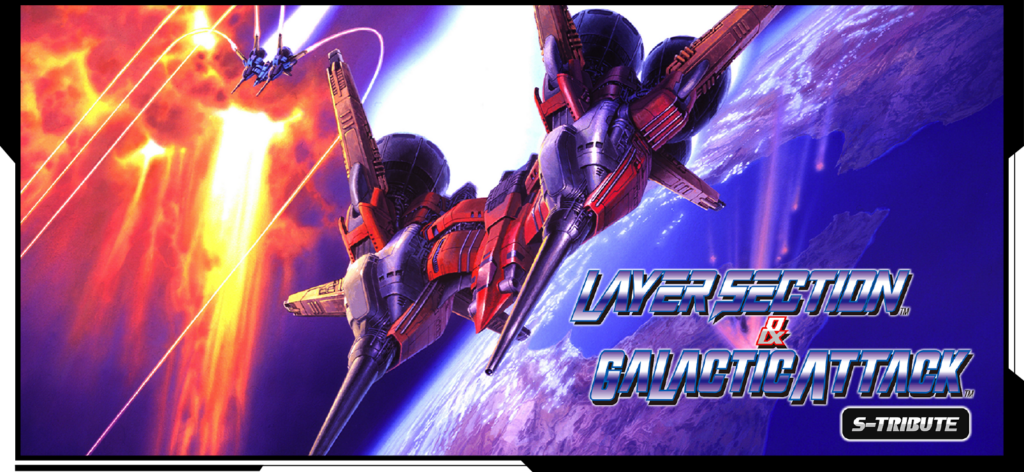
Layering Attack Rays in Sections of Galactic Force

Should Galactic Attack have music? Does Attack Galac have a second stage? Why is there so much audible rattling under the hood of my minivan while I drive? Until these questions are answered satisfactorily, we decided to put aside Galactic Attacktic for a future date. In the meantime I will find a new bin/cue file and not speak to a mechanic. We did play enough to realize the game is good and for Andrew to compose his requisite haiku, luckily for you. Only time will tell if I demand he write another after we play more of the game. →  Show me the reading!

Thinking about the Master System library

This post is unlikely to exist. If you’re reading it then it must, but just barely. I originally began writing about Saturn games that needed to be better than they were. That will still be written, I think. Then I decided I’d need to dig into the Genesis’ games to really figure out what happened between Sega’s most successful console and their first publically named planet console. But then it would be important to understand the Sega CD and even 32X. I still want to write about all these things 47 other people care about, all of them with strong opinions that contradict my own.

Moving back to the Master System seemed inevitable, but only after I decided I would write about it. I suppose inevitable things are always evitable at first and then something happens to make them into things that were always going to happen even though up until then they weren’t going to happen. I was doomed to write this, but was happier when that doom was pending. →  The fuck does Cuno care about reading?

Wednesdays with Andrew – NiGHTS into Dreams

(For context, see the introduction to this series here.)

We’ve all seen movies, read stories, and played games where if you die in the game you die in real life. But where are the games that if you die in real life you die in the game? Sure there are some games where if you stop playing an enemy may kill you or, if for some reason you play multiplayer games, another human. But it’s not really the same. I propose a game that detects a lack of player input and then sends pop up boxes in game every four minutes asking if you are still alive. If you take more than ten seconds to confirm your existence, you die in game. This ensures that dying in real life does in fact kill you in game. Maybe you think this is a harsh mechanic and you shouldn’t lose a video game just because you died, but I see it as respectful. →  Illiterates hate her! Click to read this one weird trick.

Tuesdays (Wednesdays) with Morrie (Andrew)

My elderly (42) friend Morrie (Andrew) is dying (he is not) of cancer (massive hemorrhoids). Understandably, he (probably) came to me and said, “I cannot imagine the regret of leaving this world without becoming familiar with Sega’s legendary Saturn console.” I pointed out that the shame his family would endure would force them to leave the state because I don’t think he was fully considering the precariousness of his position. 

Luckily for Morrie (Andew), I am a very generous person living with some woman, three children, and an inordinate amount of free time. “Honey, the only time this man plays Saturn, let alone Sega CD Make My Video games, is when I invite him over promising to watch a movie he really wants to see and then forcing him to instead play old console games,” I considered saying. “What a travesty, and I still can’t get over the cancer,” I imagine she would respond, if I spoke to the woman in my house. →  Katamari Damaread

Out Run, I Mean Outrun Culture

A few months ago I found myself buying (and playing) the Sega Ages version of Out Run on Switch. It’s a great port with some interesting new features, and it made me appreciate the game all over again. Eventually I found myself doing some historical research on the game to learn more about its development and legacy.

Unfortunately, this was easier said than done. My search results were dominated not by Out Run, but by …. Outrun.

As far as I can tell, “Outrun” is the name of both a subgenre of synth music, and a surrounding subculture. According to the Outrun subreddit’s description, Outrun is:

Dedicated to the synthwave music scene, a revisionist 80s music style of synthesizers and pulsing beats, and the retrofuturist 80s aesthetic of fast cars, neon lights and chrome.

And the wikipedia entry says:

Synthwave (also called outrun, retrowave, or futuresynth) is an electronic music microgenre that is based predominantly on the music associated with action, science-fiction, and horror film soundtracks of the 1980s.

 →  U R Not lamE.

Playing catch up – Phantasy Star IV

I was a Nintendo kid growing up (until that stopped being cool, when I defected to Sony). I got a Genesis very late in the game, so I’m still playing catch-up on the Phantasy Star games. A couple months ago, the final game worth mentioning in the series was released on Virtual Console. I played through Phantasy Star 2 several months ago, so I figured I’d give its better-regarded descendant a go now that current-gen RPG releases have calmed down a bit.

Phantasy Star 4 deserves all of the acclaim it gets. If its fans are not heard as loudly as those of other, better-known series, they should be. Is it the Second Coming? Perhaps not. But it has all the requirements for a good RPG (aside from only one of two established religions being evil – I’ll overlook that). It has a fun and no-nonsense battle system, entertaining characters if a bit lacking in depth, some good dramatic scenes (but not too many!) →  2 h4rdc0r3 4 U.

Review – Yakuza

As a fan of the Shenmue series I was induced to try Sega’s Yakuza (non-neutered Japanese name: Ryu go Gotaku, or Like a Dragon). Hardly a review was written that avoided comparing some aspect of the game or the game itself to Sega’s acclaimed series. If you have not already played them, I am here to tell you that these are drastically different games. While there are some cosmetic similarities, the crowd that adores Shenmue (at least those who do so for the same reasons I do) will not find a spiritual successor here. While both games are basically brawlers in an open world, with plenty of side quests and dark corners to explore, the heart of Ryo is absent from the muscular Kazuma.

Shenmue has many strengths (and several weakness), but chief among them is Ryo’s hesitance to resort to violence unnecessarily and his ineptness in many adult situations. The obvious example is his incompetence in wooing the lovely Nozomi (and several other females that throw themselves at him), but there are subtler examples, such as the way he prosecutes the early stages of the revenge he seeks for his father’s murder. →  Video games are bad for you? That’s what they said about huffing paint.