Video game plots must evolve

The importance of video games to human development cannot be overstated. I believe there have been three major inventions that have radically shifted the creative horizons of the human species and the reality we continue to shape for ourselves. The first would be movable type and the advent of the printed word, the second would be motion pictures, and the latest revolutionary intellectual force would be interactivity. Video games and the internet that many of them run on have irreversibly transformed the human race and set our consciousness on an exciting new course of development.

I marvel at the advancements this medium has made in my lifetime. From photo realistic graphics to complex game mechanics to real world physics we are seeing video games mature and match sophistication with the other, older mediums in a relatively short period of time. However, I feel that in one particular area video games are stagnating, shockingly and perplexingly so.

Not nearly enough games tell us stories worth paying attention to. →  We are what we pretend to be, so we must be careful about what we play.

Review – Phoenix Wright: Trials and Tribulations

I recently went through some effort to prove that most games are entirely about play mechanics and that story and characters are mere dressing. This concept is echoed by some great designers. In On Game Design, Chris Crawford describes interaction as the key to all games — more, deeper interactions make for a better game. Judging by his designs, Miyamoto agrees.

Don’t look at this picture. Too many spoilers.

With this in mind I face a problem. The Phoenix Wright trilogy stands among my favorite games despite their being little more than books on DS carts. And not even Choose Your Own Adventure books that create the illusion of control; there is only one correct thing to do at all points in Ace Attorney, and often you will be forced to run through all items in your inventory in hopes of showing the right someone the right something. Still, the game is compelling and probably would be if there were no interaction at all. →  U R Not lamE.

Retrospectives – Metroid Prime

I don’t know about you guys, but with all these Metroid videos popping up all over the place, coupled with the release of three Metroid titles in a three week span (Metroid, Super Metroid on the VC, and Metroid Prime 3: Corruption on the Wii), I have developed full-blown Metroid-fever. GameTrailers has an awesome video retrospective on the entire Metroid series, while Nintendo has been so kind as to relay eight preview videos for the soon-to-be Wii masterpiece, Metroid Prime 3: Corruption, right to our very own Wiis.

But then I became a little sad. Corruption is going to end the Prime trilogy as we know it. What happens next, no one knows. Would the series return to 2D adventure like SNES’s opus, Super Metroid? Would it continue the First-Person-Adventure legacy? That’s for Nintendo and Retro Studios to decide. My job now is to tell you how awesome Metroid Prime is.

Surprisingly, many of you have never actually played Metroid Prime before, all because it wasn’t like Super Metroid. →  All the lonely gamers, where do they all belong?

Review – Mr. Robot

I entered into the futuristic world of Mr. Robot with some apprehension. The game is based on a lot of stuff I am not overly fond of; puzzle games, platformers, and robots. I was not too keen on the title of the game, either, because other than Mr. T, who was the last good Mr. Anything you can think of? And so help me, if you dis Mr. T, I do indeed pity you, fool.

The one thing this game had going for it is that it is one of my friend’s all time favorite games and he has very good taste. Mr. Robot sits among legends such as Fallout 2, X-Com, and Katamari Damacy if you were to see the list entitled, “Jim’s All-Time Favorite Games”. So when it was suggested that I take a look at the game and review it I jumped at the chance.

This robot is designed solely to lift smaller robots.

Mr. Robot, is created by the guys over at Moonpod, an indie game developer with a lot of promise, if this game is a glimpse of what’s to come. →  Lords of the Read 2

Little things that make a big difference: Visible enemies in RPGs

Playing Chrono Trigger today, I noticed what a nice change of pace being able to see enemies on the screen was. The Saga games may be another RPG that shows bad guys, but that series does it in a way that makes wandering maps akin to a running play in 10 Yard Fight. Chrono’s enemies are different.

Sure, you can avoid many of them, but the little animation they run through pre-battle goes a long way to immerse us in their world. These aren’t invisible baddies who materialize randomly – they’re always out there, even if they’re hiding in the bushes.

Shining the Holy Ark modified this concept of stumbling upon villains in their native environment. Enemies don’t frolic like they do in Chrono Trigger, but rather make an entrance unto the battlefield worthy of a celebrity. Skeletons rise from the earth, rolly bugs spiral in from behind you, slime drips from the ceiling, or bats fly in from the East or West. →  This better not be as bad as everything else here.

Make my RPG

The RPG Maker XP community can be harsh. Members tend to look down on any game developed using RPG Maker XP that contains the default graphics and music. Not wanting to play a 50th game that uses the exact same character graphics and boss music makes sense.

But then there don’t seem to be 50 finished games. Much of the community expertly ignores a new game if it looks old hat, but games rarely see completion. It doesn’t make much sense why people are so sick of character art they have only seen used in five finished titles, but not wanting to use that character art in their own games is what leads to so few finished products.

I’m afraid their way of thinking is affecting me, too. My RPG Maker game was supposed to be small and contain no original assets. Nothing leads to an overblown, overambitious project like deciding you alone will compose 75 songs, create 50 new environments, and 200 character sprites with full animation. →  It’s time to read and chew bubblegum… and I’m all outta gum.

Retrospectives – Suikoden series, part 3

Suikoden IV

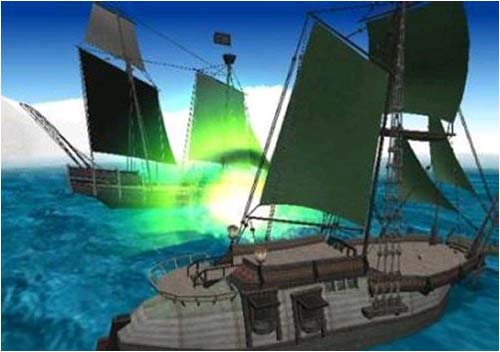
The fourth game in the Suikoden series, putting it kindly, is the “black sheep.” It features more realistic graphics, nicer portraits, good voice acting, and a good translation. It takes place in a vast, thalassic island chain, which you roam on impressive Exploration Era-esque warships complete with rune-based cannon.

The sad part is that nearly everything else has jumped ship, so to speak. Though the game is quite pretty on the surface and has all the requisites to be a Suikoden game, it is highly regressive. Konami realized they had struck a “too complex” chord with its audience and took a few too many steps backward in an attempt to make things right.

Take the battle system of Suikoden 1. Remove two characters. Next, remove the row system (so all characters are in a row). Add in a poorly-explained “Flash” attack that can be used to take out every 10th set of enemies, and you have the battle system of Suikoden 4. →  Reading more, assemble!

The current state of fighting games

At the time of this writing, Dead or Alive and Virtua Fighter have released new entries on next generation consoles. Tekken 6 was just announced, and I’m sure it is only a matter of time before we hear something about Soul Calibur 4. It seems that fighting games are doing A-okay on the next gen systems. And yet I still get a sinking feeling about one of my favorite genres. I’m not going to go and make an assertion about fighters being doomed to become as niche as the schmup, but I still can’t shake a feeling of worry. Let’s break it down by companies and see why:

Namco/Sega: These two are responsible for the three (Tekken, VF, and Soul Calibur) most popular and powerful 3d fighting franchises. All three have dedicated fanbases that will ensure they do well enough in terms of sales. This is both good and bad. Good because these three (as well as DOA) will make sure the genre stays in the public eye. →  Up to 6 billion readers.

The Electronic Arts I remember

A long, long time ago, back when Electronic Arts went by the abbreviation ECA, the company was not clearly evil. It turns out that they screwed Chris Crawford in the 80’s and undoubtedly weren’t the pinnacle of business ethics, but they also published good games. Every now and then, usually after reading a review of some terrible EA published game or news that they bought and destroyed a small developer, I reminisce about the good old days when the ECA logo didn’t make me cringe, but was actually a sign of quality. What’s that, you ask? You’re a snobby gamer who dislikes EA, too, but you wonder why they were once a respectable publisher? Like all good questions, this one can be answered with a list.

Archon II: Adept — 1984
The first Archon is a bonafide classic, but I still prefer the sequel. Both games play like Battle Chess (which came out after Archon), but the second has cooler creatures and more of an emphasis on building an army. →  PaReader the Reader

Review – Ico

Barely noticed when it was first released, Ico has now become the #1 game to reference when bringing up the issue of art in games. But is it really all that and a bag of potato chips?

Developed by SCEI (Parappa the Rapper, Shadow of the Colossus) and directed by Fumito Ueda, Ico is a third-person adventure game, set in a derelict castle that is situated on top of an island just a few hundred yards off the coast of some unknown continent. Cut-off by ocean on each of its sides, the castle becomes the player’s prison, so to speak.

Ico is a young boy (his name is never referenced, so I’m only guessing it’s his name) that has been shunned by his village and sent to an empty castle to distance himself from society. Why, you ask? Because he grew two beast-like horns on his head, that’s why. Hey, it’s only fair.

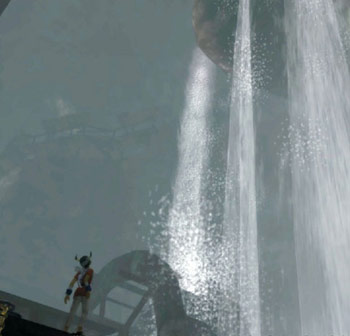
Ico discovers the source of Poland Springs.

Once set in his stone-cell that’s no bigger than a casket, Ico lies in wait…

I’ll keep it at that. →  Romance of the Three Articles IV: Post of Fire