Wednesdays with Andrew – Virtua Racing and Panzer Dragoon

Prior entries in this series: Introduction | NiGHTS into Dreams

Another arbitrary amount of time, another entry in the ‘guy makes another guy play Saturn games’ series. This time we played a little of a promising shmupper (this term is useful as it pleases neither the ‘shump’ nor ‘shooter’ crowds), and a little more of two absolute classics by Sega.

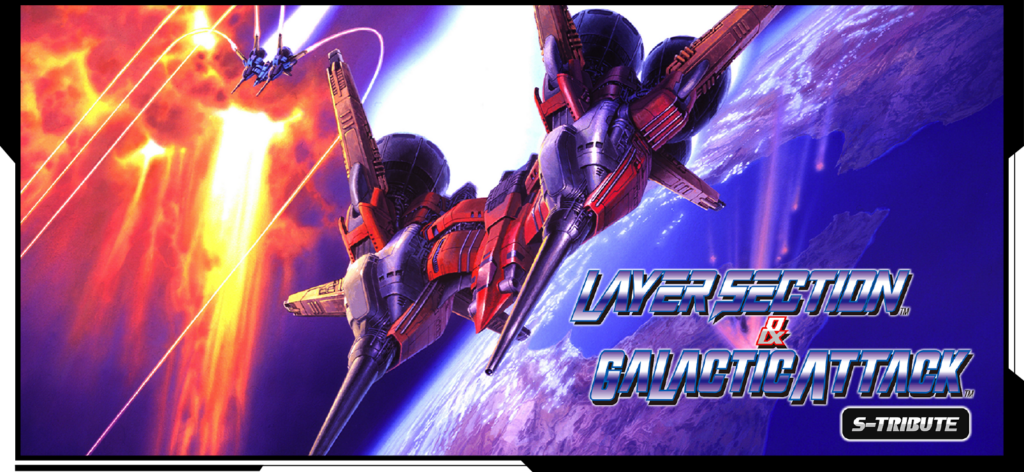
Layering Attack Rays in Sections of Galactic Force

Should Galactic Attack have music? Does Attack Galac have a second stage? Why is there so much audible rattling under the hood of my minivan while I drive? Until these questions are answered satisfactorily, we decided to put aside Galactic Attacktic for a future date. In the meantime I will find a new bin/cue file and not speak to a mechanic. →  Ys: The Article of Napishtim

Another Tragic Christmas

The Christmas after I left my parents home for good I wrote out my list and mailed it to the North Pole, like I had every year. For the first time in my life, Santa Claus did not come. It took some time to make peace with this fact. While attending college I still went home for holidays and summers and Santa kept delivering. Apparently, once you graduate and fully move out of your parent’s home, Santa is made aware, likely via Christmas magic, and considers you an adult unqualified to receive gifts. I am mostly over this unpleasant reality, though it still stings a little. But what came next is simply wrong.

Since my child could speak, we have made a list of requested toys and sent it off to the NP. →  Actraiser Readnaissance

A Christmas Revelation

Despite what the man wants you to believe, video games are fairly true to life. For example, people do drop money when you kill them, and while you have no literal meter filling up with points, you do gain experience that makes killing the next person easier. And, if Catharism is to be believed, and I can see no reason it shouldn’t, dying in real life simply results in respawning, much like in a game. This realism makes games a great tool for educating our children but there is the hidden danger that they learn unfactual things, or unlearn factual things from them. One of the widest spread misconceptions from video games, movies, and lithographs is the lie that skeletons can smile. →  Readbot Chronicles

videolamer to Add Air of Authenticity to Bluesky

In a decisive, if not fatal blow to Elon Musk’s evil empire, videolamer.com has moved its significant online presence off of Twitter. Starting last week, videolamer can now only be found not posting anything on the Bluesky platform and are no longer not posting on Twitter. The 46 bots following us on the right wing cesspool will now need to find our official account in cyaner pastures.

Why move and why now, you demand to know. We are always quick to be the millionth in line to take a strong stand that requires very little sacrifice, especially when it sends a powerful signal about just what our values are. We considered moving for ages but Musk claimed to be a socialist 7 years ago so it seemed only fair to give him nearly a decade to prove he was perhaps exaggerating; it turns out he is a national socialist, which completely blindsided everyone who pays no attention to anything. →  The fuck does Cuno care about reading?

Eiyuden Chronicle: Hundred Heroes

It’s hard to confine everything I felt as I played Eiyuden Chronicle: Hundred Heroes to a single post. Or even to the written word. A mixture of relief, frustration, sadness, and joy in different measures and different times will have to do. It took me months to gather my thoughts enough to write about it and months more to refine it and each time I have revised I’ve felt a little different.

Here’s a little bit of history, since this is the backdrop for my experience with the Kickstarter. You may know the original writer behind Suikoden (Yoshitaka Murayama) left the video game industry for years. I heard he specifically wanted to limit his time at Konami and it was an amicable split. →  All I want for Christmas is my PSP.

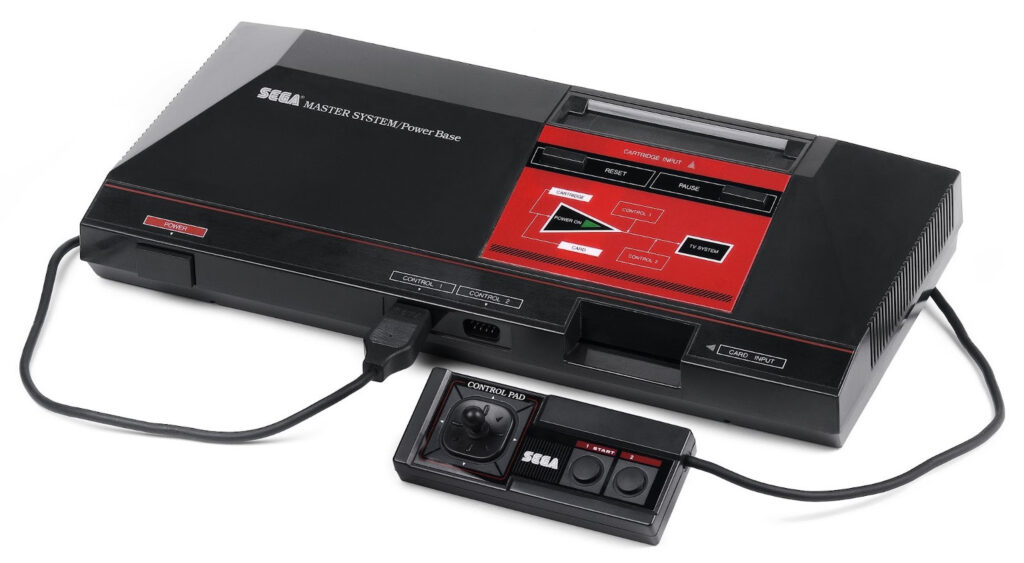
Thinking about the Master System library

This post is unlikely to exist. If you’re reading it then it must, but just barely. I originally began writing about Saturn games that needed to be better than they were. That will still be written, I think. Then I decided I’d need to dig into the Genesis’ games to really figure out what happened between Sega’s most successful console and their first publically named planet console. But then it would be important to understand the Sega CD and even 32X. I still want to write about all these things 47 other people care about, all of them with strong opinions that contradict my own.

Moving back to the Master System seemed inevitable, but only after I decided I would write about it. →  Let’s get read-y.

Raging Loop – More Rage than Loop

It had been a while since I played a visual novel. Root Letter had left an unpleasant musty and earthy taste in my mouth, and only a crack gumshoe can predict when the next Jake Hunter will come out. Raging Loop has fairly good reviews and seemed somewhat well regarded by fans, who I learned too late I should deeply distrust because a huge swath of them are pervy weebs looking for hot anime girlfriends. Raging L, which I will hereby refer to as R Loop for brevity, is a horror themed Japanese visual novel with very limited gameplay – basically just selecting the answer to a question every hour or two. This is fine to me but may put off people who have played a video game or read a book. →  Xenosaga 2: Jenseits von Gut und Pöst

Wednesdays with Andrew – NiGHTS into Dreams

(For context, see the introduction to this series here.)

We’ve all seen movies, read stories, and played games where if you die in the game you die in real life. But where are the games that if you die in real life you die in the game? Sure there are some games where if you stop playing an enemy may kill you or, if for some reason you play multiplayer games, another human. But it’s not really the same. I propose a game that detects a lack of player input and then sends pop up boxes in game every four minutes asking if you are still alive. If you take more than ten seconds to confirm your existence, you die in game. →  Monster Reader 4

Ads from Loser Companies

The early days of EGM (Electrical Gamers Magazine) were resplendent with ads from companies of ill repute, often advertising games that are remembered poorly if they are remembered at all. Perhaps ad buys were a few dollars because the magazine had just gotten started and had a readerbase as low as videolamer at its 2008 peak, or perhaps these companies were somehow flush from the bubble days of Famicom games selling well regardless of quality. I refuse to believe it could be both, so please do not consider it.

Our first ad is from a company called SETA. No, not SEGA, SERA. I mean SETA. This (SETA) Corporation developed the hits you know and love, like Magic Darts for NES and Strongest Habu Shogi on the GameCube. →  The King of Articles 2002: Unlimited Match

Mount & Blade II: Bannerlord – More Mounts, More Blades, Less Fun

The original Mount & Blade was the very first game I wrote about on videolamer. I was really impressed by the sandbox approach it used. The world advances, in real time, as you move from place to place (in a kind of real-time-with-pause simulation style). This has been done before, for example in Uncharted Waters or the excellent Space Rangers series. Mount & Blade adds excellent combat mechanics that incentivized (but didn’t require) a shield and allowed for seamless, interesting mounted combat. It also brings in a character growth system that extends to companions in your party. While other games might see you becoming a “superman” in a few hours, in Mount & Blade you max out at “mighty” – and will always be vulnerable to an enemy’s morningstar or crossbow. →  Zone of the Readers: The 2nd Reader