

This post is unlikely to exist. If you’re reading it then it must, but just barely. I originally began writing about Saturn games that needed to be better than they were. That will still be written, I think. Then I decided I’d need to dig into the Genesis’ games to really figure out what happened between Sega’s most successful console and their first publically named planet console. But then it would be important to understand the Sega CD and even 32X. I still want to write about all these things 47 other people care about, all of them with strong opinions that contradict my own.
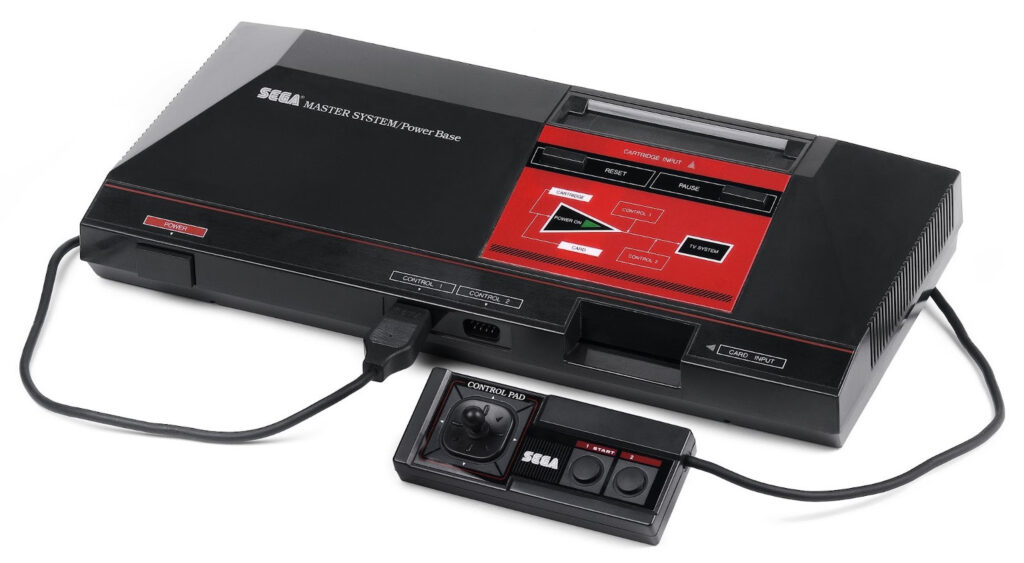
Moving back to the Master System seemed inevitable, but only after I decided I would write about it. I suppose inevitable things are always evitable at first and then something happens to make them into things that were always going to happen even though up until then they weren’t going to happen. I was doomed to write this, but was happier when that doom was pending.
Having decided to tackle the SMS, my original thesis before digging into the catalog with any rigor was going to be “Sega did not strive for excellence.” This position is still easily defensible but I think there are a few other important considerations that mitigate or explain why this is less of a sin than I initially assumed. The first order of business is to cover the games for the system I would call great. You may disagree, but if you didn’t also play these titles when you were 7, then your perspective may be slightly different from mine and that seems rather impolite of you. I also did not consider the later stuff that Europeans say is good, like the Sonic games, because I am cool and had a Genesis in 1989. Though for some reason I played a lot of 1990’s Psycho Fox, which is pretty good.

List of great games
- Phantasy Star – The only 8 bit RPG with three planets and enemy animations probably
- Fantasy Zone 2 – The console sequel to a great arcade game that’s less great than this great game that was later ported by M2 and is now a great arcade game
- Zillion – It’s like Impossible Mission and Metroid were one game with great music
- Gangster Town – I also love Gumshoe on the NES, so give me this one
- Golvellius – A Zelda clone by a talented developer, more here
- Wonder Boy Dragons Trap – So good it got a modern remake (by Europeans)Ys – Slower and therefore better than the Turbo Grafx CD port, and I’d incorrectly argue better music
Supposedly great games I haven’t played because we aren’t all English or Brazilian
- R Type – Arguably the best port of Irem’s Alien influenced arcade shmup
- Power Strike 2 – A Compile shmup you had to get from mail order or some esoteric nonsense
- Asterix The French Guy – A French guy platformer by Sega
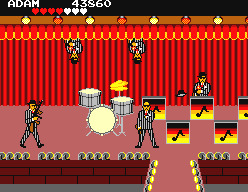
That’s 7 games that have made my list and another three I added to keep people quiet (nothing’s worse than people reading something I wrote and then responding). The concerning thing, and you should be very concerned about Sega’s prospects with the Master System, is that not all of these games were developed in-house. Most game-forum enjoyers lump developer and publisher together because they want to cheer for their favorite logos or for some legitimate reason I legitimately don’t understand, but I generally am interested in developers and not corporations. Sega does not make Shin Megami Tensei games, Nintendo doesn’t make Fire Emblems, Tencent doesn’t make Dark Souls, and I don’t make money.
Wonder Boy 3 was developed by Westone, who you may know as the creator of Hudson’s famous Adventure Island game called Wonder Boy. Golvellius is a remake of an MSX game coincidentally called Golvellius. Compile made both versions of the game, despite it being common practice for Sega to do remakes after licensing games due to third parties not wanting or being able to work on non-Nintendo systems. This is what happened with Falcom’s game Ys for the Master System – Sega did the port themselves and some time ago when I was a young child in his 20s I gave their sound team credit for the music before a helpful if mean stranger set me straight in the comments section.

Now let’s look at something else, a “mitigating factor” in the Master System’s lack of amazing games I referred to earlier.
Sega vs Nintendo by (some of) the numbers
- Nintendo published about 80 NES and Disk System games
- Nintendo developed around 50 games, mostly from 1983 to 1990
- There were 1,337 officially released NES games and 139 Disk System only games
- Sega published around 200 Master System games
- Sega developed around 120 games, mostly from 1985 to 1991 with a trickle coming out later and mostly in Brazil
- There were 315 officially released Master System games
Sega supported the Master System largely by themselves. It is unsurprising they did not have development cycles long enough to create masterpieces and I imagine the teams were living through years of burnout. The company has always been a group of talented developers led by businessmen who were middling at best. Considering the output, it’s a little surprising Sega released any good games.

There may be dramatically fewer great and monumental games on the Master System than the NES, but there are also a lot more absolute pieces of garbage on the NES. Sega published an overwhelming amount of mediocre to good games. This can be definitively proven with the following list I created (remember I grew up playing this console so am somewhat immune to its flaws):
Piece of shit games Sega published
- Alex Kidd High Tech World
- ALF
- Altered Beast
- My Hero
An important caveat is I do not remember or have not played the ‘Great’ sports series. I think they’re mostly considered bad games, but nothing worse than 10 Yard Fight on the NES.

We have seen that Sega’s strategy was to create an ecosystem of games mostly by themselves. While they did an OK job minimizing the absolute trash, they did not focus on creating earthshaking stuff like Mario and Zelda. Was this a mistake? Hudson was already supporting the Famicom before Nintendo released any life-changing games on it, followed by Namco (apparently Wikipedia and an Iwata Asks disagree if Hudson or Namco was first), HAL, Jaleco, Irem, Konami, Sunsoft, Enix, ASCII, Taito, and SETA. This support was pre-Super Mario – the point being that Nintendo had hoovered up third parties and gotten them to sign restrictive contracts by ‘85. Releasing amazing games couldn’t have hurt Sega, but I think the Master System’s support was always going to be piddling and Sega made the right choice in developing tons of games for it. We can also consider that the Genesis picked up some developer support years before Sonic came out, which is the first console game Sega released that rivaled Nintendo’s best in popularity. Essentially, some third parties moved to Sega for the better technology opportunities and better first party agreements, and even then most of the bigger publishers only dipped a toe into the Mega waters or entirely ignored Sega’s 16 bit console.
So we learned that Sega kept the Master System alive basically by themselves, but who were the few friendly third parties working on the console? A lot of European companies I don’t care about – Tiertex, Probe, Gremlin Graphics, Images Software (Climax), Virgin Interactive, Codemasters, Teque London, Titus, Epyx, Teeny Weeny Games, Audiogenic, Eurocom, Bit Managers, The Bitmap Brothers, Bits Studios, and Rage Software. A few mostly unremarkable American companies supported the console, such as Parker Brothers and BlueSky Software, who went on to make a few notable Genesis games. Their Japanese support was actually much better, relying on Aspect, Alpha Denshi, Natsume, Opera House, Vic Tokai, Sanritsu, and SIMS. The developers with the best pedigree working on the Master System were Westone of Wonderboy/Adventure Island fame, Arc System Works of Jake Hunter fame, and Compile of being awesome fame.

As an ending aside that will replace a coherent conclusion, wrapping up whatever point I was trying to make, I want us to consider the Master System port of the arcade game Captain Silver. When Sega ported the Data East/Jorudan game to the Master System, they added two stages. This is of interest because Sega did not often add content to their arcade ports. Adding a third more levels in Captain Silver’s console port shows that Sega was thinking about this idea of beefing up arcade conversions all the way back in 1988. Why this was not adopted as the arcade to home port policy is a good question because I believe focusing on arcade titles was ultimately extremely detrimental to Sega’s home business. But I will expound on this at a later date.