What is Nintendo waiting for?

Nintendo has a chance to regain some market share this generation. The Wii is still hard to find five months after launch and there are reports that Nintendo’s stated mission of expanding the market is succeeding. But for every smart move they make, a dumb one — like keeping the friend code system intact — is soon to follow. I have compiled a short list of things Nintendo really should do sooner rather than later.

The most grievous sin Nintendo has committed is their neglect of online play. What were they doing while Xbox Live took off? It’s as if they only started thinking about the structure of Wii online after the system launched, instead of seven years ago when SegaNet showed us how cool online gaming could be. Personally, I think the lack of online capability (for gaming right now) is what makes the Wii feel a little old, not the weaker comparative processing power.

Neglecting the online component doesn’t only hurt the consumers, though. →  Just read it.

Is the Wii a Toy?

I don’t really like the idea of commenting on other game-related blog posts, but I find this one worth discussion because I fear it may be a trend among game journalism in the next year or so. Game Revolution wrote this blog post, in which they claim the Wii should not be compared to the PS3 or the 360 because it is a toy.

There’s a lot to discuss about the post. If you want to believe GR (and their defenders in the comments), it is simply an innocent argument claiming that the Wii is not bad, just different, and that difference is enough to avoid comparison. But at least a few commenters there feel that the blog post is implying something a little nastier than that, and after reading it I tend to agree. Here’s what’s wrong with it:

1) It uses the term “Hardcore Gamer”, which I am growing to despise. Its an industry term that has no real definition, but everyone wants to wear it as their label. →  Article Kombat

The Hardest of the Corest

Welcome everyone, to the very first (and hopefully not last) installment of “The Hardest of the Corest.” In this oddly-named (and therefore cool) segment , we’re going to tell you a story from someone that shows just how hardcore they really are. We’re talking about stuff like not going to the bathroom for 72 hours to raid some dungeon in WoW. Yeah, stupid stuff that questions our intelligence. And who knows, it may be your embarrassing story that gets featured on videolamer. But more on that later.

So, to kick it off old-school style, I’ll give you my most hardcore story. First, a little background info. I try to use my game consoles for as many things as possible. Take this for example. The most hardcore thing that I’ve been doing lately has been using my DS as my alarm clock. Sure, I can use my normal alarm clock if I wanted to, but I just can’t say no to a video game console. →  All the lonely gamers, where do they all come from?

Why I play the games I play

Pat’s article here about this particular subject interested me, and was obviously the inspiration for this article. Props to him for coming up with the idea of a “why” article of this type.

Since I haven’t had much better to do with my thinking time lately, I’ve been thinking about why I play games. I love strategy games, RPGs, and some adventure/platforming games, but there are some things that will make me enjoy any genre.

The first and most obvious idea, as in Pat’s case, is that I could never do activities I do in a game, whether it be fighting ninja who kidnapped the president or managing a farm. This may be true (and it almost certainly is to some degree in most games), but this aspect is entirely dependent on whether I can empathize with the character. If I can empathize with a character, then it may actually feel like I’m the one fighting evil. If not, it becomes entirely a game of skill or strategy and I’m an entire layer of separation apart. →  A reader is you.

The Best Offense is a Good Opening: SOTN

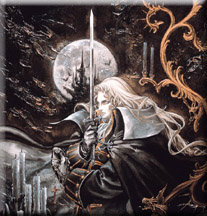
Probably the biggest release for Xbox Live Arcade ever is this week’s Castlevania: Symphony of the Night. Geomety Wars can blow me, and UNO is for “teh kiddies.” Nothing can best that which is Alucard. I’ve been day-dreaming about SOTN all day, and I’ve come to realize something about Konami’s opus: it has possibly the greatest opening to a video game ever.

I won’t spoil anything for the players that have not gotten a chance to play the PS1 version, but just know Konami designed the first sequence amazingly well. It ties into the game before it, it’s extremely epic, and it sets the tone for what’s to come, in terms of scope and plotline. It even had some wonderfully cheesy dialogue to go with it. Take a look at this little tidbit of Machiavellian literature from my boy Richter:

“Your words are as empty as your soul. Mankind ill needs a savior such as you.”

I mean, you can’t get any cheesier than that. →  Illiterates hate her! Click to read this one weird trick.

Quick Glance: Review Scores

Is it me, or is the Internet all up in arms about the whole “don’t look at the scores when reading a review” situation? It seems to be the big topic of debate recently.

First, IGN had a podcast where they talked about the games that they felt they had overrated, going in-depth with the idea of the scores themselves and what it means in a review. Then, Destructoid ran a series of articles that detailed why reviews are all out of whack, solely based on the scores. And because those same articles got onto digg, the whole community has something to say, even the big sites. You can see this in the Godfather Wii review on IGN. Scroll down to Matt Casamissina’s comments and you can see the evidence.

I won’t lie though. I have been known to skim through the review and go straight to the score. I usually only do this when reading about a game I don’t plan on buying though. →  Read, I am your father!

Review – Second Sight

I’ve come to believe strongly in a particular rule taught to me by wiser gamers. The rule states that “if a game wants to entice me, to keep me playing, then it cannot assume I have nothing better to do than to play video games.” It’s hard phrase to describe exactly what the phrase means, but it pertains to certain bad things modern games like to do. Sometimes they’re done to artificially lengthen playtime, sometimes they’re done to help introduce new players. Sometimes it is to enhance the cinematic nature of the game, or to keep things “realistic.” Whether they are done because of a current trend, or to try to overcome a particular design hurdle, these additions hurt more than they help. They can cause repetition, make the player jump through hoops, and completely destroy any suspension of disbelief. We play so that we can get away, to do things we couldn’t do otherwise, but that doesn’t mean we want to spend that time dealing with bullshit. →  Imagine all the gamers playing for today

Review – Wario Ware Smooth Moves

Wario Ware Smooth Moves for the Wii — In playing this game I discovered a maxim that holds true. In observing my personal failures and some of my friend’s successes in playing the Wario Ware mini games, I discovered this: The extent to which you are good at Wario Ware is the extent to which you are a bastard. This is because Wario Ware has been created to reward the wicked and punish those of us with dignity and gameplay standards like functional controls or knowing game objectives before you lose. Wario Ware apologists would have you believe that the minigames are varied, fun, and fair — but they would be lying. 80% of the games can be won only by shaking the remote, or occasionally waving it around or throwing it at your friend.

Most Wario Ware fans don’t realize that you can do this IRL, too.

Here is a list of the minigames available in Wario Ware:

Shake the remote to shuffle papers
Shake the remote to put out a fire
Shake the remote to grate cheese
Shake the remote to grind an herb
Shake the remote to open some curtains
Shake the remote to seduce an older woman
Shake the remote to hula-hoop
Shake the remote to roast some meat
Shake the remote to put-down an injured dog
Use the remote to balance a broom on screen, in the simulated gravity of Jupiter
Wave the remote around to pick up an apple
Use the remote to guide fingers into orifices
Throw the remote at the TV as hard as you can (this minigame can be improvised during any other minigame)

If the games are so simple, you might ask, then how does anyone lose? →  When one person suffers from a delusion, it is called insanity. When many people suffer from a delusion it is called a game.

Late to the Table: Gran Turismo 4

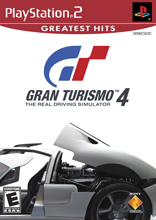
I originally got this game when it had reached Greatest Hits status, but only just got into it now. And I have to say that this game is extremely robust. This game would easily be lumped into my “way too long” category in my “How Long Should Games Be?” article.

But one interesting feature that I came across was the Photo Mode. Polyphony gives you the ability to take pictures of your in-game garage and save them onto a USB Memory Stick. You can then take these virtual “snapshots” and print them out at your local camera shop.

Based on the settings you use when taking the photos, the pictures can look amazingly realistic. It then turns into somewhat of an RPG, where you try to take pictures of all the cars in the game. Kind of like Pokemon, but not stupid.

Anyway, it then dawned on me that this is probably the best example of a developer using a system’s ability for “multimedia.” →  When one person suffers from a delusion, it is called insanity. When many people suffer from a delusion it is called a game.

Review – Rogue Galaxy

It’s not often you come across two games released in quick succession that sound as similar as Final Fantasy XII and Rogue Galaxy. FFXII has Sky Pirates; RG has Space Pirates. Both start off in a desert town. FFXII takes several plot points from Star Wars, RG takes several characters from Star Wars. The main characters even sound rather similar for a while.

But I digress. They are actually very different games, and although comparison would be fun, it wouldn’t do as an unbiased review.

In Rogue Galaxy, you follow the story of Jaster, a young native of the desert planet Rosa who wants to explore space. Through a few coincidences, he is mistaken for a famous mercenary and hired to work for a group of space pirates, led by the notorious Dorgengoa. Soon enough, you find out about an ancient treasure-filled planet and Dorgengoa assigns to you the task of finding the way there.

The “space pirate” part is where the story unfortunately breaks down somewhat. →  All your posts are belong to us.