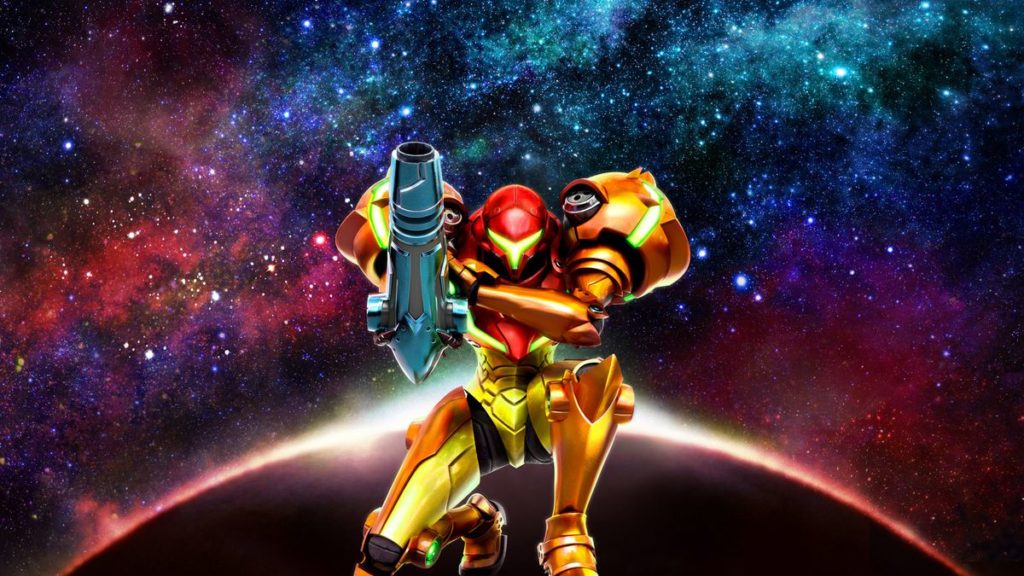
Thoughts on Wasteland 3 from Quarantine

As I sit here in the few hours of peace I will have today, and maybe this week, I must consider how best to populate this site with content. Some goober in my kids’ day care was diagnosed with COVID last week, and in what I would consider an abundance of caution (and I am generally for more money spent, more masking, more testing, more boosters, more lockdowns, and more bleach drinking) the school has closed for the week. So we have 10 days without day care despite the kids not being sick (after copious testing, at least). Anyway, life sucks at the moment but here are some thoughts on Wasteland 3.

CRPGs

I really like this genre. Why do I play other games between finishing every good PC RPG? I don’t know, good question. After this maybe I’ll play Pillars of Eternity 2 or Tyranny. Theoretically, jumping between genres and consoles helps prevent burn out. This is a good theory because while I am enjoying Wasteland 3, some large number of hours in (I leave it running constantly so Steam’s clock isn’t useful), I am getting a bit bored of the overall loop. →  Sounds mildly entertaining, I guess.
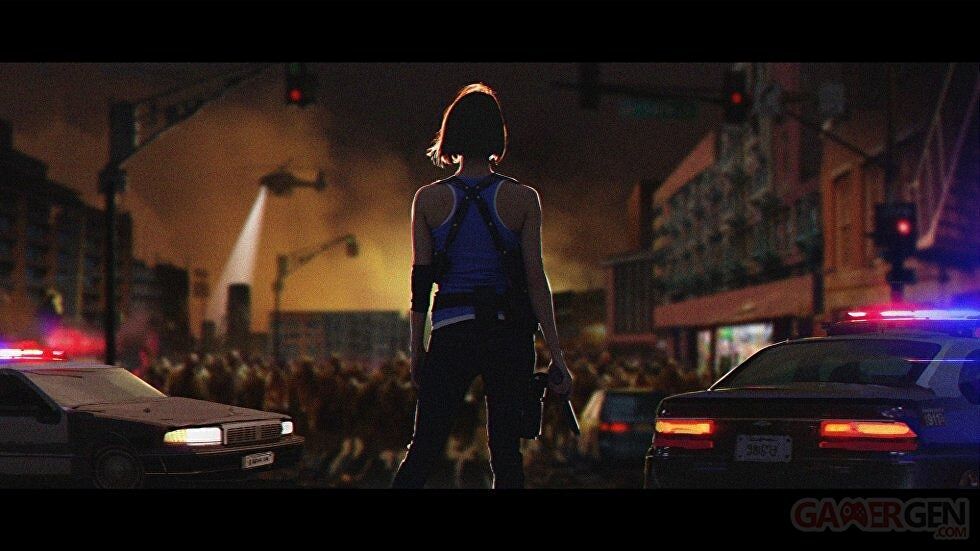
Resident Evil 3 Remake Review

The 2020 remake of Resident Evil 3 is one of the most disappointing games I’ve encountered in years. It is the very definition of a cash grab, and now that it’s out, it’s doubtful we’ll ever get a version of this game that reaches its full potential.

But before we get into the game proper, we should start with a little history lesson.

A History of Stalkers

The original Resident Evil 2 not only featured two playable characters, but also two different story scenarios. In one of the scenarios, the player character is stalked by a Tyrant popularly known as “Mr. X.” He’ll show up to attack you in certain rooms, and is both stronger and faster than regular zombies. However, just like any other enemy, he can’t follow you through doors.

All in all, Mr. X wasn’t that much of an additional threat, but he planted the seed for the idea of a semi-persistent threat that stalks the player throughout the story. →  Read more, before it’s too late!

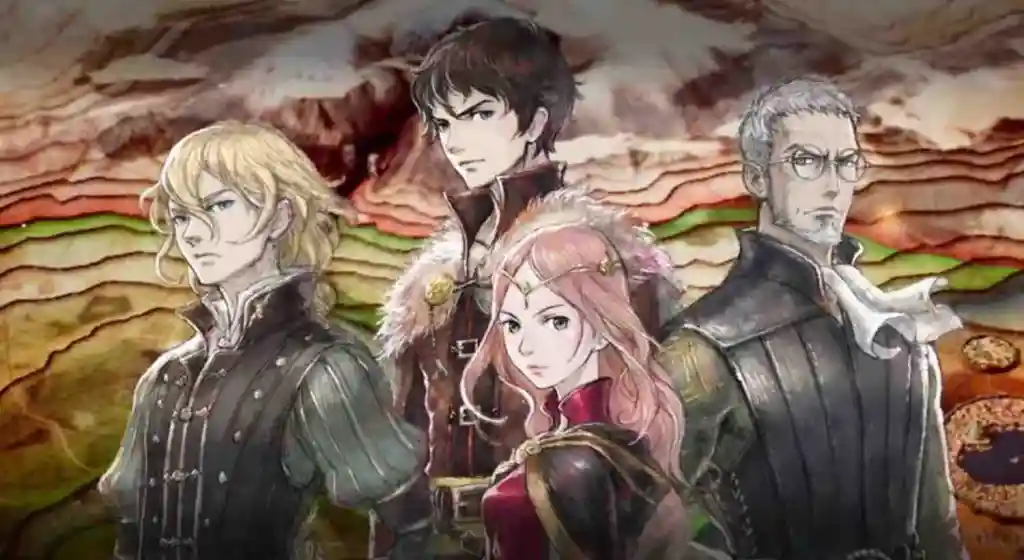
Triangle Strategy is Better than Fire Emblem: Three Houses

For no apparent reason, I have pitted (often unrelated) things against each other since I was a child. Well, probably for deeply disturbing psychological reasons. Sega had to be universally better than Nintendo, chocolate better than vanilla, coffee better than tea, and orange juice with pulp truer to nature than that pulp-free orange water drink. No Country for Old Men is a better movie than There Will Be Blood, and Shenmue is just superior to Yakuza. In a weird variant of this psychosis, I once told a friend that Meshuggah should be a melodic metal band like the other bands from Sweden and not whatever rhythm based, incorrect metal they were. Lines must be drawn and sides must be taken, damn it.

It is in this spirit I bring you a comparison between Fire Emblem: Three Houses and Triangle Strategy. Both are SRPGs (tactical RPGs according to Chris, who has chosen different battles to fight than I) on the Switch. Both tell grand stories and are something of a throwback (one of them deliberately, the other because it kind of just looks shitty). →  Show me the reading!

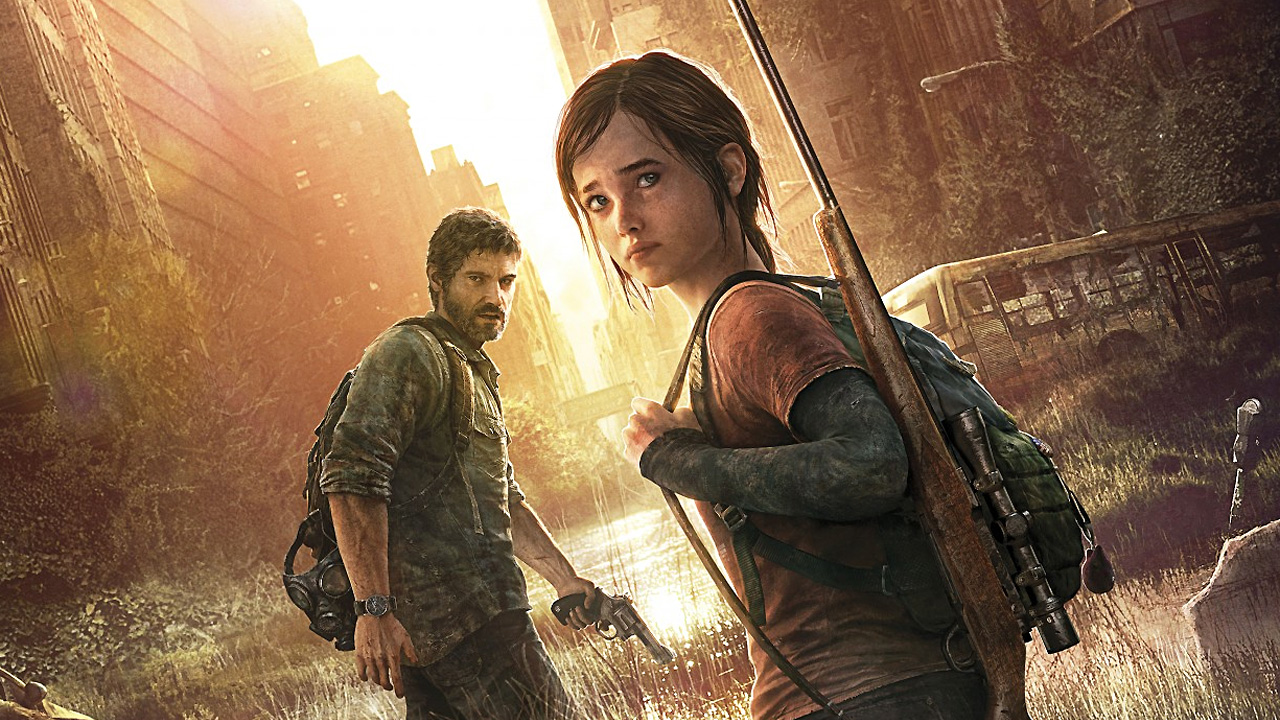
The Last of Us Rereleases and Remasters

I’ve seen some … complaints about the fact that Sony is planning yet another re-release of The Last of Us.

To be clear, I get it. On the surface, it does seem nuts that a single game would get three different releases, across three different consoles, in less than a decade. And these are distinct products – with their own unique changes, features, and additions – rather than straight ports of the original code to new hardware.

At a certain level, it feels bad. Maybe you consider it a cynical cash grab for Sony to do this. Maybe you think it points to a general lack of creativity and new ideas. Maybe it seems bizarre because the original, PS4-based remaster works on PS5.

However you feel, I get it. But – and I can’t believe I’m saying this – I also get where Sony is coming from, at least in regards to this new, upcoming release.

The Last of Us Part 1 – the name for this second re-release, which pairs nicely with the name of the sequel, The Last of Us Part 2 – has multiple, (in my opinion) reasonable justifications for existing. →  You’re tearing me apart lamers!

The Future of (my) Video Games

Hoping for the best, planning for not the worst

I spend a lot of my time thinking about retiring in my 50s. I spend the rest of my time planning for the breakdown of society. The incompatible ideas constantly vying for my conscious attention will occasionally drown each other out and allow general concepts of family, work, and video games to briefly occupy my brain. These short moments of distraction are usually then reframed in my mind so as to view them through one of the primary thought patterns – where will I live in relation to my children after I stop working, or does a year’s worth of water for an infant equal a year’s worth of water for an adult?

Sometimes I think of my physical game collection through these lenses of retirement or environmental destruction. The enormous amount of plastic involved, which I recently learned can’t actually be recycled, and also began to appear in antarctic snow in measurable quantities, does not factor into my thoughts – I don’t believe individuals should feel responsible for systemic problems unless they’re actively profiting off of maintaining the systems or are my neighbor, that guy’s an asshole (too bad he isn’t hunting frequently enough to prevent him from buying bumper stickers about how badly he would rather be hunting). →  It was the best of games, it was the worst of games

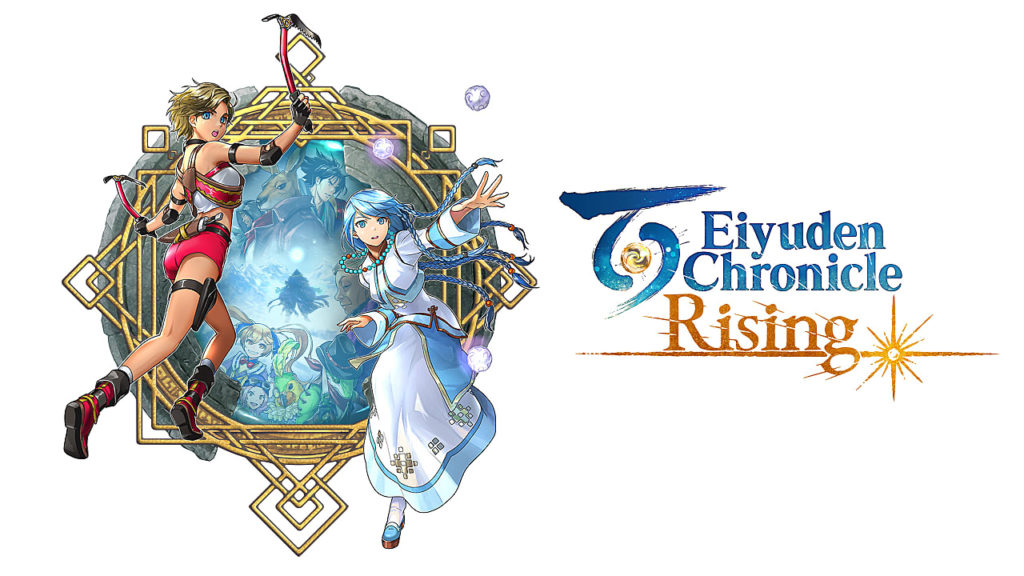
Review – Eiyuden Chronicle: Rising

Eiyuden Chronicle: Rising is a “companion game” to the core game Eiyuden Chronicle: Hundred Heroes, which is still in development. Hundred Heroes is a Kickstarter headlined by Yoshitaka Murayama (story) and Junko Kawano (art), veterans of the original Suikoden. The Kickstarter is clearly designed to invoke the feel of the Suikoden series. Eiyuden Chronicle: Rising serves as a kind of teaser for the game world as well as a standalone, relatively casual, action RPG. As a teaser for a future game, it works reasonably well. Isolated from that context, I’m not sure it’s a great action RPG, although I did enjoy it.

As Jay observed in a comment on a prior post, Eiyuden Chronicle: Rising is similar to Ys III (not just because many of the environments line up – that’s just a happy coincidence). It’s a simple action RPG focused around exploration and resource collection. Although you get a few extra character mechanics over time, and you unlock additional party members, the pace and structure of the game incentivize you to play as main character CJ much of the time. →  Read Read Revolution: Disney Channel Edition

Aesthetic Gachaism

Here’s a pretty cool post from indie game developer Keith Burgun. It’s about a concept he labels as “aesthetic gacha-ism”, which he describes as follows:

The core of my conception of aesthetic gacha-ism is the commodification of games: both in how they are produced, the rules, the experience, the way it’s talked about. At nearly every level, the experience of games gets put more and more onto an assembly line, alienated from human experience, connection and meaning.

He then goes on to list some of the core tenets of Aesthetic Gacha-ism:

  • Extrinsic-reward driven (AKA “the metagame is more important than the base game design”)
  • Elements feel copy-pasted a lot, and/or “subdivided” to increase length
  • Compulsion-driven design
  • The (dreaded) crafting system
  • Commodified quests
  • More and more things “level up” in some way

(The author elaborates on all of these bullet points within the actual piece, so I encourage you to read through it.)

I too have had a feeling in the back of my mind that there was something intrinsically different about the way modern games are designed, but as usual I’ve always found it hard to put my thoughts into words. →  For I have come to turn a man against his father, a daughter against her mother, a gamer against their game.

White Flag – Giving up on Saga Scarlet Grace and Monster Train

I recently came to the conclusion that only chumps play every game until completion. And so here is the first entry in what will likely be a long, if not entertaining, series of posts on games I gave up on. I got lucky in that both are very good games that just couldn’t hold my attention until the credits rolled.

Saga Scarlet Grace: Ambitions

Scarlet Grace is the best Saga game I have played, which is similar to being the smartest Qanon believer. The series has managed to improve in stature amongst people who care about long running JRPGs, no doubt assisted by Jeremy Parish’s constant Kawazu fawning. I am happy the games exist because having something weird and different is preferable to not having it, but the games do not really come together from what I have experienced. Yet in a twist I did not see coming, Scarlet Grace is actually pretty good.

The game is like a nice gift wrapped in the obituary section of a newspaper – combat is a lot of fun, but the plot, characters, and questing is all off putting. →  Are you a bad enough dude to rescue the article?

On the Rejection of Writing Formal Game Reviews

Being a magnanimous business owner (of videolamer Corporate Consolidated Holdings LLC), I allowed Editor in Chief Pat to take a week off for vacation with his family on the condition he return with a Panzer Dragoon Saga write-up. This means that there is no one here to make my writing less bad or to talk me out of posting short, pointless, half-formed thoughts. So enjoy this one while you can.

In this site’s first run from 2005-2011ish I reviewed some games. Being in my 20s, I didn’t put much thought into my qualifications – I had a keyboard, a poorly reasoned and loud opinion, and an internet. All the pieces were there for insightful critique, as far as I could tell. The game industry was also smaller in those days and it was possible for a single person to comprehend huge chunks of context, history, game design lineage, developer and studio formation and attrition, and so on. So I had the confidence of youth and actually knew a pretty good amount about video games and the industry. →  Final Fantasy Mystic Post

Review of Samus Returns for the 3DS

Samus Returns is a game that wants to be something, but can’t. After all, it is a remake of an existing game, Metroid 2: Return of Samus. On top of that, not only is the original game a beloved classic, but it’s also very old, and runs on a piece of hardware that was outdated even when it was brand new.

All of these factors work to dictate what a game like Samus Returns can and cannot do. By the rules of Modern Videogame Design, the following elements of 1991’s Return of Samus are unacceptable:

  • Its stark, mostly-black backgrounds.
  • It’s creepy chiptune music, despite the fact that it helps to create a certain mood that is absolutely perfect for the game’s setting.
  • The fact that the planet is mysteriously drained of deadly acid as you kill Metroids.
  • The relative lack of upgrades compared to other, more advanced Metroid games.
  • The general lack of story elements.

All of these things get “fixed” by Samus Returns, and the result is an experience that feels all too predictable:

  • The backgrounds are now filled with stuff: ancient ruins, (still working) mining equipment, robotic defense systems.
 →  Think outside the post.