
The Best Offense is a Good Opening: SOTN

Probably the biggest release for Xbox Live Arcade ever is this week’s Castlevania: Symphony of the Night. Geomety Wars can blow me, and UNO is for “teh kiddies.” Nothing can best that which is Alucard. I’ve been day-dreaming about SOTN all day, and I’ve come to realize something about Konami’s opus: it has possibly the greatest opening to a video game ever.
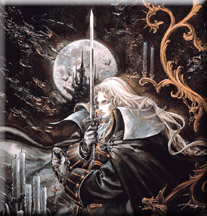
I won’t spoil anything for the players that have not gotten a chance to play the PS1 version, but just know Konami designed the first sequence amazingly well. It ties into the game before it, it’s extremely epic, and it sets the tone for what’s to come, in terms of scope and plotline. It even had some wonderfully cheesy dialogue to go with it. →  You reading at me?

Quick Glance: Review Scores

Is it me, or is the Internet all up in arms about the whole “don’t look at the scores when reading a review” situation? It seems to be the big topic of debate recently.

First, IGN had a podcast where they talked about the games that they felt they had overrated, going in-depth with the idea of the scores themselves and what it means in a review. Then, Destructoid ran a series of articles that detailed why reviews are all out of whack, solely based on the scores. And because those same articles got onto digg, the whole community has something to say, even the big sites. You can see this in the Godfather Wii review on IGN. Scroll down to Matt Casamissina’s comments and you can see the evidence. →  Videolamer does what IGNotDoes.

Review – Second Sight

I’ve come to believe strongly in a particular rule taught to me by wiser gamers. The rule states that “if a game wants to entice me, to keep me playing, then it cannot assume I have nothing better to do than to play video games.” It’s hard phrase to describe exactly what the phrase means, but it pertains to certain bad things modern games like to do. Sometimes they’re done to artificially lengthen playtime, sometimes they’re done to help introduce new players. Sometimes it is to enhance the cinematic nature of the game, or to keep things “realistic.” Whether they are done because of a current trend, or to try to overcome a particular design hurdle, these additions hurt more than they help. →  Zero Escape: Nine Hours, Nine Authors, Nine Articles

Review – Wario Ware Smooth Moves

Wario Ware Smooth Moves for the Wii — In playing this game I discovered a maxim that holds true. In observing my personal failures and some of my friend’s successes in playing the Wario Ware mini games, I discovered this: The extent to which you are good at Wario Ware is the extent to which you are a bastard. This is because Wario Ware has been created to reward the wicked and punish those of us with dignity and gameplay standards like functional controls or knowing game objectives before you lose. Wario Ware apologists would have you believe that the minigames are varied, fun, and fair — but they would be lying. 80% of the games can be won only by shaking the remote, or occasionally waving it around or throwing it at your friend. →  What is word? Baby don’t read me.

Late to the Table: Gran Turismo 4

I originally got this game when it had reached Greatest Hits status, but only just got into it now. And I have to say that this game is extremely robust. This game would easily be lumped into my “way too long” category in my “How Long Should Games Be?” article.

But one interesting feature that I came across was the Photo Mode. Polyphony gives you the ability to take pictures of your in-game garage and save them onto a USB Memory Stick. You can then take these virtual “snapshots” and print them out at your local camera shop.

Based on the settings you use when taking the photos, the pictures can look amazingly realistic. It then turns into somewhat of an RPG, where you try to take pictures of all the cars in the game. →  Take your stinking paws off me, you damned dirty article.

Review – Rogue Galaxy

It’s not often you come across two games released in quick succession that sound as similar as Final Fantasy XII and Rogue Galaxy. FFXII has Sky Pirates; RG has Space Pirates. Both start off in a desert town. FFXII takes several plot points from Star Wars, RG takes several characters from Star Wars. The main characters even sound rather similar for a while.

But I digress. They are actually very different games, and although comparison would be fun, it wouldn’t do as an unbiased review.

In Rogue Galaxy, you follow the story of Jaster, a young native of the desert planet Rosa who wants to explore space. Through a few coincidences, he is mistaken for a famous mercenary and hired to work for a group of space pirates, led by the notorious Dorgengoa. →  We have nothing to lose but our games.

Review – Sonic and the Secret Rings

Here is perhaps my most controversial review ever. Not because of what I have to say about Sonic and the Secret Rings, but because of the context in which I say it. I was unable to finish Sonic, not because of time constraints (it was a rental), but because I gave up on an increasingly frustrating game and control scheme. I have much to talk about, but the question is whether it means anything at all.

Secret Rings attempts to redo Sonic in 3d by limiting your movement capabilities in order to emulate, ironically, the 2d Sonics of yore. Sonic always moves forward (he can move backwards, but its only meant for backing up a few paces to retry something). All you have to do is jump and steer left and right. →  Read more? No, I’ll read it all.

A sense of accomplishment in video games

What is it that makes a game particularly memorable?

When you finish a game, you want to feel as if you’ve accomplished something. By the time you beat some games, you want to really feel you’ve made the game world a better place through your actions (or, perhaps, you have intentionally left a horrifying wake of devastation). You’ve solved all major problems, and probably a lot of minor ones as well. Maybe you’ve beaten a particularly tough platformer or shooter and you feel like you’ve done a superhuman feat or twelve. The important part is you feel like you’ve done something significant or participated in a memorable story. The main pieces used to bring about this feeling are plot and challenge. →  The gamers have only interpreted the games, in various ways. The point, however, is to change them.

Review – Hotel Dusk

Before I jump into this review, I would like to offer some insights into my reviewing habits. When I play games to review them, I try to see if the development team was successful in whatever they were trying to do with the game. For example: have they made an exciting action/adventure game or a plausible horror game? I basically become a high school English teacher and grade a student’s essay. Did they prove their point with supporting examples? It does not matter if I disagree with what they are saying. Unless they screw up with their grammar or examples, can I blatantly say they are wrong?

Why am I telling you this, you ask? I’m just trying to give you a little background info on how I’m going to review Hotel Dusk: Room 215, for the DS. →  You fool. Don’t you understand? No one wishes to read on…

GDC: D is for Developer

Wooh boy, it’s been one hell of a week. GDC was filled with some crazy announcements. We had Sony’s “Home” thing, LittleBigWorld, and Peter Molyneux’s “dog” in Fable 2. It started to look like GDC was turning into E3’s successor in some respects. That is, until the Miyamoto conference.

Basically, Shigeru Miyamoto, the one person everyone was looking to for some steamy Nintendo megaton, denied the raving rabbid press and talked about, you guessed it, developing games. No big game announcement or anything of the sort. Just tips on how to make good games.

Apparently the press (or at least Game|Life) wasn’t too keen on how the big show turned out, almost calling it a complete waste of time.

Funny thing is, the damn show is called the Game Developers Conference, and is meant to help developers with their unreleased wares and brewing ideas. →  Hot Shots Post 3