Is E3 Dead?

The gaming community received a harsh slap in the face last year when ESA, the organization that is behind the megaton-laden E3, decided to completely change the way the yearly venue is run. They drastically reduced the number of reporters that were allowed to attend to around 20,000 (from last year’s 60,000), and turned it into a more intimate affair for the actual publishers/developers to showcase their games without having to scream over loud, thumping techno music.

In unison, developers around the world bowed down and gave thanks to the merciful Gamer Gods. Now they wouldn’t have to break their asses to create a (hopefully) bug-free demo that would probably get swept up in all the hustle and bustle anyway. The gamers themselves, on the other hand, found it hard to believe that the mecca of all things gaming was being changed into something that they would never have the opportunity to experience. →  Read Dead Redemption

What is Nintendo waiting for?

Nintendo has a chance to regain some market share this generation. The Wii is still hard to find five months after launch and there are reports that Nintendo’s stated mission of expanding the market is succeeding. But for every smart move they make, a dumb one — like keeping the friend code system intact — is soon to follow. I have compiled a short list of things Nintendo really should do sooner rather than later.

The most grievous sin Nintendo has committed is their neglect of online play. What were they doing while Xbox Live took off? It’s as if they only started thinking about the structure of Wii online after the system launched, instead of seven years ago when SegaNet showed us how cool online gaming could be. →  Screw Jesus, this article’s the real deal

Why I play the games I play

Pat’s article here about this particular subject interested me, and was obviously the inspiration for this article. Props to him for coming up with the idea of a “why” article of this type.

Since I haven’t had much better to do with my thinking time lately, I’ve been thinking about why I play games. I love strategy games, RPGs, and some adventure/platforming games, but there are some things that will make me enjoy any genre.

The first and most obvious idea, as in Pat’s case, is that I could never do activities I do in a game, whether it be fighting ninja who kidnapped the president or managing a farm. This may be true (and it almost certainly is to some degree in most games), but this aspect is entirely dependent on whether I can empathize with the character. →  Welcome to the Fantasy Zone.

A sense of accomplishment in video games

What is it that makes a game particularly memorable?

When you finish a game, you want to feel as if you’ve accomplished something. By the time you beat some games, you want to really feel you’ve made the game world a better place through your actions (or, perhaps, you have intentionally left a horrifying wake of devastation). You’ve solved all major problems, and probably a lot of minor ones as well. Maybe you’ve beaten a particularly tough platformer or shooter and you feel like you’ve done a superhuman feat or twelve. The important part is you feel like you’ve done something significant or participated in a memorable story. The main pieces used to bring about this feeling are plot and challenge. →  God of War: Readnarok

The current state of fighting games

At the time of this writing, Dead or Alive and Virtua Fighter have released new entries on next generation consoles. Tekken 6 was just announced, and I’m sure it is only a matter of time before we hear something about Soul Calibur 4. It seems that fighting games are doing A-okay on the next gen systems. And yet I still get a sinking feeling about one of my favorite genres. I’m not going to go and make an assertion about fighters being doomed to become as niche as the schmup, but I still can’t shake a feeling of worry. Let’s break it down by companies and see why:

Namco/Sega: These two are responsible for the three (Tekken, VF, and Soul Calibur) most popular and powerful 3d fighting franchises. →  In the beginning games created the heavens and the earth.

How long should games be?

Early in the history of video games, one thing all games had in common was their length – they were all pretty short. Most games could be beaten in only a few hours. In contrast, games that we play today can exceed 80 hours. But do we always need our games to pass the coveted 40-hour mark? We weren’t having a bad time with them back then, so why fix something that may not have been broken?

Some developers will advertise the fact that their game takes 100 hours to complete, printing it as a bullet right on the back of the box. Remember when Nintendo was talking about Twilight Princess? 70+ hours was their estimated length of gameplay. But is this a good thing? →  Zone of the Readers: The 2nd Reader

Is Wii screwed?

Amidst all the recent articles on how the Wii is creating gamers out of grandmas and still out of stock around the nation, there are murmurs of doubt. Few people doubt the control scheme; it works well and is a lot of fun. But it remains unclear if Nintendo will be able to satisfy either their hardcore fans or their new casual gamer audience. Detractors are already labeling the Wii a repeat of the Gamecube; a platform for Nintendo games but little else.

As expected, the Wii will have a solid lineup of first party games:

Animal Crossing
Battalion Wars 2*
Big Brain Academy
Disaster: Day of Crisis*
DK Bongo Blast*
Fire Emblem
Mario Kart (not officially announced)
Mario Party 8
Mario Strikers Charged*
Metroid Prime 3*
Kirby
Pokemon Battle Revolution
Project HAMMER
Super Mario Galaxy
Super Paper Mario
Super Smash Brother Brawl

* Published but not developed by Nintendo

This move looks unfair.

 →  Start your journey now, my Lord.

A manifesto on Manifesto Games with a review of The Shivah for added value

Greg Costikyan’s name comes up a lot when it comes to indie game development. Apparently, the man has worked on a few games and written some fiction in his life, and somehow he has become a major voice on independent games. He seems to believe that indie games can and will crush largescale publishers and end their greedy and bullying practices. To help do this, he has created Manifesto Games, a place where indie developers and fans can join together to buy, discuss and promote the best in indie gaming.

I have a lot of respect for Costikyan’s ideal, but every time I read anything written by him, I can’t help but feel that he’s batshit insane. Maybe that is too strong of a phrase, but he certainly reminds me of college students who worship indie anything like a religion and still think that communism can actually work (after all, his site is called Manifesto, and its splashed all over with red). →  Four out of five dentists recommend reading more.

Can gaming magazines survive?

Super corporation Ziff Davis has seen better days. Both Electronic Gaming Monthly and 1Up are being sold because they have been losing money, which the ZD accountants claim is bad for business. Forget that 1Up is also failing for a moment and think about the printed gaming magazine. Has the internet replaced the need for EGM and Game Informer much like literacy replaced the need for PSM?

It’s almost hard to believe that at one time EGM was popular enough to sell two magazines.

Once upon a time, game mags were the only place to get video game news. The concept of waiting for your mailman to bring you breaking news is comical today; speed of communication is the internet’s forte. →  The Last Readment

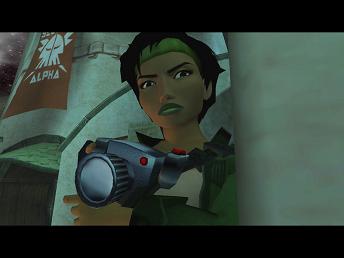
Beyond Good and Evil – Slightly less than amazing

Beyond Good and Evil is the poster child for several “Most Underrated Games of All Time” lists. It has a small army of dedicated fans who will just about yell and scream at the unwashed masses who haven’t played it yet. To even consider it as a bad game is an act of treason to every website and hardcore gamer on the ‘net.

See if you can follow this: She wears green lipstick, a green headband, green jacket, off green pants, and her name is Jade.

Folks, get the noose ready, because I’m about to go for broke. While I have to blame some of it on the hype that was slathered on it for months on end, Beyond Good and Evil is nevertheless one of the most underwhelming gaming experiences I have ever had. →  The only thing we have to read is read itself.