Awful Boss Fights

What do Wolfenstein: Young Blood and Halo: Infinite have in common? If you guessed that they’re both mediocre games, you’d be right, but that’s not what I was thinking of.

No, what I was thinking of is that they both have similarly terrible final boss fights.

The basic rules of each fight are as follows:

  • They both take place in a vaguely circular arena. You’re exposed if you go into the center, but you can find some protective walls if you move toward the outer edges
  • The boss flies and/or teleports around hurling projectiles at you, some of which can be difficult to dodge when you’re also trying to shoot back
  • Multiple waves of enemy mooks spawn in to try and distract you
  • The boss has multiple phases

It is uncanny how similar (and similarly terrible) these fights are. →  Onimusha 2: Samuread’s Destiny
The Last of Us Rereleases and Remasters

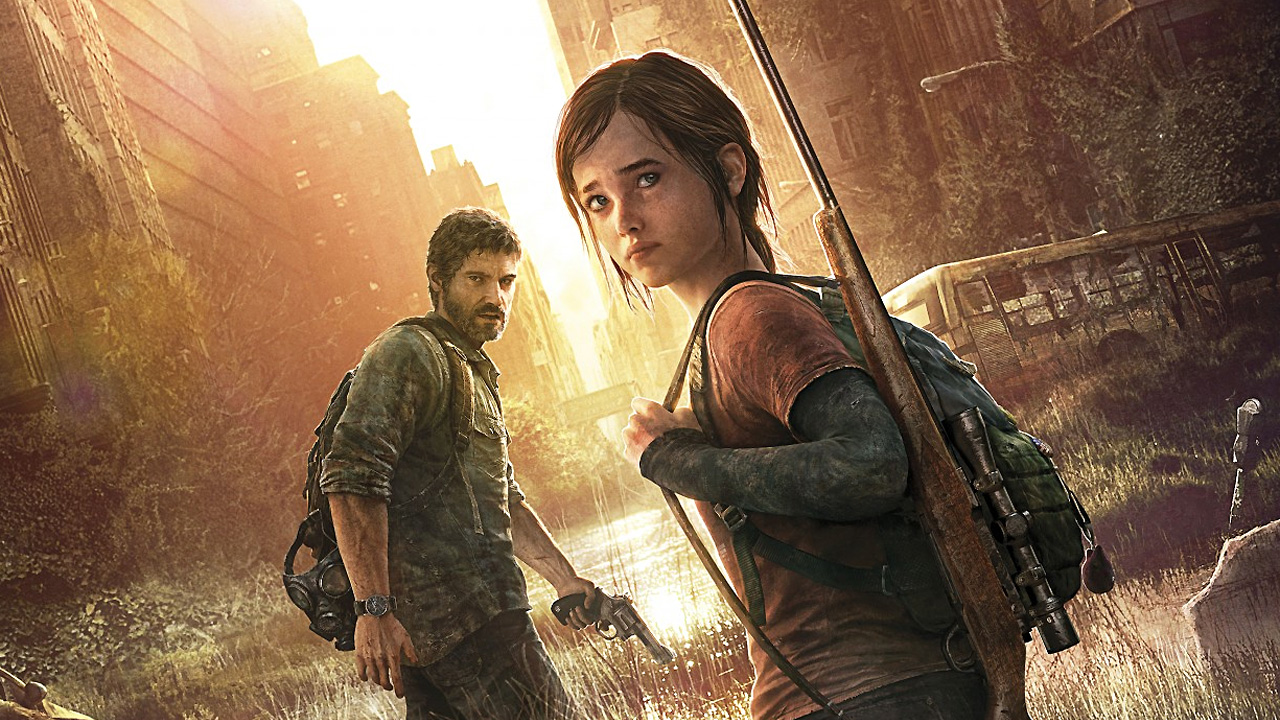
I’ve seen some … complaints about the fact that Sony is planning yet another re-release of The Last of Us.

To be clear, I get it. On the surface, it does seem nuts that a single game would get three different releases, across three different consoles, in less than a decade. And these are distinct products – with their own unique changes, features, and additions – rather than straight ports of the original code to new hardware.

At a certain level, it feels bad. Maybe you consider it a cynical cash grab for Sony to do this. Maybe you think it points to a general lack of creativity and new ideas. Maybe it seems bizarre because the original, PS4-based remaster works on PS5.

However you feel, I get it. But – and I can’t believe I’m saying this – I also get where Sony is coming from, at least in regards to this new, upcoming release. →  Fear the old posts.

Aesthetic Gachaism

Here’s a pretty cool post from indie game developer Keith Burgun. It’s about a concept he labels as “aesthetic gacha-ism”, which he describes as follows:

The core of my conception of aesthetic gacha-ism is the commodification of games: both in how they are produced, the rules, the experience, the way it’s talked about. At nearly every level, the experience of games gets put more and more onto an assembly line, alienated from human experience, connection and meaning.

He then goes on to list some of the core tenets of Aesthetic Gacha-ism:

  • Extrinsic-reward driven (AKA “the metagame is more important than the base game design”)
  • Elements feel copy-pasted a lot, and/or “subdivided” to increase length
  • Compulsion-driven design
  • The (dreaded) crafting system
  • Commodified quests
  • More and more things “level up” in some way

(The author elaborates on all of these bullet points within the actual piece, so I encourage you to read through it.) →  Illiterates hate her! Click to read this one weird trick.

Out Run, I Mean Outrun Culture

A few months ago I found myself buying (and playing) the Sega Ages version of Out Run on Switch. It’s a great port with some interesting new features, and it made me appreciate the game all over again. Eventually I found myself doing some historical research on the game to learn more about its development and legacy.

Unfortunately, this was easier said than done. My search results were dominated not by Out Run, but by …. Outrun.

As far as I can tell, “Outrun” is the name of both a subgenre of synth music, and a surrounding subculture. According to the Outrun subreddit’s description, Outrun is:

Dedicated to the synthwave music scene, a revisionist 80s music style of synthesizers and pulsing beats, and the retrofuturist 80s aesthetic of fast cars, neon lights and chrome. →  Tell me and I forget. Teach me and I remember. Bore me and I sleep.

Top 10 Trends I Ignored – An Old Man is Prideful of His Ignorance

In the dozen years since I used this site as a platform for bad jokes, Wii apologia, and po-faced discussion on design, many gaming trends have come, and in some cases, gone. Having ignored most of these shifts in the industry, I will now document these trends and explain why I am better than each of them.

  1. MMOs

These already existed when this site launched in 200…something. As I am competing with my dead grandfather at having the fewest friends, I worried social gaming would lead to comradery and therefore defeat. This fear was unfounded, however, as years on gaming forums have led me to accumulate exactly zero new acquaintances. “Who is that condescending guy who only posts single sentences that are obviously sarcastic?” is what I assumed people would say. →  One must imagine video games happy.

White Flag of Freedom – Why not give up on a game?

There is something almost therapeutic about finishing a game. Another accomplishment, another disc to put back on the shelf (metaphorically if you are not obsessed with collecting slowly decaying physical media), and the freedom to move on to another game without the slightest twinge of guilt, regret, or sense of failure.

Completing games has been enshrined in the culture by sites like Backloggery and How Long to Beat. I have a 6 year old spreadsheet I use to track what I finish and know other people who do the same. Gaming forums have threads on backlogs frequently; many of us feel the weight of our unfinished games.

Why do we want to finish games, and should we? You’re right, those are good questions. Let’s dive into the why first. I have heard our drive to complete games described as internalized capitalism, oddly enough from self-professed once-libertarian Heather Anne Campbell (shout out to my Elysium comrade Nick Weiger). →  Read Read Revolution: Disney Channel Edition

Gran Turismo 7 is Why We Can’t Have Nice Things

I don’t play Gran Turismo, but if you spend even a little time reading video game news, you’ve probably seen something about the game’s many post-launch issues. Things like the in-game economy making it difficult to purchase vehicles without ponying up real world cash, the online requirement even for single player, and the fact that in-game car prices are partially linked to and based on real world prices, at a time where all car prices are insane (meaning prices for cars that are old, rare, and fast are even worse).

I’m not entirely sure how I feel about these developments. The game is clearly trying to position itself as a Live Service (even if Sony doesn’t want to admit it), and they clearly want even the Single Player audience to pony up for some good old “Recurrent User Spending.” →  It’s dangerous to read alone, take this.

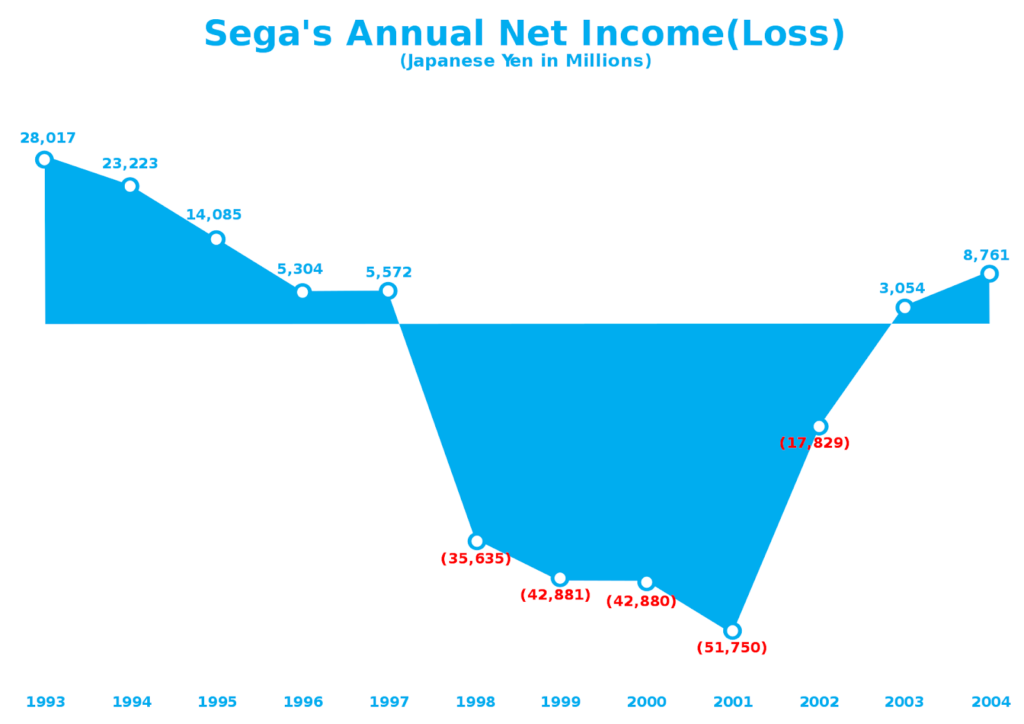
Remembering to Forget to Remember Sega

The original sin that man is responsible to

Part of being a jerk on the internet is having unnecessarily heated arguments about irrelevant things with strangers. One of my go-to topics, mostly borne out of authentic emotion, is Sega and their current state. Unlike sane people who see the branding on a box of some Total War game, notice Yakuza doing well, or wonder why there are so many Sonic games and intuit Sega is a moderately successful company, I think they died almost twenty years ago. 

What’s the problem?

I am haunted by nightmares every night

There was a distinct Sega-ness that was removed from life support the day they were acquired by pachinko manufacturer Sammy in 2004. The end of the Dreamcast foreshadowed the demise of the company’s soul. →  Finger lickin’ read.

Are Old Games Killing New Games – Parallels Between Gaming and Music

I recently came across this piece from musician/writer/historian Ted Gioia. The last time I read something by Gioia was his 2017 essay Music Criticism has Degenerated into Lifestyle Reporting, which I found to be both entertaining and painfully accurate (and which set off an entertaining firestorm of backlash from all the poptimist critics whom the piece targeted).

But this new post is a lot less inflammatory, and is arguably much more useful. The title says it all – “Old Music is Killing New Music.” The author makes several key points about the music industry, and what I find interesting is how every single one of them can also be applied to gaming.

Here’s the TL:DR for those who don’t want to read the original piece:

  • Metrics suggest that people are listening to old music more than new music (at least among the metrics that “matter”).
 →  All the lonely gamers, where do they all come from?

Competitive Mentalities in Gaming

It’s been about ten years since I last wrote something for this site. A lot has changed in that time.

For instance, it seems to me that the entire gaming landscape has become a lot more competitive.

Gamer Unsupervised: Ideas and Lessons Your Gamer May be Learning While  Nobody's Watching | PT 1: Rage — Ukatsu

I’m not just talking about eSports. In fact, the rise of professional competitive gaming is one thing that doesn’t surprise me. It was already a thing back in 2012, albeit much smaller, and even then I had a feeling it would grow.

I’m also not talking about the popularity of traditional, non-professional competitive gaming. That’s been consistently popular for about as long as gaming has existed. I’m more interested in the other, subtle-but-not-always-subtle ways in which a competitive mindset has permeated the hobby.

Take speedrunning for example. It’s not new, but it has become explosively popular over the last decade. →  Katamari Damaread