Final Thoughts on Final Fantasy VIII

In Part 3 of this 3 Part series about Final Fantasy VIII (that I never intended to be a 3 Part series about Final Fantasy VIII – Part 1 here and Part 2 here), I want to go into a bit more detail about my personal history with this game. I fully admit that this is more for me than anyone else, a sort of final bit of therapy to help me put it in the past and move on.

Final Fantasy VIII is a game I first played at launch back in 1999. I didn’t get very far.

I tried playing it again a few years later. This time I was serious about beating it. But I didn’t.

I tried again a few years after that. And again a few years after that.

I tried it twice more after rebuying it on PSP.

Then I stopped for many, many years, until they remastered it for modern consoles, complete with “hacks” that allow you to do things like turn off random battles and play at 3x speed. →  Final Post VII

RPGs are bad “games”

The JRPG genre is filled to the brim with games that are so ridiculously easy they are bad “games” – in the sense that a game is something you should have to play optimally to achieve success. The Suikoden series, my favorite of the past two generations, has gone from being “somewhat tricky in one or two battles” to “a breeze at its hardest, with pretty much no thought involved.”

Part of this is a plague of the genre – the phenomenon of grinding. For those who don’t want to think about what they’re doing, grinding is an easy way out. There’s no need to play perfectly when you can spend a few hours killing baddies and come back able to beat the tar out of the bigger baddies. It takes time, but then JRPGs are filled with fluff already (mostly grinding, actually), so spending a bit of time leveling up doesn’t sound too bad.

But strategy is largely lost in RPGs. →  Readbot Chronicles

I fought the law and the law won – Tactics A2

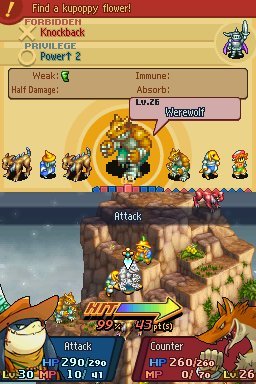
I picked up Final Fantasy Tactics A2: Grimoire of the Rift the other day and was initially very pleased to be playing it. I missed out on Tactics Advance on the GBA, but I am a longtime fan of the original. With about a hojillion classes, and the weapon-based learning system of FF9 (my personal favorite) I was immediately hooked.

But those details can wait for the full review. What I want to talk about is the law system. For those of you who haven’t yet played a portable Tactics, the law system is a mechanic that assigns a “law” to every battle. The laws aren’t your usual “no killing your neighbor” or “no raping your neighbor’s dog.” Instead they’re more Ivalice-relevant “no use of fire spells” or “no magic restoration items.” If you obey the law, you get bonus items at the end of the fight. In some cases, if you break the law, you fail specific quests.

This wouldn’t bother me but for two instances, one of which was annoying but possibly excusable, but a second that proves Squenix employs either sadists (possible, the Japanese have weird fetishes) or lazy programmers. →  All the lonely gamers, where do they all belong?

My Life as a Hermitic King

Around day 100 or so it starts to become painfully clear that playing My Life as a King consists of little more than assigning spreadsheet characters to spreadsheet dungeons. As this understanding of the game mechanics slowly dawned on me, I began to go to bed earlier each day (virtual king me, not real me).

Calling Chime in every morning to put me back to sleep after I had finished running to the sign post and assigning every adventurer to the open behest I was met with the question, “Are you tired already, sire?” At first I felt like an emperor who had come down with mononucleosis.

This gave way to my recitation of the few lines of Macbeth’s soliloquy I still recall. Tomorrow, and tomorrow, and tomorrow… The days had blended into each other and none of them seemed to matter at all. I had become a reclusive king who did not want to speak with his subjects or even leave his room. →  Xenosaga 2: Jenseits von Gut und Pöst

Short RPGs for fun and profit

Almost a month ago, Persona 3: FES was released. It not only contains the definitive version of my favorite RPG, but it has an extra “epilogue” chapter as well.

This is a cause for much rejoicing. I started playing it immediately, and so far I’d say I would pay the $30 just for the improved first game. But herein lies the problem, and the crux of this article: It has been a month and I am still playing it. Not only that, I’m still in the first section; the remake.

I love RPGs. I love playing lots of RPGs. But I also like having time for other, trivial things, like working, sleeping, eating, and the occasional shower. Most games in the genre are long; sometimes the length necessary for fleshing out the story, but more often it is just padding. Over the past couple of years alone, I’ve completed more than a few RPGs that clocked in at 60 or more hours. →  Is that an article in your pants, or are you just happy to read me?

Enough with the androgynous characters

Team Ninja is obsessed with breasts. This happens to be an obsession most American men (and women) share. Game after game, Tecmo and many other publishers give us girls that make Dolly Parton look prepubescent. Most thoughtful gamers (or prudes) have already declared this tendency absurd, or at least unrealistic.

Arguing that Team Ninja should be neutered is a position that is seen as pro-women and inclusive. Call Final Fantasy characters effeminate, on the other hand, and you invite accusations of homophobia and narrow-mindedness. Before I justify my stance on the character design of Final Fantasy games and many other Japanese titles, let me first establish what I mean when I say the art is effeminate.

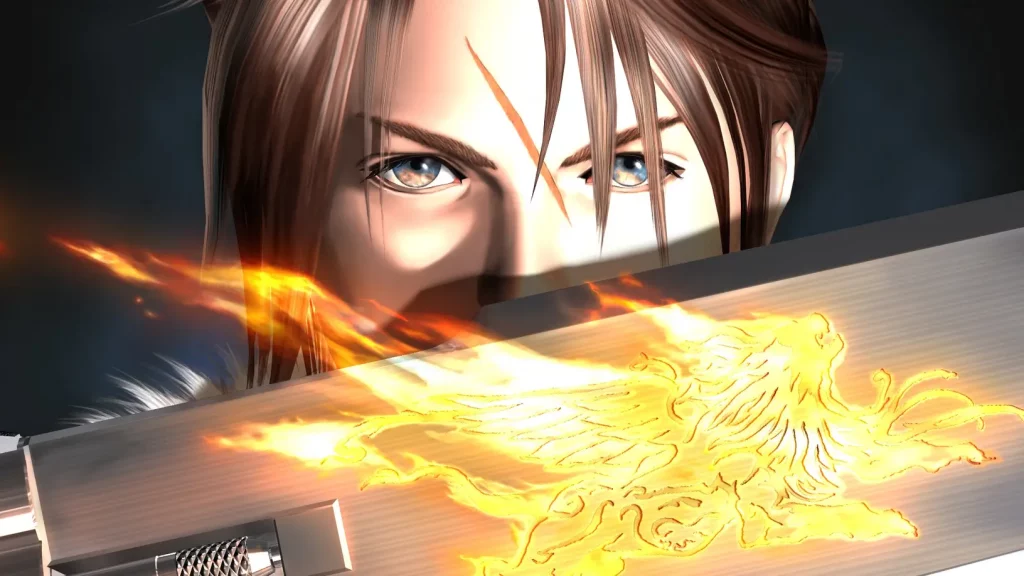
Squall from Final Fantasy VIII looking coy in his furry coat is a good example. Notice how pretty his hair is and his elegant stud earring.

Tidus from Final Fantasy X leaning back, his hair wet, almost exploding in orgasm. What beautiful porcelain skin.

Someone from Final Fantasy XII with a rounded face, thick, pouty lips and beautiful skin. →  Apply directly to the forehead.