
videolamer’s Chris sent me a link to a sale on EGG Console games the other day. For well-adjusted people who don’t know what I’m talking about, the EGG Console is a line of old Japanese computer games rereleased for modern consoles. So like Hamster’s Arcade Archives line but for Japan only games that generally require actual reading (in Japanese) as the collection is of computer stuff. I had looked at the EGG titles years ago when it first surfaced in North America and was composed mostly of Hydlide and Xanadu but then lost track of the releases. Luckily for me, Chris knows what sort of garbage I’m into and he noticed Golvellius on the list of games on sale. I immediately bought it and then spent an hour looking into the other EGG Console games, even the ones not on sale because I am fiscally irresponsible.

The Japanese version of Miracle Warriors, my beloved mediocre Master System RPG, was apparently released on the ol’ EGG in late 2025. Titled Haja no Fuuin, the PC88 version of the game seemed like a perfect pairing for discussion alongside the MSX2 version of Golvellius. Unfortunately, it’s very difficult to get into. It being entirely in Japanese is an immediate hurdle, but an even bigger problem is the game originally used a keyboard because the PC88 was not an 88, but actually a PC. So EGG Console publisher D4 implemented this half assed interface of scrolling through a letter or number one at a time. Gameplay largely consists of making slow selections of key strokes that match a legend written in Japanese.
To make matters boring and not just tedious, there is no music or sound at all for some reason. Cool people will already know that uncredited Sega composers added an awesome soundtrack to the Master System port that makes the grind, which is about 90% of the game, toe-tappingly tolerable. (I just checked, the Famicom port has comparatively shitty music.) Maybe I will eventually hunker down and play this PC88 version, if only because I found an error in Hardcore Gaming 101’s article on it and the quickest way for videolamer to blow up in popularity is to correct a Kurt Kulata piece from 20 years ago.

Back to Golvellius, or should I say Shin Maou Golvellius? Probably, since that’s what it’s called. Unsurprisingly, the Japanese release didn’t go with the English subtitle of Valley of Doom. The history of this game is sort of odd – it was originally an MSX game practically made by one guy and then published by Compile, of Golvellius fame. This was then ported to the Sega Master System with the aforementioned subtitle Valley of Doom. Then the game was remade for the MSX2, which was presumably one better than the MSX computer. And then instead of Shin Xiaopingu Golvellius 2, Compile released a fourth parody remix of the same game but changed the sprites into food related stuff and called it Super Cooks. This was not appreciated by fans as the ending of Golvellius promised a sequel, and the more normal among us are still annoyed almost 40 years later.
If you don’t want to learn what Golvellius is by reading this article that would soon be able to vote if elections weren’t being phased out in America, I suppose I can give a quick summary here. It is a Zelda clone with a few wrinkles here and there, like alternating side scrolling and top down autoscrolling dungeons. It’s also something I played when I was a child and so has considerable nostalgia armor for me. That out of the way, let’s get down to the boring details of how this MSX2 version of Golvellius compares to the Master System one.

I immediately noticed the controls feel worse than Sega’s version of the game. It’s all a bit sloppier and the hit detection is much more strict, but in a way that doesn’t make sense – your sword will pass through enemies without hitting if you do not strike them exactly in their vulnerable point. A small improvement, I suppose, is while navigating the main overworld hero Kelesis can now move diagonally. This is cool but not a good trade for the rest of the controls being worse.
In the side scrolling dungeons that (don’t) make the game famous, up is now used to jump. Apparently these old computers only required a one button joystick and so it couldn’t be assumed by developers that everyone would have access to a second button. Up to jump is terrible in every game (sorry Europe), including this one. The original version of Golvellius for MSX1 used up to jump and also had side scrolling dungeons that broke 5 minutes in length. Luckily for me, this MSX2 version cut the dungeons down to something much closer to the couple minute long Valley of Doom dungeons.

The top down dungeons in the MSX2 Golvellius move faster and are harder because of it. These stages autoscroll and present some minor maze like design, which often results in choosing a wrong path and getting pushed off the bottom of the screen. The result of this result is getting booted from the dungeon and having to start over, so the increased scrolling speed is not welcome. I had to retry some dungeons 5 or 10 times using save states that put me a few seconds before the hard parts. Without them, I’d have had to restart entire levels and I probably would have given up because I’m only so desperate for videolamer content.
The bosses, which I consider a highlight of the game, are inferior to the Master System bosses. They look worse and have less interesting attack patterns. A minor improvement is a boss health bar has been added. Graphics in general look worse than Valley of Doom, and there are now particularly ugly two tile high enemies that look out of place.

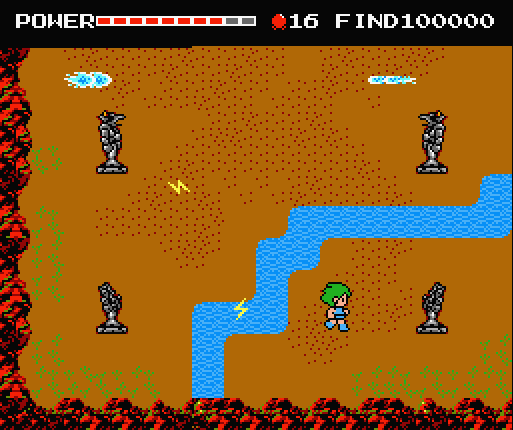
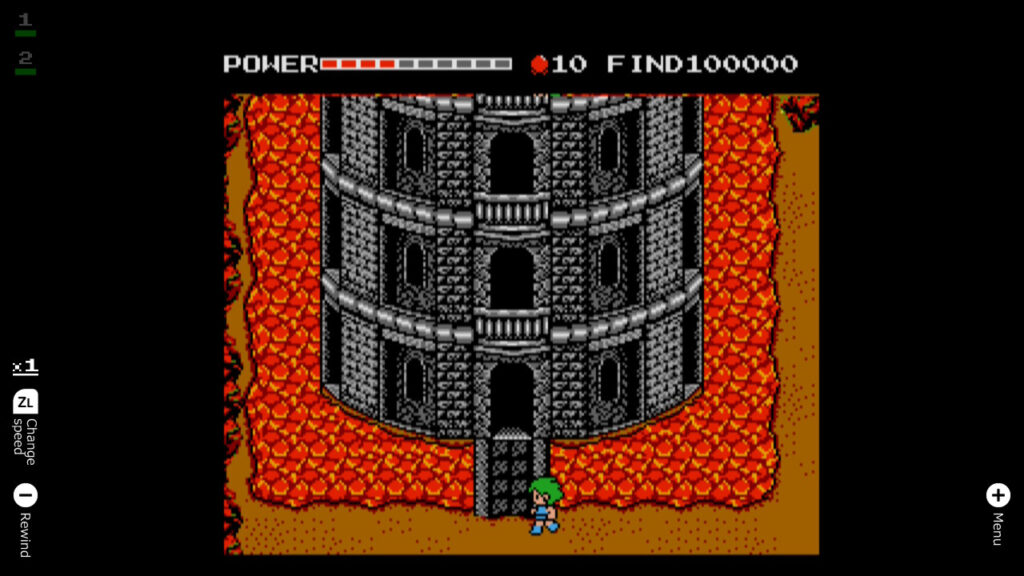
There are some structural tweaks that ultimately do not add much to the game. An opening village with fetch quests and terrible pixel art greet you upon starting this version of Golvellius. Some other attempt at adding plot and/or characters (who happen to be gods I think) was made – instead of only old women asking you to deliver things to each other (the same old women who are also the merchants), the Shin Maou has new deities asking you to do divine fetch quests. I suppose it’s an improvement though it’s hard for me to tell due to a nostalgic feeling of how the game “should be.” The last structural change added is this bizarre multiscreen thing before the final boss rush, which is also new so you could say it’s the lastest change. In this pre-boss rush scenario, you must destroy four statues on a few screens that are keeping you out of Golvellius’ tower by standing still and lobbing lightning in your direction now and then.
Oh yeah, the game is named after the final boss if I forgot to mention that. The strategy to kill Golvellius is the same on MSX2 as it was on Master System. Buy herbs until you can’t carry more, enter his fight and stand still slashing your sword quickly while he tramples over you repeatedly. You may need to change directions sometimes. You will lose a lot of health but the battle won’t be close – Golvellius is as good as dead, and, as an added bonus, the fight will be profoundly unsatisfying.
I went track by track and compared Valley of Doom and Shin Maou Golvellius’ music. Most people who are familiar with Compile, which isn’t most people, probably know them through Guardian Legend for the NES. The same two guys who composed that game’s music also did this (multiple) ones, and it is fairly similar. So if you love the Guardian Legend’s soundtrack, check out Golvellius’. For other anal retentive people, here are some painful details on the music comparison between the Master System and MSX versions:
Both MSX and MSX2 have around 6 songs not in Valley of Doom (Aleid Kingdom, Little Valley, Area 3, Area 4, Godies Theme, and Area 8), though the MSX2 version has two tracks in its sound test listed as “unused” that are used for bosses on the SMS. Specifically, MSX2 lacks Backular’s theme (unused 1) and Warlics’ theme (unused 2). Dusa’s theme is “unknown” on SMS so is not actually used in game, as far as I can tell.
This may be nostalgia speaking, but I don’t think the half a dozen extra tracks are particularly good. In defense of it not being rose tinted hearing aids, I don’t like all the songs in the Master System version so I have some amount of discerning taste. The music sounds better to me on the Sega soundchip, but a lot of people think the Master System, what with its lack of bass, sounds bad. I want names, because I will fight you.
The most important changes to the game are the changes in design. Shin Maou Golvellius has awesome box design, but the individual screen maps and how they fit together into larger areas are not as well crafted as what’s in Valley of Doom. Fighting enemies in the overworld is less engaging because they do not have as varied, or often even unique attack patterns as opposed to the Sega version.

There is a small but notable amount of backtracking in Valley of Doom that’s almost entirely eliminated in Shin Maou Golvellius. I counted a single instance in the newer game, and that’s just as well because the MSX2 loads between each area and that would make significant backtracking too tedious. But then the weird gear unique to Golvellius becomes much less interesting because it’s used only in small, specific places. The boots that allow you to walk over almost all terrain, including pits and trees, are only useful for a single area in Shin Maou but in Valley of Doom can be used to walk over almost the entire game world. The few key items you backtrack for in Valley of Doom add a bit of Metroid flavor I appreciate.
The real meat of all versions of Golvellius is buying items to increase the size of your purse, for some reason called bibles, and then buying health upgrades or items necessary to find the next boss like the aforementioned winged boots. Oddly, the amount everything costs in Shin Maou Golvellius is much smaller than the Master System game. This means less grinding ultimately, but also just less game because so much of the structure depended on figuring out which enemies gave a good amount of gold for a tolerable risk. Tied to this design is an NPC named Dina who will trade you money for health. This was a risky move in the Sega game but becomes an entirely pointless proposition in the new version that never requires more than a minute or two of slaying enemies to max out your gold.
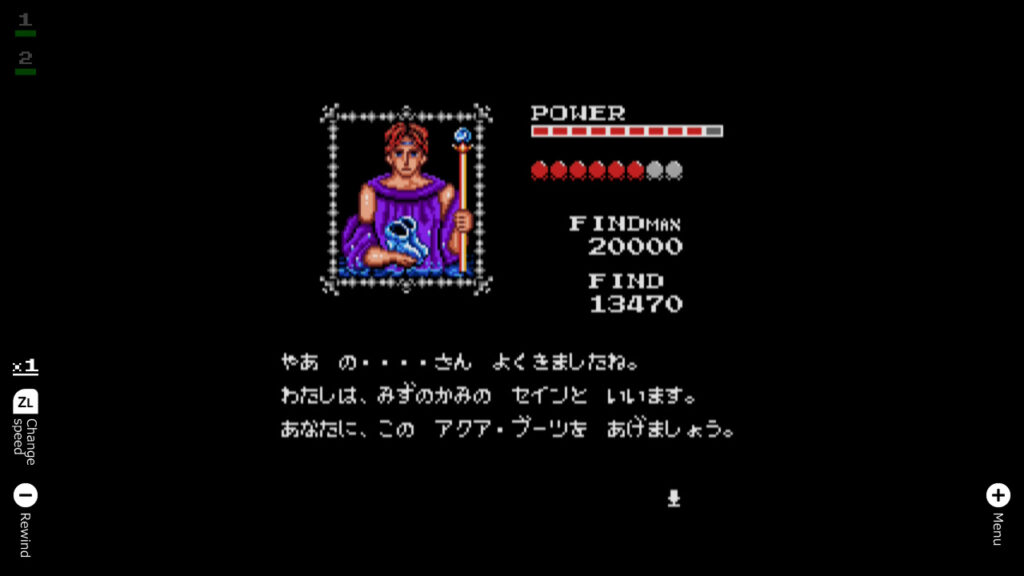
Collecting bibles and accumulating money may be like breathing to the average American, but these books that control your maximum gold capacity must be found. Similarly to how nearly each screen in Zelda contains an apparent or hidden hole that must be discovered by bombing, candling, or using a bomb with candles in its mouth and when it explodes it shoots candles at you, in Golvellius each screen contains a hole that must be discovered. This is done by it being open when you get there, killing some number of enemies, or striking specific spots on the map like trees or rocks. These holes contain merchants selling bibles, health upgrades, healing shops, fairies who give hints on how to proceed, and so on. In Valley of Doom, all holes were discoverable if you had the means to open them – that is to say if you required an item to cross water to open a hole by flashing a tree on an island and did not yet have the aqua boots, this would be inaccessible, but minus any special conditions every hole was accessible as you move from screen to screen.
Shin Maou Golvellius essentially breaks this design by requiring caves be discovered linearly. For example, you cannot find the merchant who sells the next health upgrade before you find the bible that will increase your max gold to the amount required to buy the health upgrade. This changed design fails in multiple ways. It becomes much more difficult to map the screens in your head and recall where you have and have not opened holes because they tend to appear one at a time. It also violates a basic design principle – show the player a locked door and then have him find the key. Finding the key and then the door is unfulfilling and limp design, which is what requiring the player to have the ability to buy the health potion before he sees it is equivalent to. Discovering all the tantalizing things you will be able to do (buy) and then piecing it together so it happens is far more engaging than linearly being allowed to proceed.
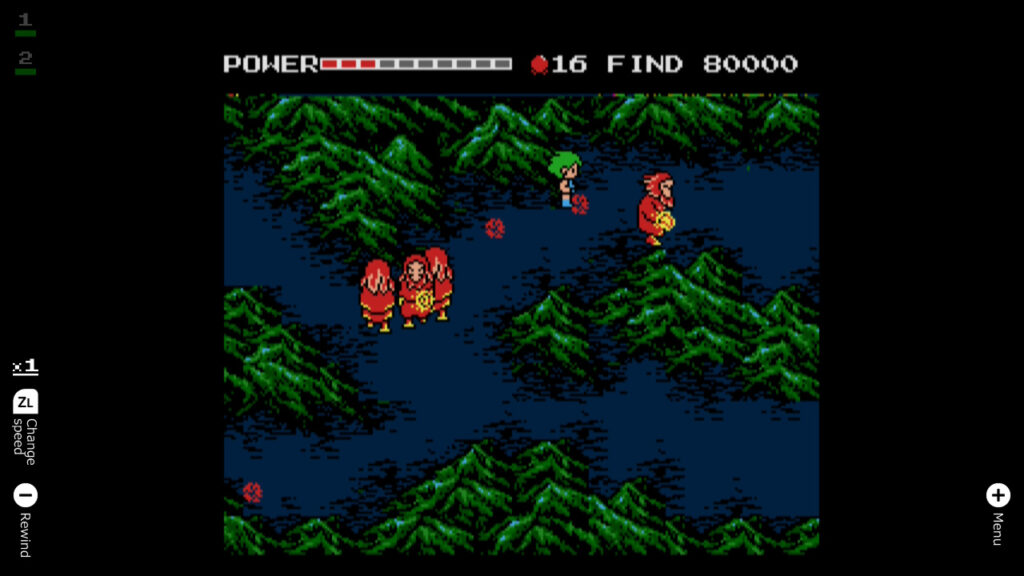
There is a real mystery at the core of Golvellius. We know who made the original MSX version, and Moby Games has a list of Compile people credited with the Master System game. But then there is this tricky line on the title screen of Valley of Doom – “Reprogrammed by Sega.” Moby gives no Sega employees credit, which seems odd. Shin Maou Golvellius has no credits online but I took screenshots after finishing the game and can say they overlap with Valley of Doom mostly – most importantly Maikeo Suenaga was the sole credited designer of both. So what is this mystery I speak of? Well, why would the same team make the newer version of their game worse? Did uncredited Sega employees make the map design, collision detection, etc. better than Compile could have? I’m not sure and I don’t think the history of the three versions of Golvellius will ever be fully told.
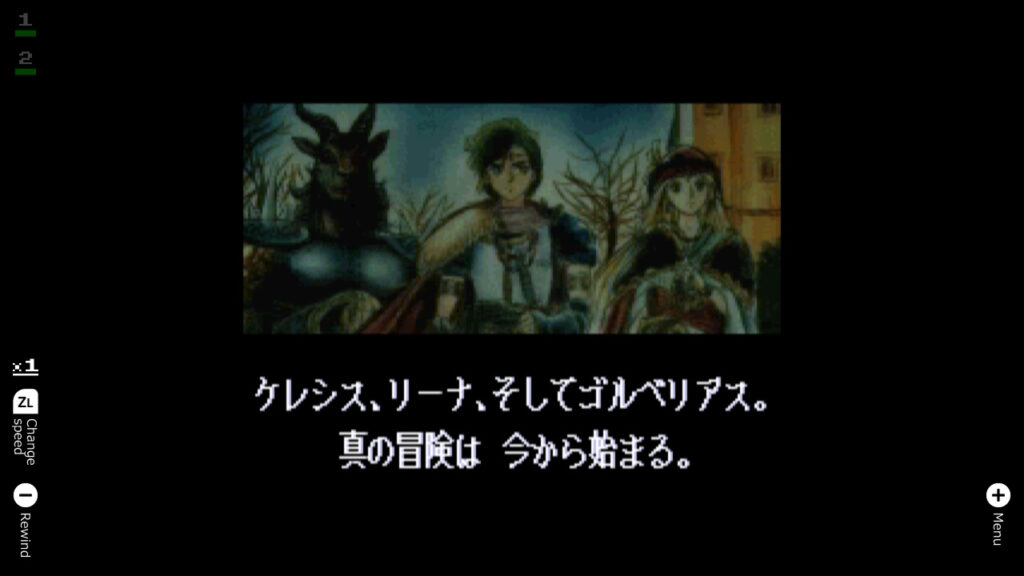
Here are the credits. I’ll add them to MobyGames when I feel like it.
Produce
Moo Niitani
Original Story
Pac Fujishima
Game Design
Maikeo Suenaga
Program
TK Tanida
Pochi Nakamori
Maikeo 200 Songs
Kunihiro
Jemini Hirono
Graphic
Anego
Hyohju Mu-
Wanatabe Dogezaemon
Yorichika Dogezaemon
Sound
Myamo
Sakoda
Shanto
Shin-Kun
Pazz
Yasue Santo
Opening-Ending
Akabei Taniguchi
Kei Furutsuki
Yoriki
Yonemitsu HiHiHi
Anego
Hyonju Mu-
Jemini Hirono
Special Thanks
Bogieman Saton
Kei Furutsuki
Seiko Manitoh
Ys Shoji
And You
I appreciate you braving the dangers of EGG Console for all of us.
I’m not surprised that some of them are lesser (or mixed-bag) ports. While we often talk about awesome games we missed out on due to over-curation or misjudgement of the market, I’m sure there are hundreds of subpar games or inferior ports that we didn’t get for good reasons. And not just cases where the system didn’t exist here or had an extremely small market.
I’m actually surprised that EGG Console is available in other markets generally, they must be getting some cheap or lax licensing out of all of this.
[…] my post about the MSX2 version of Golvellius I briefly mention that I gave the PC88 version of Miracle […]