

The Genesis of the Idea
I’ve been sitting with an unfinished version of this post for half a year. Making up incorrect theories about the Master System is fun because few people actually care enough to be mad at me, but the Genesis is the big leagues. I’ve settled on splitting the ideas I have about the Genesis library into two main parts, one about their first party output and one about third party support. This gets a little muddled because I cover internally developed, developed by a company Sega owns, and at times third party games published by Sega in this first post that’s supposed to be on first party efforts, but I try to clarify what is being discussed.

Similarly to the thesis of my Master System writeup, Sega did the majority of work supporting the Genesis with games – Sega developed 80 titles internally for the Genesis, while Nintendo internally developed 24 SNES games. This was done both by direct development but also a large number of publishing deals. As the tables below may indicate, Sega was the primary driver of sales to the console with Sonic 1 and 2. Even outside of those two games, they were publishers of another half of the remaining 8 top 10 sellers of the Genesis. This is actually fewer than Nintendo’s share on the SNES list, which is a whopping 8 out of the 10 – but the point I was attempting to make is any significant success the Genesis had was likely directly tied to Sonic.
| Genesis Sales by Year in NA Vaguely accurate and slightly from here | |
| 1989 | 500,000 |
| 1990 | 1,000,000 |
| 1991 | 1,600,000 |
| 1992 | 4,500,000 |
| 1993 | 5,900,000 |
| 1994 | 4,400,000 |
| 1995 | 2,000,000 |
| 1996 | 1,000,000 |
| Top 10 Selling Genesis Games | |||
| Sonic the Hedgehog | 1991 | 15,000,000 | Sega published |
| Sonic the Hedgehog 2 | 1992 | 7,500,000 | Sega published |
| Mortal Kombat | 1993 | 4,300,000 | |
| Aladdin | 1993 | 4,000,000 | Sega published |
| Sonic 3 and Knuckles | 1994 | 4,000,000 | Sega published |
| Jurassic Park | 1993 | 2,200,000 | Sega published |
| NBA Jam | 1994 | 1,900,000 | |
| Mortal Kombat II | 1994 | 1,800,000 | |
| Street Fighter II CE | 1993 | 1,600,000 | |
| Eternal Champions | 1993 | 1,600,000 | Sega published |
But why did Sega rely so heavily on one series to move systems? Part of the answer will come some other day when I look at third party support, but the other part of the answer lies with Sega themselves. The short answer is that it was not a deliberate move but more a stroke of luck that any series moved systems. To help illustrate this, let’s take a look at some of Sega’s fruitless endeavors.

Not Quite There
Sometimes a game just doesn’t quite come together, but a serious player in the industry, especially a platform holder, typically limits the number of half-baked releases. Sega were competing directly with Nintendo, who are known to work on games until they’re done, at least most of the time, or even just shelve completed titles. Taking a distinctly different approach, Sega often released games quickly and with little quality control. The following Sega games, developed by their internal studios or a Sega owned Western studio, are not all bad per se but they all could have benefitted from some more development time, a larger budget, or perhaps just a better overall vision.

Alex Kidd: The Enchanted Castle – After putting together the Master System version of this post, I imagine most of the games on this list and really almost all Sega games were rushed, but this one really suffers badly for it. This 16 bit upgrade to the Alex Kidd in Miracle World is a significantly worse game, with hit detection you’d find in Action 52. I never made it far enough to see if the later stages improve on the level design of the Master System predecessor because Enchanted Castle is barely playable – jump kicking an enemy is as likely to kill you as it is to kill an enemy. AND they didn’t get rid of the rock/paper/scissors mini-game that kills you immediately if you lose. Sega can make a better platformer and they literally already had, so what happened here? Likely, “throw some shit together for the Genesis launch window, even though the concept of a launch window doesn’t currently exist and I am saying something knowingly anachronistic which makes you wonder if I am actually a time traveller, in which case why am I not warning you about the fall of the American empire or the failure of the 32X?”
Garfield: Caught in the Act – Fine, this is a licensed game so there was always a strong chance it would suck, but it was developed by a Western arm of Sega and production was inspired by the Aladdin game, which did not suck. Development was apparently troubled and restarted at some point, and Jim Davis would frequently show up in the office just to show new comic strips and crush morale.
Golden Axe II and III – These Genesis only sequels to the arcade original were a little bigger, if worse looking due to the weaker hardware, but ultimately offered more of the same sword swinging and axe battling. The third game was apparently just bad. Why treat a premier property with such indifference (repeatedly)? Either a big budget, full-talent game a la Streets of Rage or an evolution of the beat ’em up would have suited the franchise and the console far better than retreads with a famous name, but Sega has since shown a paradoxical position of honoring its past by constantly repackaging their old games but also releasing subpar remakes of and sequels to classic games.

Kid Chameleon – This game is like one of the scads of sort of good platformers the NES had in abundance. In a vacuum, Kid Chameleon would be fine but again, it’s a Western Sega developed exclusive that probably should have been excellent and not another decent game. There is an inventive but scattered, sloppy feel to the level design that is more reminiscent of a Euro-platformer than say a Sonic. All blame can be laid at programmer and sequel-to-Ken-Kutaragi Mark Cerny’s feet, who has never made an amazing game in his massively successful, miserable life (though Running Wild came very close).
Jewel Master: Master of Jewels – I always confuse this with the sequel to SpellCaster for the Master System, but that game is actually Mystic Defender, which a less cultured person may include on this list but I will not because that game rules. No, Jewel Master is a forgettable, generic fantasy side scrolling game that, according to Wikipedia, ended up reworked as a Genesis game “through a complex series of events.” I say Lemony Snicket is right about this one when he says his presumed catchphrase, “more like a series of unfortunate events.”
Last Battle – This Fist of the North Star game (in Japan) is like the Genesis Alex Kidd game – worse than the Master System entry, which was called Black Belt in the West. Last Battle is maybe the worst game on this list. It suffers from Sword of Sodan Syndrome, known as The Kung Fu-itis in Japan – enormous characters with minimal animation and gameplay. There is some sense in making a licensed game a piece of shit, assuming the property alone will sell the game, but then why release it in the West? And if the plan was always to release it here to bolster the meager 1989 Genesis library, why not make it not a piece of shit?
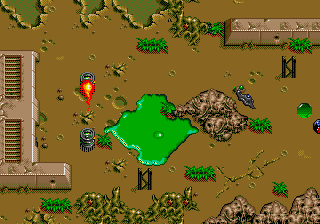
The Ooze – Another Cerny joint, this late Genesis game is at least weird and upsetting – you play a guy who discovers an evil company’s plan to release a plague upon the population who is then thrown into toxic waste in an attempted murder. Just like in real life, you don’t die but instead become a green blob hellbent on revenge. Like each of the entries on this list, this game alone does not bear the responsibility for the Genesis quickly losing footing to the SNES – The Ooze in particular is a neat attempt to do something unique. But this game still plays poorly and is pretty unpleasant to look at, and, had the future brought us Smell-O-Vision as promised, the game would also smell really bad. Doing something different can lead to greatness, a la Act Raiser, but usually just leaves you with a Marble Madness.
Osomatsu-kun – This maybe should not be on the list because it, like Last Battle, is based on a Japanese license, but then we are all intimately familiar with those Matsuno sextuplet brothers and their constant mischief. Still, if the development resources were going to be spent making this game, why not make something good that can be brought out worldwide, like the TurboGrafx classic JJ & Jeff?
Phantasy Star III: To Infinity and Beyond – I recently watched an internet streamer of video games play through this and, for some reason, really enjoy it. That Phantasy Star III was lacking was apparent when I played it the Christmas after it came out; I was 9. To be fair, its predecessor, the much beloved Phantasy Star II was also very clearly rushed. It had a similar sparseness of dialog and evoked feelings of loneliness, but the seasoned developers, some of who had worked on the original Phantasy Star, used these constraints as part of the overall ambiance and mood of the game and its world. It’s a fine line, but PSIII does not feel sparse and cold like PSII, it just feels empty. It’s also ugly, has spastic animations, amateurish enemy sprites, and the compositions are often good but the audio drivers or whatever are very unpleasant – which is interesting because the next game in the series was handled by the same composer and has excellent music, so that’s likely another result of a rushed development. This nadir of the series did make the comeback of Phantasy Star IV feel slightly sweeter, sure, but it was likely not a shrewd business move by Sega to release a mediocre game in a venerable series. Shrewd business moves were generally not in Sega’s wheelhouse.

Space Harrier II and Super Thunder Blade – I don’t have much to add for these I haven’t already said for Golden Axe II and III, and honestly I have not played them. Even as someone who had the console by the end of ‘89, these inferior versions of arcade games were unappealing. Yet more evidence Sega has never paid much respect to their own properties and thought nothing of making mediocre sequels in what could otherwise be classic series. Start with an existing design, maybe iterate but probably just make more levels and enemies and stuff, put a roman numeral at the end and there you go, another Sega sequel.
Sword of Vermilion – Sega studio AM2’s first console exclusive game, this is one I really wanted to love. Vermilion came to me the same Christmas as Phantasy Star III so it was a long January of disappointment. It’s probably more enjoyable than PSIII and there is an attempt at ambitious genre blending, but the first person RPG adventuring, the beat-em-up-esque random battle system, and the 2D fighting game style bosses all play somewhat poorly. It’s hard to believe that Yu Suzuki, the man behind the best game ever made, could not produce a great RPG for the Genesis. But then it’s also hard to believe the man most successful for Sega’s success up to that point because of hits like Hang On, Space Harrier, and Outrun would not have been given sufficient budget and time to make said great RPG. What actually went wrong is something we will never know because Japanese developers are notoriously tight lipped, but Sword of Vermilion is exactly the sort of Genesis exclusive Sega needed to be great. Nintendo would never give Miyamoto control of an exclusive RPG project and then release it in a mediocre state, so why did Sega so often put out games of this quality?
Comix Zone: Xtreme Panel Punching – A lot of people would be upset at this game being on this list, but I think it’s a fairly mild position to say the game could have been better (in a significant way, not some philosophical sense that all things (besides my writing) could be better). Zone is a style-over-substance affair that I have always found too difficult to be much fun. They were either combating the rental market or trying to hide a lack of length, I suppose. At least it’s better than Vectorman.
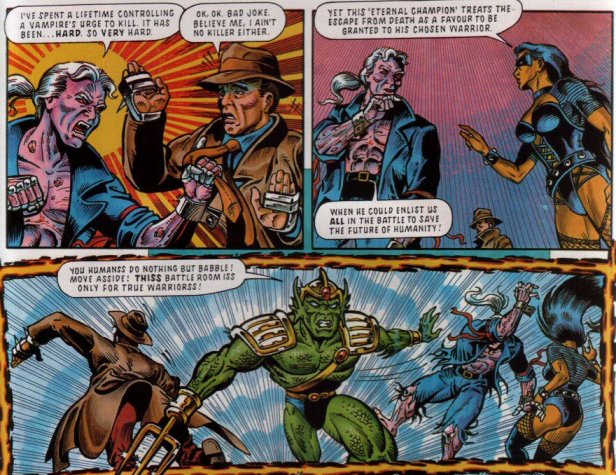
Eternal Champions – Everyone had access to Street Fighter II, so why Sega thought Eternal Champions was good enough to be released is anyone’s guess. It’s an interesting game because it reeks of effort – there is a decent plot, there are some cool character designs, it looks good, there is a training room to practice the game’s moves, and so on. But it does not play very well; it’s slow and not much fun. I spent a lot of time playing the Mortal Kombat port on the Genesis (ABACABB), and the fatalities were cool but were climaxes of the fights. With Eternal Champions, we would load up two player matches and spend our time perfectly aligning characters so they would land in the spots necessary to trigger the environmental fatalities. In MK, the fatalities were part of the game, but in Eternal Champions they were all we cared about because we didn’t want to play the game.
Combing through the credits of some of these games I did notice that Sega of Japan did not take the same strategy of using external yet fully owned and controlled studios Nintendo still uses. Meaning, they did not seem to assign senior Japanese staff to projects being developed in the states. Would having some oversight on Kid Chameleon resulted in enjoyable playforming, or an easily controllable the ooze in the game The Ooze? Maybe, but it’s not an open and shut case since, as we just discussed, the Japanese Sega teams often released mediocre games themselves. For Sega to uphold some standard of quality and control western employees with an iron grip like Nintendo does (Metroid joke here), Sega would have first needed some standard for their own releases.

Different Format, Same Game
Sega launched the Genesis in the States bundled with Altered Beast, a 6/10 arcade port of a 7/10 arcade game. The game has been largely mocked in recent decades (Rise from your grave!) but there was something to be said for packing in a cart that showed off the power of the new system without giving customers dozens of hours of entertainment – for more than half an hour of gameplay you would need to buy more games. The actual problem with Altered Beast is it was a very accurate arcade port. This is and will continue to be something I complain about, but Sega did not usually put extra stages, modes, etc. into their ports from the arcade and I think it was to their detriment.
Whereas the NES game Rygar famously console-ized an arcade game by making it longer and deeper, Sega believed that accurately bringing the arcade experience home would bring success to their consoles. They pursued this strategy with games like the aforementioned Altered Beast, Alien Storm, ESWAT, and Golden Axe. Besides riding the fighting game craze in Japan with the Saturn, Sega has basically always been wrong about this idea that arcade ports would significantly move systems. It is not a coincidence that the Sonic games, which as I mention above seem to be hugely tied to the console’s success, are longer platformers and not arcade ports.

Money in a Blender
- Sega published 237 MD/Genesis games
- Nintendo published 68 SFC/SNES games
These numbers are astounding to me. What could Sega have done with the money spent publishing over 200 games for the Genesis? A lot of these publishing deals were for bringing ports or second party style games to the console, like Sega’s work with Treasure. Obviously, publishing a Treasure game is always a good use of resources regardless of sales. But what about the money spent chasing celebrity sponsorships and licensed products that could cost significant amounts of money (Sega paid Joe Montana $1.7 million, for example, and he isn’t even good any more)? I am skeptical that this was money wisely spent, and again refer you to the info above suggesting that it was basically just Sonic and maybe Mortal Kombat that rocketed the Genesis to success.
| Celebrity Sponsors and When Their Game Came Out | |
| Arnold Palmer | 1989 |
| Tommy Lasorda | 1989 |
| Buster Douglas | 1990 |
| Michael Jackson | 1990 |
| Pat Riley | 1990 |
| Joe Montana | 1990 |
| Mario Lemieux | 1991 |
| Ayrton Senna | 1992 |
| David Robinson | 1992 |
| Evander Holyfield | 1992 |
A lot of these celebrity games were not good, and Buster Douglass Knockout Boxing was actively bad (I still regret buying it on deep discount at The Wiz). The Joe Montana developers, Park Place Productions, also apparently worked on the Madden games and deliberately did not make Montana as good because they didn’t want to compete with themselves. Sega seems to have realized this celebrity angle was stupid as they wound down the releases fairly early on in the console’s life and did not pursue the strategy for their next consoles. Or maybe the Saturn failed exactly because Ginger Spice wasn’t in Panzer Dragoon.

Besides the millions burned buying celebrity names and likenesses, Sega also pursued famous licenses from movies, comics, books, cave paintings, and television. Here is an incomplete list of the properties that received Sega published Genesis games:
- Asterix
- Barney
- Berenstain Bears
- Home Alone
- Ex-Mutants
- Bonkers
- Captain Planet
- Speedy Gonzales
- Little Mermaid
- Daffy Duck
- Roadrunner
- Dinosaurs for Hire
- Ex Mutants
- Fantasia
- Magic School Bus
- Marsupilami
- Power Rangers
- Jurassic Park
- Ren & Stimpy
- Rambo
- Busy Town
- Spider Man
- Star Trek
- Tale Spin
- Taz Mania
- Toxic Crusaders
- X-Men
- Indiana Jones
- McDonalds
Some of these games turned out alright (and Jurassic Park also sold very well), but many of them did not. Overall, spending millions on licenses seems like a questionable way to handle a console. Instead of gimmicks, Sega could have used their resources to develop better games. Not more games, they did not need to make more games.
Why Not Share?
Sega developed a number of Japan only releases that may have been pretty good, many of them some sort of RPG or another, which were in short supply on the console. If these games had been localized, they would be on my list of games that aren’t good enough instead of this list. A real missed opportunity for Sega.

Ninja Burai Densetsu – This is a turn based strategy game about ninjas, who flip out and kill people. It likely isn’t a hidden gem but I really enjoy the genre of guys taking turns hittinh each other on a map viewed from the overhead perspective and maybe if the Genesis had more RPGs, instead of people saying the system had no RPGs they would just say it had no good RPGs.
Bahamut Senki – Another turn based affair but this one also has some Koei-ness thrown in. Had I played it as a child (imagining it had been localized) I would have bounced off it like I did all of Koei’s games. Still, the Genesis needed more RPG-adjacent games in the states and this one has dragons.
King Colossus – The guy who wrote Phantasy Star IV designed this action RPG, so I can only imagine it alone would have relegated the SNES to Game.com status in the US. Japanese reviewers complained it didn’t do anything to stand apart from Ys and Zelda, but the Genesis only had the sidescrolling Ys III and no Zeldas to speak of, so King Colossus still had a place to fill on the console.

Rent a Hero: The First Hour is Free – Another Yu Suzuki produced action RPG, this is likely another one that could have spent more time in development. Unlike Sword of Vermilion, Rent a Hero is one of Sega’s quirky titles which gives it more room to be mediocre in some areas while still being of value. At least we didn’t get a localization of the Dreamcast remake, either.
Legend of Heroes 1 and 2 – Sega and Falcom made some sort of agreement to release a few games as a group consortium inventively called ‘Sega Falcom.’ Besides announcing a bunch of Sega CD games that never came to fruition besides Popful Mail (initially announced as a Sonic spinoff called Sister Sonic – who was going to be damned sexy), the company released ports of the Japanese computer games Legend of Heroes 1 and 2, which are Dragon Slayer 6 and a sequel we will call Dragon Slayer 6.4. As mentioned, the Genesis lacked a deep catalogue of RPGs in the states so these would have been nice to have had. Sorcerian aka Dragon Slayer 5, however, will not be on this list and I will go to my grave content knowing the Genesis port was never localized.
Lord Monarch – Or Dragon Slayer 7, obviously. Another strategy game Sega decided Western audiences didn’t need to play. That’s ok because you likely already have the FM Towns port. An entry in the Sega Falcom partnership, Hardcore Gaming 101 says Lord Monarch on the Megadrive was actually developed by Omiya Soft, who we all know as the venerable Culdcept developer. Also, in case you are me and sometimes think this game is Dragon’s Earth by Human Entertainment, you (I) are (am) wrong.

The Hybrid Front – Sega’s own take on the Daisenryaku series, which I have never liked due to its cold and impersonal nature (give me brightly colored, young children leading unnamed soldiers to their deaths, please), Hybrid Front’s goodness seems to not entirely be agreed upon by the internet. Like a lot of these unlocalized titles, it’s also a strategy/tactical game, and one thing we do know is the cover art is sick, as is a lot of what artist Jun Suemi made.
Surging Aura – Like the previous game, I cannot find a clear consensus on this JRPG’s merits. The Genesis could have used even 7-out-of-10, solid-but-not-great entries in this genre. There were only so many times a person could suffer through Traysia.
What Worked and What Should Have
It’s hard to look at Sega’s output compared to Nintendo’s and see it as anything but inferior. Nintendo did not always make more interesting games, but they usually made better ones. Still, Sega developed a share of the generation’s great titles, even if most of them did not sell particularly well.
Revenge of Shinobi – This game stands in sharp contrast to all of the arcade ports and console-only arcade game sequels that refused to deviate from their roots. Revenge of Shinobi is obviously a Shinobi sequel, but it is designed for a console. It’s also excellent and considered a minor classic, or so I just made up. I may prefer Shadow Dancer, but most people do not, so this is on this list of great Sega developed Genesis games.
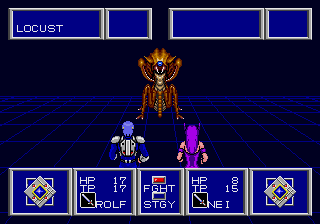
Phantasy Star II – The sequel to maybe the best game on the Master System, this is a huge RPG that killed off a main character years before Square invented the idea. Sure, the battle backgrounds were boring tron-style blue lines when PSI on the Master System gave us lush environmental art, but PSII was still a cool game and, unlike Square’s series, made people who played the original feel connected to the story by callbacks such as the excellent intro. Sega of America was so concerned about the difficulty of the dungeons that the game shipped with a strategy guide. Nintendo followed suit with Earthbound doing this years later because everyone was always trying to be Sega.
Castle of Illusion Starring Mickey Mouse but Not Minnie – This may be one of the earlier really good licensed games. A platformer, Mickey had to fight through creative levels in pursuit of some evil sorceress or something. Sega must have considered the Disney license to be a boon to be treated with respect as a lot of the team who made the excellent Revenge of Shinobi worked on Castle of Illusion. The sequel, World of Illusion, included a two player mode with Donald, the superior cartoon character despite his questionable ties to the US war machine, but was too easy and didn’t live up to the original.
Sonic the Hedgehog – Never heard of it.
Streets of Rage – Developed as an answer to Final Fight on the SNES, this game featured three playable characters and simultaneous two player action. The music was also really fucking good. Streets of Rage is exactly the kind of evolution of an arcade genre I have been whining about this whole post and makes a straight port like Golden Axe look like a complete waste of time and money. A highlight of this game was the accurate representation of the police – hit the special attack button and law enforcement swoops in and, asking no questions and proffering no warrants, murders people.
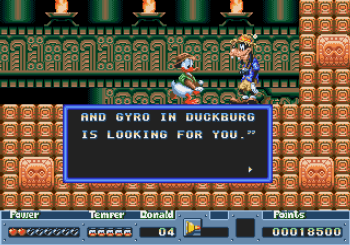
Quack Shot – This one shares a lot of staff who worked on Castle of Illusion. Structurally, it is sort of a vague blend of Mega Man level selecting with a smidge of Metroid backtracking (Quackalvania). This Donald Duck game is generally not remembered as well as Mickey’s first Genesis game, but I may prefer it. Editor Pat and I played through Quack Shot maybe 6 years ago and I was pleased that the end segments still felt intense. No one cares what Pat thought.
Sonic the Hedgehog 2 – Despite Sega Technical Institute (STI) developing this gem, studio head Mark Cerny cannot be given credit for the quality of this game despite how often he pages me and then when I call him back begs me to retract my mean but accurate statements about his talents. We have video game evidence of what he believes a good platformer looks like and it is called Kid Chameleon, a game that came out a mere 8 months prior and was developed by his STI group. No, Sonic 2 feels good to play and is fun so it’s blatantly obvious that the Sonic Team defectors who joined STI should be given credit for making this sequel of a similar pedigree of the game they had made prior to it, namely Sonic 1: The First Hog.
Streets of Rage 2: Bare Knuckle Brawl – Yuzu Koshiro’s company Ancient largely made this game and it slipped through my strict “Sega developed only, I don’t care who published it” criteria. It largely builds on and improves the original, which was internally developed, so close enough. I think it would be hard to argue SoR2 is not the superior game, but the original had playable character Adam and he was awesome. Koshiro’s music does not get any better in this series, however, despite weirdos claiming 3’s atonal, algorithmically composed beeps are superior. I have yet to play the fourth game or Guard Crush’s follow up Absolum, but for some decades SoR2 was arguably the pinnacle of the genre.

Shining Force – Fine, this is also not exactly a Sega game as it was a joint project between Climax people and second party developers who would eventually become Camelot Software Planning and then make Nintendo sports games until merciful death brought them succor. Shining Force II is probably the better game, but this original entry occupies a more privileged place in my heart, right next to the left ventricle. Its music and character design is superior to its sequel, and these little things carry a lot of weight. Every few years I check what other games composer Masahiko Yoshimura worked on and am always disappointed the list hasn’t gotten any longer.
Shinobi III: Return of the Ninja Master – God damn it, I give up. Sega didn’t quite make this one either, but they took my advice I sent back from the future about how they need to be more hands on with teams making their games, only they ignored that the advice was specifically about western arms of the company. That is to say, Noriyoshi Ohba oversaw development and he has an excellent resume and a bunch of paystubs that clearly came directly from Sega. Besides this high quality offering, he also worked on the Revenge of Shinobi, Dark Wizard, Streets of Rage, and became a big shot producer and head of Overworks (I read or made up that the name is a pun on his name, as in Ohbaworks) who released multiple Sakura Taisen games, the PS2 Shinobi, and most importantly to Jesus Christ himself, Skies of Arcadia. Anyway, I actually played Shinobi III when I was a kid and remembered it as fine but not great. I also remembered it straying fairly far from the play and feel of Revenge of Shinobi. Upon replaying it the other year, however, it both felt more like Revenge than I had believed for the past 30 years and was also great. I would recommend not replaying games because life is short and there are always good games you haven’t played. I would also recommend replaying games because your initial impression of them may no longer be correct.

Sonic the Hedgehog 3 – Give or take a Knuckles. I remember devouring this game when I brought it home on launch day. The funny SHWONG sound the shield item makes is still seared into my brain. I didn’t know if I liked it more than 2, but it was great. General consensus, as far as I can tell by asking my wife who doesn’t play video games but did play Civilization 3 in the 90s, is that this one is not as good as Sonic 2. Wherever it falls in the series ranking, we can all agree every 3D Sonic game is bad and we only tolerated Adventure because of our love for the Dreamcast. Before I wander off to the next game on the list, I do have to say that the music is good but Sega really fucked up with it. The composer of the first two games did an amazing job, many of those tracks still being iconic today. Sega would not give him the money he requested for 3 (presumably because Tommy Lasorda demanded more supplies of Slim Fast), so they went to Michael Jackson, who, along with his team, composed the music for Sonic 3. But then, apparently unsatisfied by the results or distracted by an attractive child, MJ decided to pull his name from the project. So Sega is left with neither a third stellar Nakamura soundtrack, nor an advertisable Jackson soundtrack. The silver lining is we were exposed to a gamified version of the eventually released unreleased track Hard Times, which is excellent.
Shining Force II – Despite the downgrade in music and character design compared to the original, this is another all timer. Scrapping the segmented chapter structure of the first game, SFII is more open-ended feeling and allows for wandering between maps somewhat at will. This decision was either too hard to implement well or did not pay off from Camelot’s perspective as the third game in the series is structurally closer to the first. Similarly to I and III, though, this game is chock full of well designed turn based tactical combat, and if memory serves, improves on some of the first games overly large maps that take ten turns to even bring units close enough to consider what combat will look like. The plots of the games in this series have never made much sense to me, but for what it’s worth I think this one entirely throws out whatever was in the original besides also having a bad guy called Dark Soul, who is also in the predecessor game Shining in the Darkness but also may be his father or something. I should clarify that SFIII likely has a coherent plot but I played Scenario 1 in English, Scenario 2 in Japanese with a printout of a fan translation, and didn’t play Scenario 3 so the overall I would say the game was hard to follow.

Phantasy Star IV: The End of the Millenium – The best traditional JRPG on the Genesis by a city kilometer, this game still looks and sounds great. The comic book style cutscenes stand out even now but I wish they had been ripped off more and didn’t remain as striking. Anime influenced games of this era peaked in visual design for my tastes as by the 32 bit consoles the hypersexualization of female characters finally became within perverted designers’ grasp. Compare Final Fantasy VI’s Celes to Final Fantasy VII’s Tifa. There is ongoing debate on the internet about exactly what went wrong in Japanese society to lead anime aesthetics to become primarily a masturbation tool, but I don’t have enough degrees in Sociology and Cultural Stereotyping to try to explain. Instead, I will enjoy Phantasy Star IV’s cool anime cut scenes knowing we truly were at the end of the millennium.
Ristar: The Friendly Star – I’ve played 10 minutes of this game and it seemed to be of very high quality. Reviews were favorable as well, though cursory research indicates it was actually better received more recently than contemporaneously. There are two possible explanations for this phenomenon. The first is that the market was already saturated with platformers by 1995 and even very good ones had difficulty standing out. The other explanation is that people realized much of the staff that made Ristar went on to develop the excellent NiGHTS into Dreams and, by way of apology for not making that game an overwhelming success, humanity as a whole is now trying to make amends by honoring Ristar.
So why weren’t these all huge hits, besides the obvious answer that I am a fanboy and the games aren’t great? Obviously, some of them like the Sonics did sell very well, but there are a number that should have done better than they did. I think there is something to the idea of priming your audience to be receptive to genres and then the overall state of a genre on a system also matters – having two great RPGs but only a total of 4 is unlikely to matter to fans. RPGs were not pushed hard on the Master System nor Genesis and so people looking for those kinds of games were less likely to buy those consoles. Shining Force and Phantasy Star IV’s excellence didn’t really matter because Sega had failed to cultivate an audience receptive to those titles – potential players had NES and waited for where they expected to find the next big batch of good JRPGs, namely the SNES. Sega never really snapped themselves out of this self-fulfilling cycle, at least in the states; with the Saturn the evil Bernie Stolar (who is now glowingly described in many places because he rehabilitated his image by the shrew tactic of dying) had an anti-RPG stance. Which I suppose was just as well as the Genesis didn’t bring those customers into Sega’s ecosystem, but then of course this was laying the groundwork for the Dreamcast to also be RPG deficient. Psychologists call this the cycle of abuse.

| Japanese internally Sega developed games released in the States Japan exclusives in parenthesis | |||||
|---|---|---|---|---|---|
| Year | Genesis | Sega CD | 32X | Total | % Localized |
| 1989 | 13 (1) | 13 (14) | 93% | ||
| 1990 | 13 (2) | 13 (15) | 87% | ||
| 1991 | 10 (7) | 10 (17) | 59% | ||
| 1992 | 6 (2) | (3) | 6 (11) | 55% | |
| 1993 | 2 (6) | 1 (4) | 3 (13) | 23% | |
| 1994 | 4 (6) | 3 (2) | 2 | 7 (15) | 47% |
| 1995 | 3 (4) | 2 | 5 (1) | 10 (15) | 67% |
| Total | 51 (28) | 6 (9) | 7 (1) | 64 (102) | 63% |
Much has been said on the infighting between Sega of Japan and America. The lack of focus on the Western market despite that being the source of their success is apparent in the numbers above, which support the idea that Japan was unwilling to fully commit to their most successful market. In the most critical years for the Genesis, after they had found success and were facing the SNES, Sega devoted significant development resources to Japan-only titles. They also seem to have generally just done less development, for whatever reason. Hopefully when I do a Sega CD writeup I will figure out what the fuck the internal Sega devs were up to in 1992. Perhaps celebrating on the back of yachts. Whatever the case, surely the convicted criminal Yuji Naka is to blame.
When thinking about the company I usually come back to the same conclusion – Sega succeeded despite itself. They have historically been an organisation full of talented, passionate developers who seemed hamstrung by incompetent businessmen. Whether it was hemorrhaging money for pointless celebrities, underpaying second party developers like Sonic Software Planning (the predecessor to Camelot), or rushing game after game to market, the suits never seemed to have a clue and that the Genesis was a hit in the states seems almost accidental. Yet throughout their console history, Sega often released experimental or weird games their competitors likely wouldn’t have dared to, so there seemed to be some perfect mix of incompetence and a hands off nature from the management/business layer of the company that would reach an amazing climax with the Dreamcast. The company’s ineptitude is both what ruined them and made them great, ironically. Now that they have righted their business in this post-console era of endless sequels, you can deduce how impressed I am by their game designs and boldness.
Next time I will take a look at what third parties were doing on the Genesis. This will likely be depressing and lead us to understand why Sega developed and published so many games on the system, as they had done for their previous console.