

I have less time sitting at a desk (or couch) at home than I used to. I have a device that is more powerful than ever in my pocket, and I’ve found myself turning to that device for entertainment from time to time.

When I’m not entertained by doomscrolling or getting fed a deluge of AI-authored content (or content I’d prefer to think was authored by AI), I’ve been trying to find games that don’t addict me with pretend gambling, or for that matter real gambling. I’ve also been put off by free games with built-in advertisements. While it took a while, I have succeeded in the last year or so in playing mobile games that do not have these common mobile-game features. Here is a brief list of them for your enjoyment, because lists are the foundational content of the internet.
Kyen & Bylina: Retro PC-styled RPGs with a touch interface
These are inspired by an older mobile game series called Gurk, which is no longer available without side-loading because of OS version limitations. These are only on Android (though the creator has said an iOS port in the future is possible if the Android version sells well enough).

Both games offer a “keyboard” at the bottom that shifts between keys depending on the situation – which offers a consistent interface and hints at what options are available. This adds a dash of a retro feel while making it very easy to learn. The core mechanics are like older PC RPGs, with an equipment system, random encounters, and the option to reroll level attribute boosts a limited number of times. Grinding might not be absolutely necessary but I found it to make things easier as there are a few difficulty jumps throughout and some random encounters can be very dangerous. Saving is available at any time and there is a minimap, making it easy to pick up and set down for short sessions.
Kyen: The Skeleton Amulet is a free demo for Bylina: Lure of the Sorceress. Kyen offers a shorter, more straightforward adventure with more limited characters and equipment. Bylina adds multiple subclasses for each primary class, with additional recruitable character types and several secrets.
Paragon Pioneers 2: City-building with idle mechanics
No, wait, come back! “Idle mechanics” are a mobile thing, yes, but this is more of an active city-building game with background resource collection. It strikes a reasonable balance between active and passive play. Unlike many games with idle mechanics, there are no time limitations or advertisements.
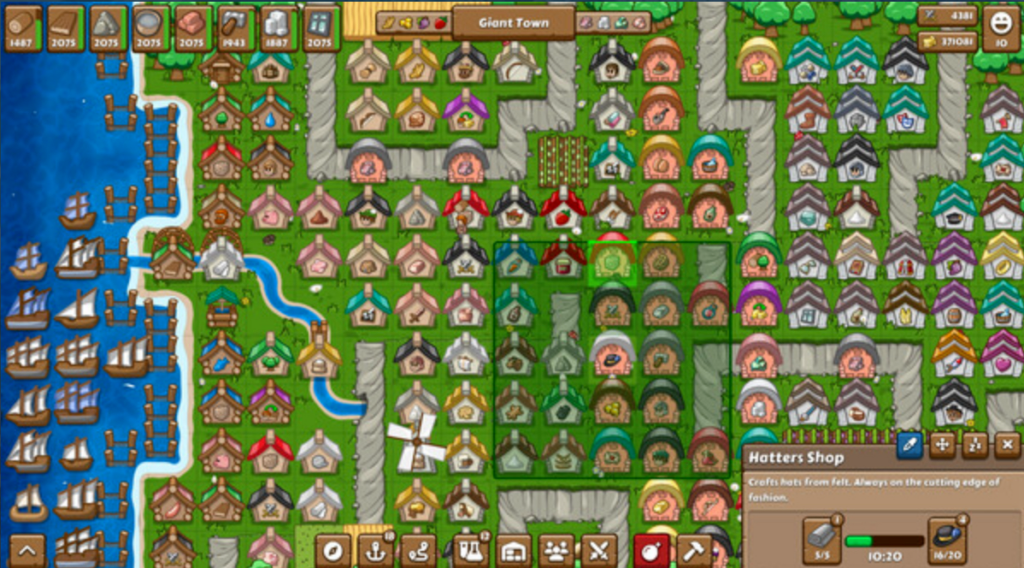
PP2 is an Anno-like game where your production continues while the game is inactive. It is not a clicker game in hiding, instead it is a sort of long-term optimization game where you are attempting to build up various resources to upgrade your citizens over time to construct a specific monument. As you unlock new islands, you need to field armies to conquer land, so you’re simultaneously keeping citizens happy and producing more soldiers to expand domestically and abroad.
This often involves creating supply chains which ship goods from island to island, whether as an ingredient for more complex goods or to fulfill citizens’ needs. Unfortunately, these systems can get clunky over time, because as your demand outstrips supply you may need to fiddle with this route or that island to try to best fulfill those demands. Still, this is very similar to what I’ve found in Anno games, so it wasn’t a concern specific to this one.
Paragon Pioneers 2 also has a prestige-like mechanic where you can take on additional challenges to get bonus points more quickly. These bonus points offer benefits on future games, so you can choose how you want to play the game on your next round. In my experience the first “round” lasted around 30 days, and subsequent games are shorter.
Kairosoft: A selection of simple simulations
Best known for Game Dev Story, Kairosoft has been making simulation games for decades. Most of their games are more detailed than Game Dev Story, with widely varying themes. Each has a “fast mode” that unlocks after you’ve completed the game once. While they are fairly easy, Kairosoft’s premium games are devoid of microtransactions or ads and often have enough depth to be worth replaying. Many of these have been ported to consoles and PC, but they are typically released on mobile first.
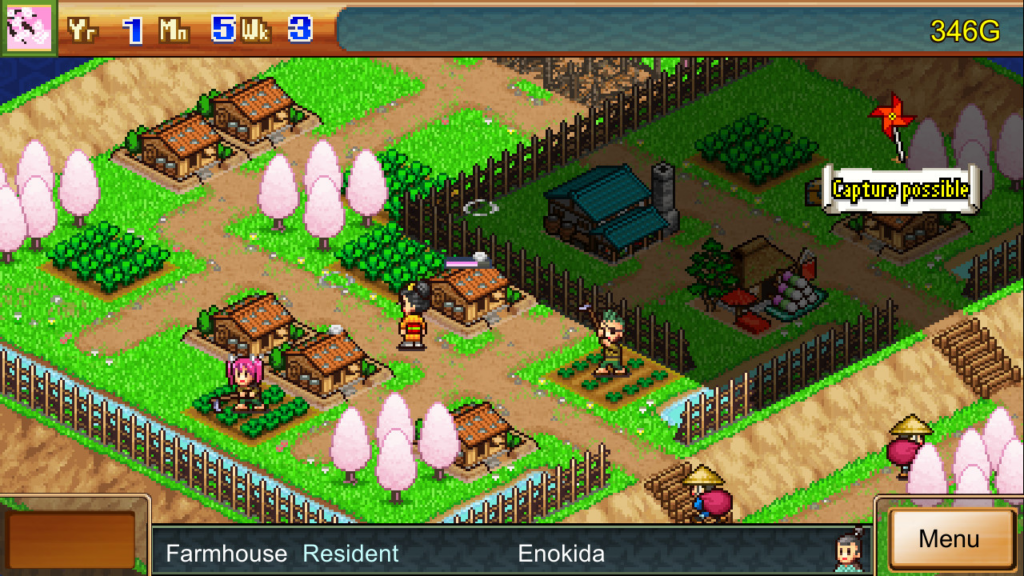
If you haven’t played Game Dev Story, it’s a great introduction to Kairosoft – it simulates starting as a game developer in the early 1980s, and new consoles come out and the market shifts as time passes and you try to become a premier video game developer. If you want something similar but with more depth, I’d recommend TV Studio Story. Despite its thematic differences, the game loop is familiar with several improvements over GDS.
Assuming you’re open to a different subgenre, Ninja Village is a satisfying strategy/simulation that combines a well-trod premise (conquering various Sengoku-era lords to unify Japan) with city building. It’s also one of Kairosoft’s less linear games, so it lends itself well to replays and different strategies.
Kairosoft has many more “shop sim” style games. Among the better ones are Convenience Stories and Jumbo Airport Story.
Slice & Dice: Roll with a regular roguelike
The key conceit of Slice & Dice is that each of your characters has a die that can have its sides swapped, enhanced, replaced etc. via items. Each round you roll all your dice, keep some, reroll others and take actions using those dice. Completing a stage unlocks options for character upgrades or items.

Like many roguelikes (in the modern and not classic sense), each round is a fresh start with some items, classes, and enemies unlocked based on overall progress. You can also start with difficulty modifiers that are semi-randomized as well, so it’s pretty flexible to your desired level of chill or stress.
The base version of Slice & Dice is free and gives you a self-contained, basic version of the game. The paid unlock adds 8 more rounds to the “classic” mode as well as a dozen or so extra game modes.
Bonus: Mobile ports that are pretty good!
These games were released elsewhere first, but are solid games to enjoy on mobile as well.
Luck Be a Landlord
A slot machine game that (in my opinion) distills the modern roguelike into its purest essence, both good and bad. This is heavily luck-dependent, but as you play the game you begin to learn which things generally go together and which don’t, so you can start to “lean in” to strategies more. It also has 20 levels, so you can tune it to your preferred difficulty. Since the gameplay here is mostly clicking, it might actually be easier to play on mobile than PC.

Dragon Quests
I’ve played 1 and 3 on mobile and both are good ports, even if the graphics aren’t perfect. My understanding is that 1-6 use the same engine.
Collection of SaGa: Final Fantasy Legend
While this is more expensive than other games listed, it includes the first three SaGa games (or the only three Final Fantasy Legend games, if you are 40 years old and stopped paying attention to RPGs in 1997). The first two have full-party creation, multiple smaller distinct settings, and different character types have wildly different growth mechanics (no leveling). The third has a set party and more standard growth mechanics, so it feels a little less experimental but is still a decent game with a shorter runtime.
Just because you only have access to an AI-riddled tool of the panopticon doesn’t mean you can’t be a real gamer playing real gamer games. In between Wuthering Waves, Langrisser Mobile, or Battle General: Fire and Ice Merge Dragons, you can always pick up a game free of predatory mechanics that you would consider playing while sitting in your living room.
Hi, thank you for mentioning Bylina and Kyen!