

I’ve enjoyed nearly every Dragon Quest I’ve played, but it took me decades and a streamlined version to finally complete Dragon Quest VII. I might be the exact target audience for VII Reimagined – busy, a fan of the series, and dangerously prone to nostalgia. But I feel VII Reimagined ultimately drops the ball by overly simplifying dungeons while not addressing some core issues with a disconnected structure and lack of character development.
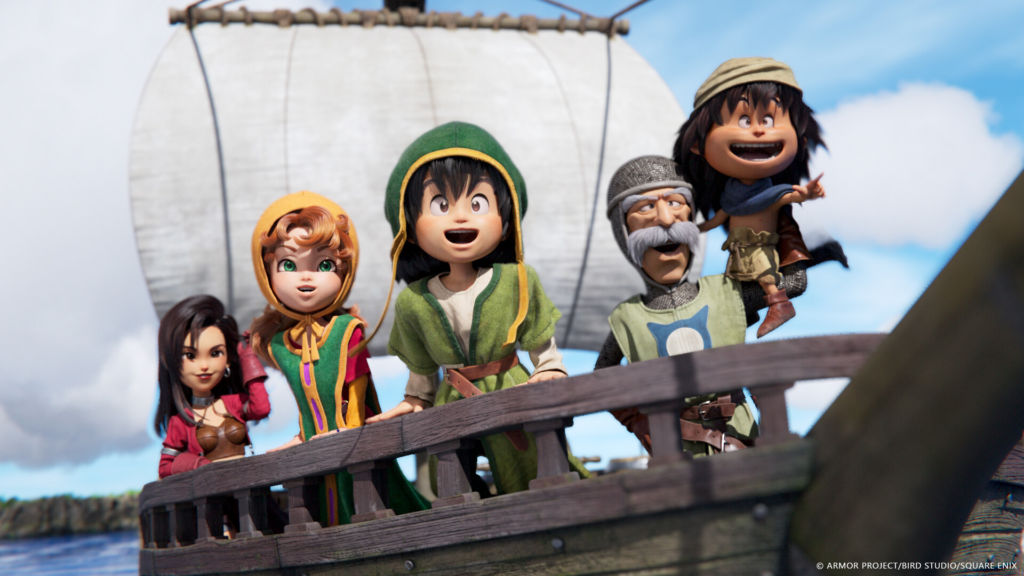
The main problem I have with the changes to dungeons in DQ7R is that things have been made too effortless. The classic “Dragon Quest loop” (or if you prefer just a “classic JRPG loop”) is one of attrition – in battles you have to determine the most efficient way to make use of limited resources (primarily MP, but also things like rare revive items or, early on, HP recovery items). In Reimagined, HP and MP are restored on level-up, and additional save statues which restore MP have been added at the start and end of most dungeons (in all difficulty levels). Between these two, there is no need to conserve resources in dungeons.
The AI control built-in to DQVIIR is pretty good at spamming the strongest moves – but the combination of relatively effortless, automated battles means that much of the game is spent not playing. Battles become a spectacle, rather than an interaction. There is a little planning that goes into ensuring your party is successful, but it hardly makes up for the lack of effort needed when actually fighting. Once your party is sufficiently strong compared to the enemy, battles are skipped entirely.

I’m divided on how much I actually like the planning/attrition dungeon loop in JRPGs. I feel like there is a crunchiness to it, particularly in older games and in Dragon Quests, that makes things more strategic, and affects how you approach battles. When you’re trying to conserve enough resources to beat a boss, it makes you ration out things and plan battles better, keeping you engaged even when things get a little tedious. I quite enjoyed this loop in Phantasy Star 2, and I liked it in Dragon Quests V and IX as well. Many modern games restore HP after battles or allow an infinite stock of items. Eiyuden Chronicle: Hundred Heroes was criticized for its limited inventory and underpowered magic system, but this gameplay loop was one of the things I appreciated about it. In the two other versions of Dragon Quest VII, I found this loop a bit exhausting, so I don’t disagree entirely with finding ways to decrease the fatigue in theory. The changes made in Reimagined, though, leave most of the mechanical side of the game feeling empty.
Boss fights in Reimagined do offer more strategic variety than the usual fodder. There, it makes sense to actually take control and plan out the fight, doing the “standard” RPG thing.These fights are a lot of fun, standing in stark relief to the frequent and monotonous encounters throughout dungeons. Even on hard mode, though, several boss fights end up being quick and require little preparation compared to other Dragon Quests.

The Vocation/Class system from the series returns in VIIR, and after a certain point it offers the ability to have two active vocations at once. But, unlike previous versions of VII, there are no benefits from mastering a class if it isn’t active. The multiclassing system mostly serves to get you to the third-tier advanced vocations more quickly. It may be better to look the prerequisites up in a guide, as they remain hidden even when you’ve discovered them with other characters. I was frustrated at one point by going down a dead-end vocation with a character because I mis-guessed one of those prerequisites.
When you’re not in battles, you’re searching for treasures or watching the next story beat. While some of the vignettes are good, others are so rote or cliched that the first half of VIIR feels a bit like 10 short Dragon Quests stitched together. The gameplay and core story aren’t engaging enough to make up for all the traversal and treasure hunting. And since town treasures are mostly recovery items or outdated equipment, treasure hunting itself is also tedious.

Even though it is largely linear and has only a few optional areas, the plot structure of Dragon Quest VIIR is very loose. This makes the core loop of “find fragments, visit place in past, resolve problems, visit place in present” feel even more repetitive, almost Sisyphean – this was the main thing that made me drop both previous incarnations of the game. Character development might have been another way to create a sense of progress, but for the majority of the game there is very little. Some development does happen towards the end of the game, but by then the sense of progress is unnecessary. It would have been nice to have more party interaction earlier, even in the form of the optional party chats – chats that are largely a missed opportunity and overly dry.
Despite disappointment in the overall narrative, there is a fair bit to appreciate in some of the vignettes. Several subvert typical JRPG tropes and many vignettes have quite sad premises or outcomes. Dragon Quest VII’s overall tone alone might make it worth experiencing for some as it does stand out in its willingness to sometimes not go for fairy tale endings.

While I did enjoy my time with Dragon Quest VII Reimagined, that enjoyment was mostly when beginning and when finishing it. Much of the middle came across as tedious fetch-quests with little engagement in dungeons and not much flavor. The first issue is due to changes in Reimagined, the second is due to the core story design. The final sections offer more both mechanically and storywise, but patience is required to get there. Reimagined does sand off much of the friction of the original, but the loss of that friction only decreased my engagement for much of its runtime.