Retrospectives – Halo Single-Player Campaigns part 3

In this continuation of the Halo single player retrospective I will look at…

Story/Presentation

Again, the most enjoyable Halo in regards to story and presentation is Halo: Combat Evolved. In 2001, we didn’t know what a “Halo” was or meant. With the first game, we were introduced to the Forerunners, the Covenant, and the Flood for the very first time, and it feverishly sparked our imaginations, with the player trying to figure out what kind of universe Master Chief was living in. This happens a lot with games in general. The first game is far more potent in terms of story than the sequels, as you’ve already experienced the same style of storytelling in the first game. From our perspective, the most innovative is the first one. All the rest are just walking down the road that the first one paved. →  What can change the nature of a post?

Retrospectives – Halo Single-Player Campaigns part 2

In this continuation of the Halo single player retrospective I will look at…

Level Design

Halo has never been one to “wow” a player with its level design. One of the core examples of why Metroid Prime was cited as being better than Halo was its superior level design, which, in retrospect, is not a huge accomplishment. Levels like The Library seem to be a test for the level designers to see how many times they could use the Copy-Paste function in their level editors.

To be truthful though, Bungie makes really good outdoor environments. This seems to be because it is usually devoid of any Forerunner architecture. When Master Chief travels through a Forerunner structure, there is very little in the way of detail. It’s an artistic choice, but it doesn’t lend itself to variety. →  Readalations: Persona

Retrospectives – Halo Single-Player Campaigns part 1

When people think of the Halo series, they’re quickly reminded of the college dorm-room deathmatch. Halo is the quintessential multiplayer experience on consoles, but it wasn’t always like that. Before 2001, Halo meant nothing to people. It was just another FPS game that Microsoft was using to launch their first console, the Xbox.

To really get players talking (and ultimately spending their hard-earned money), Bungie had to create a compelling single-player campaign. If the core game was bad or run-of-the-mill, no one would care about multiplayer. And a launch game’s success is usually dependent on word of mouth. Look at Wii Sports. The more people that enjoy it, the more they talk, and the better it sells (which basically means more people to play multiplayer with).

Contrary to popular belief, Halo was originally all about the single-player, story-based campaign, which is the complete opposite of what it is now. →  You reading at me?

Retrospective – Metroid Prime 2

Continuing our look at the fabled Metroid Prime series, we now delve into Metroid Prime 2: Echoes. It’s a common occurrence in the video game medium that a franchise peaked early in its life time. When a game is as stellar as the first Metroid Prime, it’s going to be very hard to create something better. And this is an apt description of Echoes. It’s definitely a good game, but sadly, with nothing new to show, and a few problems introduced, Echoes doesn’t live up to expectations.

In this installment, Samus has accepted a request to find a missing Galactic Federation starship that was last heard from while hunting down a Space Pirate frigate above the planet Aether. All communications with the GF starship have been lost since then. Not one to pass up easy money, Samus accepts the mission and travels to Aether, but as she enters the atmosphere, a virulent electrical storm damages her gunship, leaving her stranded on Aether until her ship repairs itself. →  Who is that standing behind you?

Retrospectives – Metroid Prime

I don’t know about you guys, but with all these Metroid videos popping up all over the place, coupled with the release of three Metroid titles in a three week span (Metroid, Super Metroid on the VC, and Metroid Prime 3: Corruption on the Wii), I have developed full-blown Metroid-fever. GameTrailers has an awesome video retrospective on the entire Metroid series, while Nintendo has been so kind as to relay eight preview videos for the soon-to-be Wii masterpiece, Metroid Prime 3: Corruption, right to our very own Wiis.

But then I became a little sad. Corruption is going to end the Prime trilogy as we know it. What happens next, no one knows. Would the series return to 2D adventure like SNES’s opus, Super Metroid? Would it continue the First-Person-Adventure legacy? →  Nobody puts article in a corner.

Retrospectives – Suikoden series, part 3

Suikoden IV

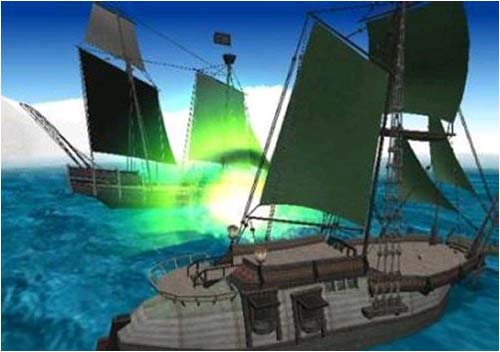
The fourth game in the Suikoden series, putting it kindly, is the “black sheep.” It features more realistic graphics, nicer portraits, good voice acting, and a good translation. It takes place in a vast, thalassic island chain, which you roam on impressive Exploration Era-esque warships complete with rune-based cannon.

The sad part is that nearly everything else has jumped ship, so to speak. Though the game is quite pretty on the surface and has all the requisites to be a Suikoden game, it is highly regressive. Konami realized they had struck a “too complex” chord with its audience and took a few too many steps backward in an attempt to make things right.

Take the battle system of Suikoden 1. Remove two characters. Next, remove the row system (so all characters are in a row). →  18 Wheeler American Pro Reader

Retrospectives – Suikoden series, part 2

Continued from part 1

Suikoden 2
Suikoden 2 takes place a few years after the events of Suikoden 1. It is not only the rarest and most expensive Suikoden (sometimes reaching the $100 mark) but is also usually considered the best of the series. I have to agree – it improves nearly all aspects of the first game, develops a more interesting plot and has nicer artwork.

First off, the second entry builds much upon the success of the first plot-wise. The game takes place in an area to the North of the first one, three years after the revolution in the Scarlet Moon Empire. This is the continent of the rival countries of Jowston and Highland.

The young prince of Highland, Luca Blight, is both ambitious and bloodthirsty. He chooses the main character’s army brigade as a sacrifice for the cause of war, and though the main character and his friend Jowy manage to survive, they are still swept into the ensuing conflict between the two countries. →  [send private information]

Retrospectives – Suikoden series, part 1

Imagine, if you will, a role-playing game (of the Eastern variety) which creates a persistent fantasy world for an entire series. This world is so large that, even in the latest entry, there are still entire countries that have been mentioned, but that players have yet to explore. The plot of each game concerns revolutions and wars – the sort of things most RPGs leave to the background – and the player is the architect of these nation-spanning changes.

Suikoden, called “Genso Suikoden” or Fantasy Suikoden in Japan, is an RPG series on the PSX, Saturn and PS2 that has been around since 1996. The “Suikoden” in the name comes from the Japanese name for the Shui Hu Zhuan or (usually) Outlaws of the Marsh, one of the four Chinese Classics (alongside the better-known Three Kingdoms and The Journey West). →  Post of Tsushima

Console logos throughout the ages

This year, 2007, marks the 30th anniversary of the Atari 2600 release, which is what many consider to be the very first commercial video game console. And since then, the gaming populace has been privy to 21 major home consoles. To celebrate this momentous year, I have painstakingly researched and categorized each of the 18 home consoles’ logos. Yes, I have nothing else better to do with my time. So, with that in mind, let’s take a quick stroll through history, shall we?

Atari 2600: Here we have the granddaddy of them all: the Atari 2600. I don’t really understand what this logo stands for, but it must mean something cool, as it can still be seen on t-shirts and stickers everywhere. If you’re trying to convey the fact that you’re a retro gamer, you probably have the Atari logo somewhere in your gaming bordello. →  NiGHTS into REaDS

Series Retrospective: Mega Man

Oh, Mega Man. Do we still love you? Time was we never thought that could be a question. Even when you faltered, you still gave rise to some very quality action-platformers. But you’ve been around for a while now, and almost every console since the NES has been graced — or maybe cursed? — with your round, blue head. As result, many see you as old and stale, surpassing even Street Fighter as the primary symbol of Capcom’s tendency to rehash their most popular franchises (which often overshadows the fact that the company has created some very good new IP’s in the last few years).

But forget what the pundits say. Mega Man was one of my favorite series as a child, and I feel that its sheer longevity earns the Blue Bomber a Series Retrospective. →  All your posts are belong to us.