Review – Devil Survivor

Sometimes innovation doesn’t come from wild, crazy new ideas but from the melding of old. Like combining the wheel with fire, Devil Survivor melds two of the oldest RPG battle systems and the result is a flaming tire of fun. Battles take place on a grid following the standard SRPG trope of battles taking place on grids, but when two combatants meet the map cuts to a standard turn-based party-on-party RPG system. Suffice to say, the integration of these two long lived standards is almost as exciting as the monetary standard integration of Europe following World War II.

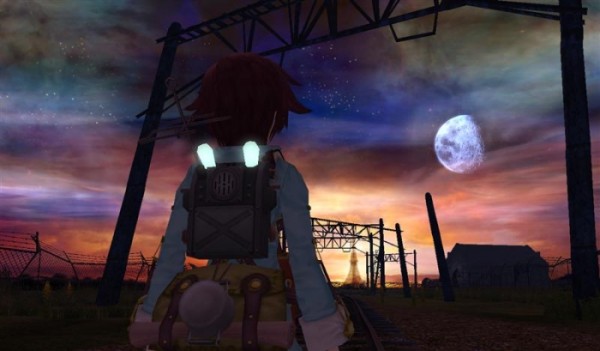
What Yuzu lacks in personality she makes up in breasts.

Battles are entertaining and copious; free battles are always available and the grind is only mostly mind crushing and soul numbing, a definite improvement over most RPGs. →  God of War: Readnarok

Review – Play!: A Video Game Symphony

Last week my buddy, Tony, called me and told me that I should drive my unemployed butt to Salt Lake City to go see a concert with him. As an added bonus, he had already bought my ticket and was willing to part with it for the awesome price of free if I could make the trip. The concert is a traveling event called Play!: A Video Game Symphony. Play! started in 2006 and the name of the concert pretty much says it all, a full symphony orchestra, accompanied by a choir, playing some of the best video game scores in existence. Of course I made the trip!

The vast majority of symphonies I have been to (and oddly enough, that has been quite a few) tended to be stuffy events that required me to shower, do my hair, and dress nicely. →  Xenoblade Articles X

Review – King of Fighters XII

The King of Fighters XII has been out for close to four months. I have had it since day one. I apologize for the delay, but I finally came to terms with why it took me so long. KOF XII is not a good game, and my old review tried to hide it by going over every detail and feature while ignoring the big picture. And the big picture is not pretty.

Here’s the problem – SNK had a vision, one that involved taking this franchise in a slightly new direction. Tag battles, quicker combat, and a new story and new characters were all in the cards. It may not be what everyone wanted, but it was a good excuse to keep the series going well after it probably should have died. →  Phoenix Write: Just Posts for All

Review – Shadow Hearts

Continuing my trend of catching up on PS2 RPGs, I picked up the Shadow Hearts series a few months ago. Since a recent spate of games (including Demon’s Souls, which seems to be a videolamer favorite) has kept me busy, I’m just now making my way through the series. The PS2 may have an impressive spread of RPGs – as I’ve discovered, still playing games I had barely heard about – but Shadow Hearts really stands apart, despite being an early game on the system that hasn’t really aged well.

By far the most impressive part of Shadow Hearts is the atmosphere. Set a little over a year before World War I and taking place in both East Asia and Western Europe, SH manages to portray a surprisingly realistic world, given its focus on demons both internal and external. →  The Adventures of Cookie and Read

Review – The Chronicles of Riddick: Assault on Dark Athena

The Chronicles of Riddick: Escape from Butcher Bay, was not simply good relative to other licensed games. It is one of the best games in its genre, both upon release and to this very day. People with no interest in the genre have picked it up and had a blast. Shooter fans were stunned that something that looked so derivative on the surface could be so engaging. While it might not have been quite the miracle that Goldeneye was, it was still a blessing, and hopes were high that developer Starbreeze Studios could take their formula and strike gold again with The Chronicles of Riddick: Assault on Dark Athena.

Let this be another lesson on the importance of execution when it comes to making a good game. All of the elements that made Butcher Bay a classic are back, but arranged so that they have hardly any potency. →  Videolamer does what IGNotDoes.

Review – League of Legends

League of Legends, the stand alone Defense Of The Ancients clone released by Riot Games, bills itself as better than DOTA. The good news: it lives up to its billing. Without a doubt, LoL is a superior product to DOTA. This should not be surprising. Being able to draw from established source material, recruit one of the recent caretakers of the map (Pendragon) and build a real, non-volunteer design team, made the first part of Riot Games’ job easy. But credit should be given where credit is due: these ingredients do not automatically make a good game, but Riot has ensured that they have taken the best of DOTA and added much more.

As one would expect, there is much to love about LoL. The evolution of the DOTA concept can be extended to two distinct aspects: the community interface, and the game itself. →  While there is a lower class, I am in it, while there is a criminal element, I am of it, and while there is a soul in prison, I am not gaming.

Review – Tex Murphy: Under a Killing Moon

After a few minutes of playing Tex Murphy: Under a Killing Moon I realized that this was a game that I’ve always wanted to play but never knew existed until recently. I was quite late to the party since the game came out in the early 90s, back when point and click adventures were cool and “interactive movie” sounded like something futuristic and not something cheesy. It was also a time when technology didn’t quite know what to do with itself; for some reason Access Software couldn’t quite figure out how to use a keyboard and mouse to make someone move around a 2.5D world in a way that makes sense, and there are specific instances where the smooth gameplay suddenly breaks into jagged fragments.

Nonetheless, it’s fascinating to be able to load Tex Murphey in DOSBOX and travel back in time to the past’s virtual imagining of the future. →  These are the games I know, I know. These are the games I know.

Review – Ninja Blade

They say that imitation is the sincerest form of flattery, but don’t tell that to us gamers. We love to find copycats and string them up. Whether it is this year’s triple-A game taking ideas from last year’s, or some media darling that stole its innovations from an ancient and obscure release, we will find the progenitor game, and we will make disparaging remarks.

Of course, we seldom practice what we preach. Kill.Switch may have dabbled with cover long before Gears of War, but we know which is the better game. On the other hand, most gamers shunned From Software’s game Ninja Blade as soon as the early screenshots showed us what looked to be a shameless clone of Ninja Gaiden. Even when the reviews rolled in, the same sentiments were common, despite the fact that Ninja Blade has quite a different purpose. →  The fuck does Cuno care about reading?

Review – 100 Classic Book Collection

100 Classic Book Collection for the DS is awesomesauce. That’s the gist of this whole review for those of you unwilling or unable to read further. However, for those with some staying power I will qualify why it is such an amazing condiment after I clarify that it isn’t a game.

100 Classic Book Collection is not a game. Don’t be confused by the packaging, the little box and the little game shaped cartridge. When you pop the cart into the DS and open it up you will not find a game. Instead you will find an assortment of 100 classic books to read. It could have been that simple. Here’s 100 books. Read them all. Cheevos for reading all of them. But much like an exotic alcoholic cocktail so many extra bits have been squeezed in to make it all the more worthwhile. →  The Adventures of Cookie and Read

Review – Persona

Nothing but Playstation remakes. The PSP seems to be relegated to the unusual role of a “Remake system”. Nearly all the RPGs (which are, of course, the only real games out there) on the system are remakes, or generally reputed to be bad. And Persona is falls neatly in the first category, as you might expect.

But as I’ve written before – the Persona we received back when it was among the first in its genre for the Playstation wasn’t quite the same game they saw in Japan. Set in the sleepy US town of Lunarvale (which still managed to house a several-storied corporate office), the American students (who all wear school uniforms and are taught in a traditional Japanese concrete-block school) face an invasion of demons from an unknown source. →  Words are the towns and cities of letters.