

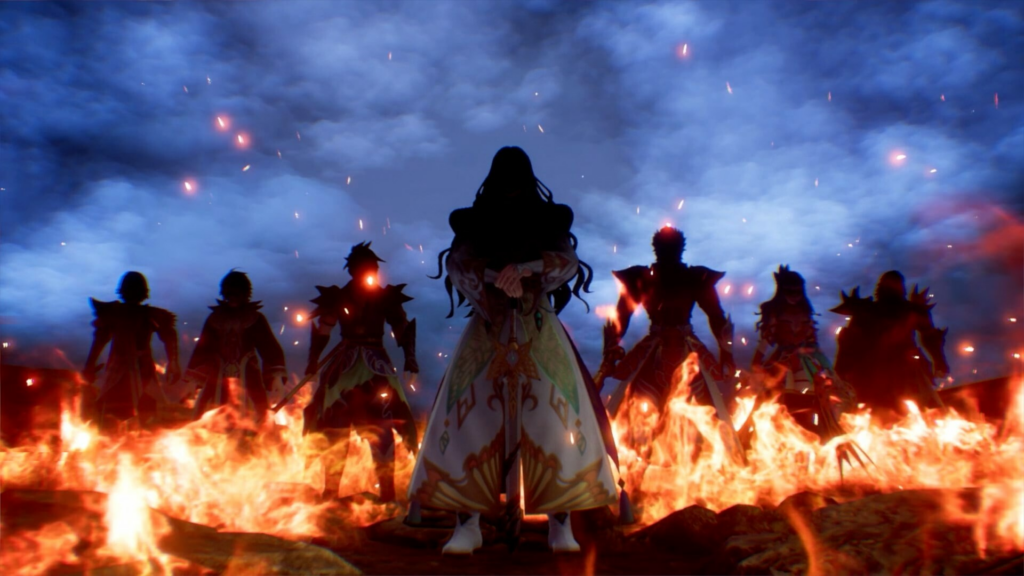
I often feel that things I have missed out on are better than things I have experienced. I’ll occasionally read a breathless article about a game I haven’t heard of that does something unique, and I want to experience it. Trying to stay on top of modern games coming out is difficult on its own, to say nothing of entire backlogs’ worth of games that we never saw even back when the United States wasn’t a dystopia. This odd form of nostalgia-FOMO is often unwarranted. I’ll occasionally pick up one of these games to find it isn’t particularly compelling compared to what we got, but the feeling remains. Romancing SaGa 2, though, is worth the play, particularly in its remake form.
The Romancing SaGa series, originally on SNES, has been fully accessible since its remasters about a decade ago, but they are dense games at best, convoluted at the worst.. My experience with the Romancing SaGa 2 remaster was initially positive, but it is a difficult game to understand, it has very frequent combat, and it requires quite a bit of fiddling with each generational change (which can happen at least a dozen times). I’m happy to say that the newest remake, Revenge of the Seven, makes this classic much more approachable for modern players, while maintaining the feeling of playing a 16-bit game.
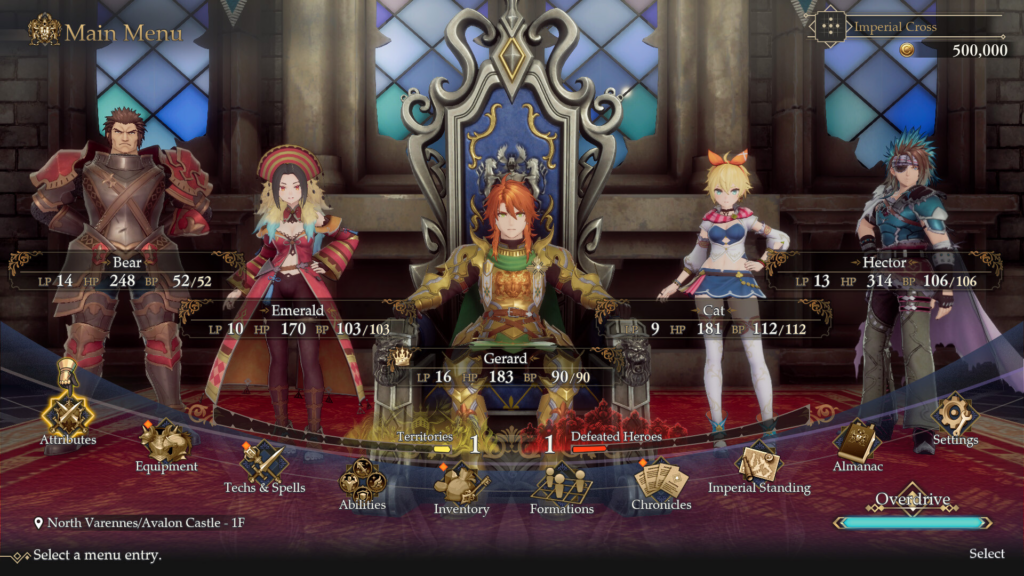
The core conceit of Romancing SaGa 2 is that it’s not an individual’s story, but the story of a nation struggling to defend its continent against heroes wielding otherworldly power. To expand and survive, Emperor Leon turns to “inheritance magic” – allowing each emperor of Varennes to build on the abilities and successes of all their predecessors. In practice, roughly every 4-8 hours of play you will have a new main character and supporting cast. In the original remaster, building the new Emperor’s party was a painful process. The remake streamlines it quite a bit, so that you still need to equip and prepare your party with techniques and magic, but it is considerably simplified and feels like useful reconfiguration, rather than tedious busy-work.
This generations-spanning story is not just a cosmetic trait of the game, but also has follow-on effects. Time passes as you complete certain objectives, and if quests remain open the generational shift can change the quest outcome. In most cases this doesn’t change things. In others, generational shifts may trigger quest failures (or rarely open new ones). The branching nature of the regions and some randomization means two playthroughs are likely to be very different even if similar decisions are made. Since there is no single “main” character, and such variance in scenarios, by the midpoint I felt like I was channeling an emergent story of this nation’s rise and struggles and I started jotting down notes of what each emperor did.
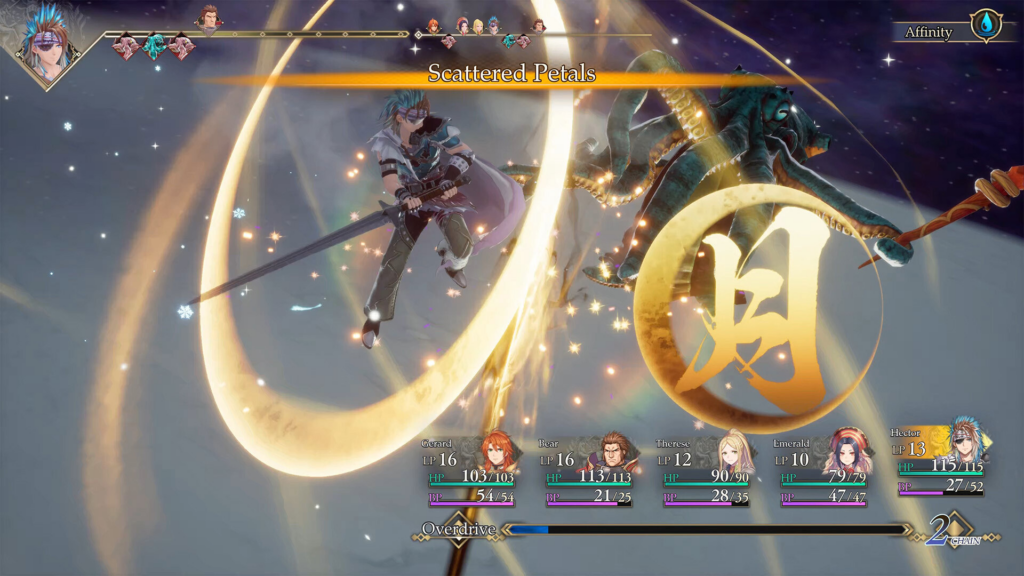
The nonlinearity and shift in perspective are a compelling reason to try out Revenge of the Seven in particular. Some 16-bit games like The 7th Saga tried playing around with different perspective options, but Romancing SaGa 2 is ambitious and executes better on its premise. The Revenge of the Seven remake keeps this core intact while softening the rougher edges gameplay-wise.
There are still some elements of Romancing SaGa 2: Revenge of the Seven that may be turn-offs for some players. Combat is frequent and often tedious, even if random encounters are replaced with on-map enemies you can ambush or sometimes avoid. There is no world map although there are several open areas with multiple connections to other zones. The overall pacing of the game can feel uneven as the distribution of the Seven Heroes varies (some are telegraphed, some will be surprises). The sheer number of characters available might also make it hard to decide on a party, although it is easy to back out of a dungeon and reconfigure if needed.
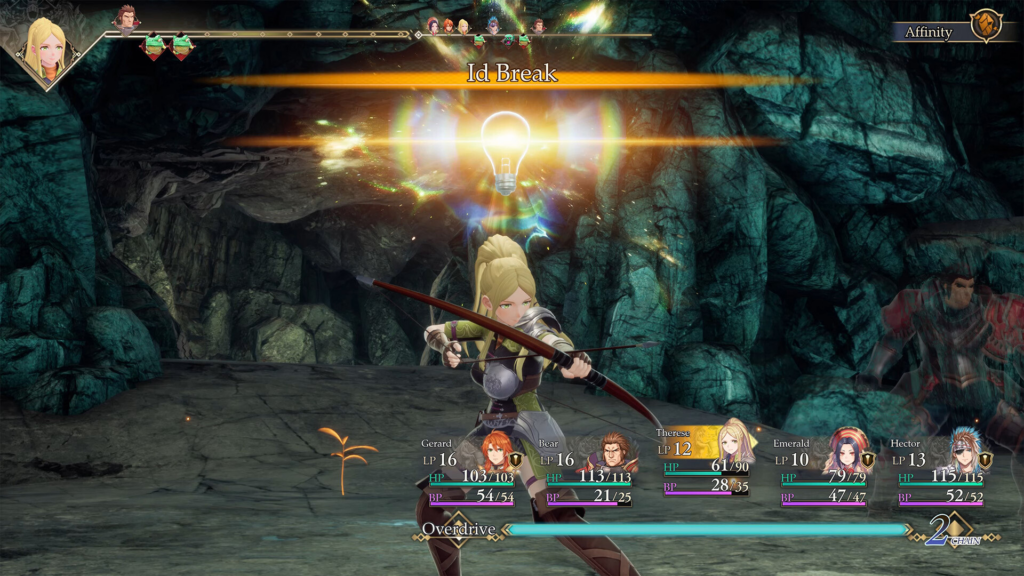
While there are new elements to gameplay and story in Revenge of the Seven, they are introduced gradually and don’t feel like they change things unduly. The game is well balanced to account for the changes, and still retains the same core feel of the original. Minor changes include more wayfinding available by default, and sidequests are shown as they are available. In the original, it was necessary to either explore exhaustively to find these sidequests or to use a guide. While exploring is possible, there are not very many optional sidequests in Romancing SaGa 2 – so the new guidance potentially saves hours versus exhaustive exploration and allows players to enjoy more of the game’s flavor.
I highly recommend Revenge of the Seven, in particular as an accessible way to experience an innovative 16-bit game that will be new to many of us outside Japan. Its nonlinearity and interesting premise are well worth experiencing. It makes a particularly good entry point to the SaGa series for the modern player. After you finish, play Unlimited Saga and then let me know how to play it.