

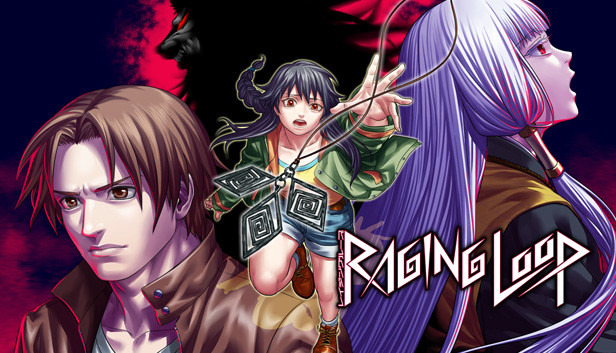
It had been a while since I played a visual novel. Root Letter had left an unpleasant musty and earthy taste in my mouth, and only a crack gumshoe can predict when the next Jake Hunter will come out. Raging Loop has fairly good reviews and seemed somewhat well regarded by fans, who I learned too late I should deeply distrust because a huge swath of them are pervy weebs looking for hot anime girlfriends. Raging L, which I will hereby refer to as R Loop for brevity, is a horror themed Japanese visual novel with very limited gameplay – basically just selecting the answer to a question every hour or two. This is fine to me but may put off people who have played a video game or read a book. I have a few positive things to say about R Loop and a lot of negative stuff, including one or two things I think completely pacify the rage… cross the loop?
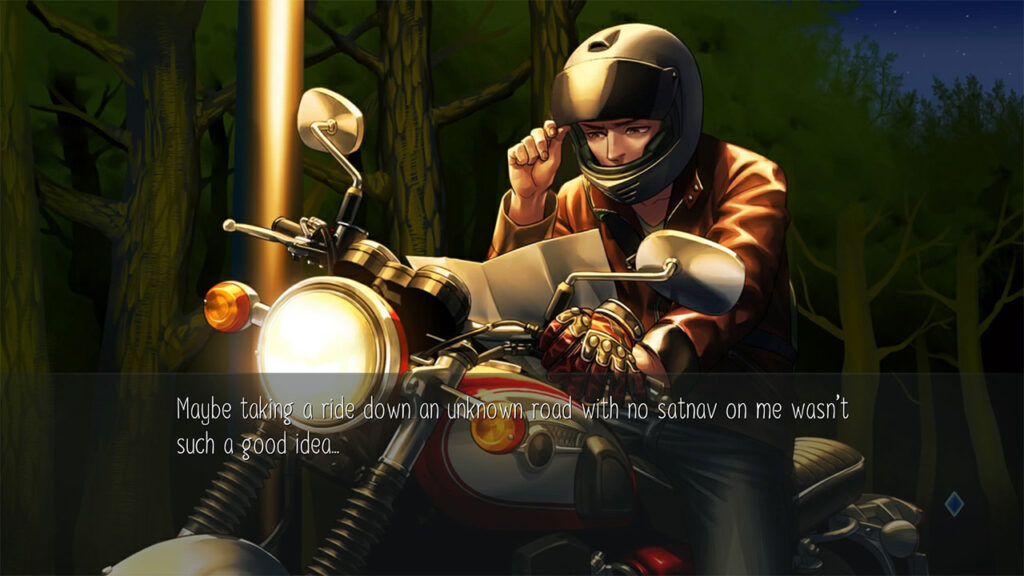
But before I lay out the pros and cons of R Loop, hereby referred to as Ragopo for brevity’s sake, I should briefly explain the premise of the game. If you have ever played the game mafia, you know how the basic structure works, only it’s werewolf, which is the same game as mafia but less hairy (take that you damn Italians). Constructing a visual novel around this concept was fairly clever, and if Kemco had done it correctly, which no one would expect from Kemco, it could have really been something.
My first complaint could be a positive for the right kind of person, but makes me furious: in a common trait of many stories in Japanese games – it’s convoluted as hell. It’s unclear if this tendency to build on top of buildings that already have buildings on top of them stems from a cultural preference or if it’s just the medium that requires a plot both obscure itself from the player and also be two or ten times the length of a movie. Either way, it is not for me. If you found 999 or its less coherent sequel 101010 coherent, then ignore this criticism. As an aside, the Jake Hunter games are modeled after more classic detective mysteries and so never get close to as twisted and incomprehensible as many other visual novels and RPGs. I really like Ghost of the Dusk on 3DS, which now – checking reviews – I see I may be the only one.
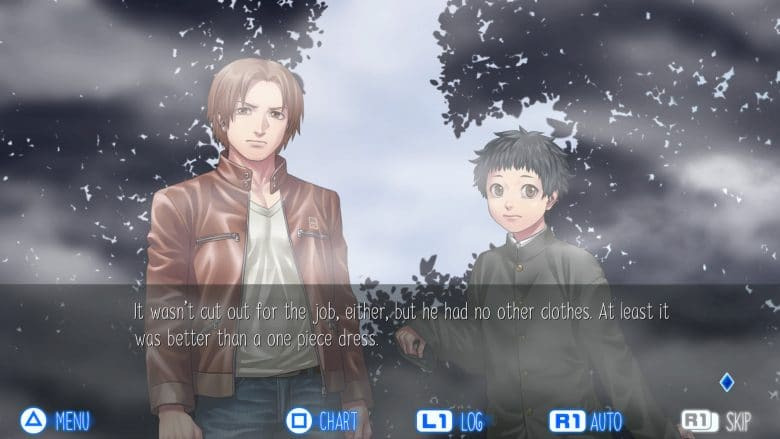
A second thing that angers me about Ragopo, which I will now call Raging Loop: The Video Game Experience for longevity, is it offers a plot map, similar to the one in Virtue’s Last Reward and presumably other visual novels. Just like in that game, having a map of the story neutralizes any tension, which would be maybe ok in say Phoenix Wright 7: Apollo Justice 4: Miles Edgeworth Origins, but really does significant damage to a horror game. Macabre endings are cute but not impactful when at any time you can just click another node and undo it. I am not convinced there is a solid solution for this problem in visual novels – either you die and have to redo a lot of the game, or you are this omnipresent being hopping around time and space like that guy Jesus. Maybe instead of a bunch of “bad ends,” as these games call them, write only a few of them with branches that affect plot but not in a catastrophic sort of way. Like a Banner Saga or what have you.
As I type this, a thread on a popular yet not white supremacy focused video game forum is having a discussion on whether these sorts of visual novels should even be considered games. I did not weigh in because after decades on forums I learned speaking to other people is not my forte. Lecturing people who cannot immediately respond suits me much better, so I will lay out my thoughts on the visual novel question here. I have two main thoughts on this genre being video games and they are thusly. 1) If we are going to narrow down what we consider video games because of what an actual game is, then there are simulators that have no fail state and thus would also fail to meet the threshold of a game. 2) Who cares? What good does fighting for the integrity of the term do? Actually changing the term (electronic entertainment, electrical funtimes, etc.) or modifying how the larger population speaks about games (search action, looky jumpy mazes, etc.) is nigh impossible so any vernacular modification would primarily be self serving. Which, as someone with unpopular politics (prove to me autism doesn’t cause Tylenol), I am usually more than pleased to embrace. But in this instance it feels particularly futile, which I also usually embrace.
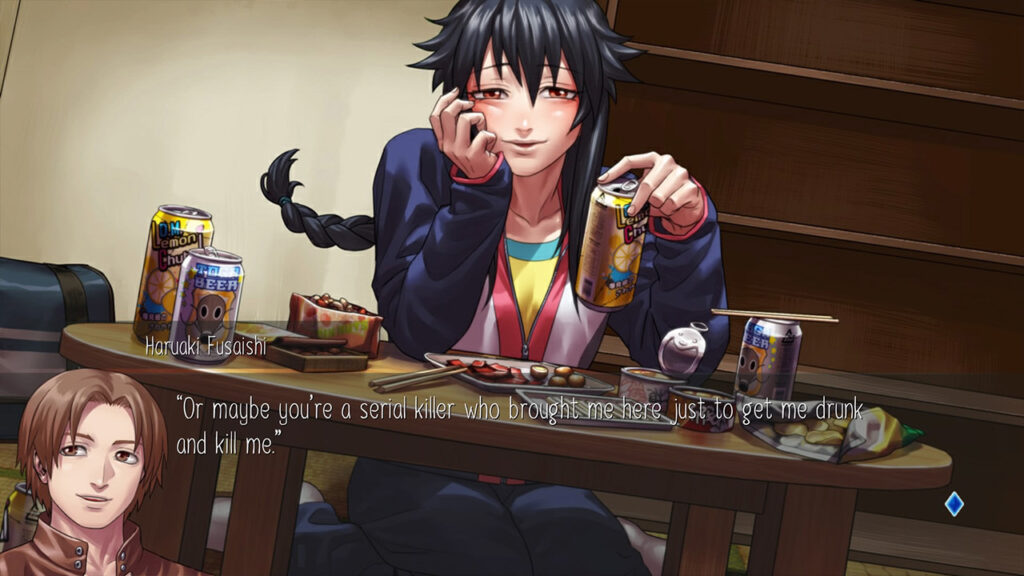
A mild spoiler but also an important premise of Raging Loop: The Video Game Experience, which will now be referred to as Racing Pool for Dyslexia Awareness Month, is that your character remembers what happens even if he dies. This is a fun way to engage with the artifice of a plot map even if it doesn’t solve the problem of negating the pressure of the horrible events of the game. Yet I am outraged by the sloppy use of this central plot mechanic. There are times when your character outright does not seem to remember something from a separate plotline. Usually (maybe always) it’s little things on dumb, disposable bad end paths, but it still feels (meta)narrative breaking.
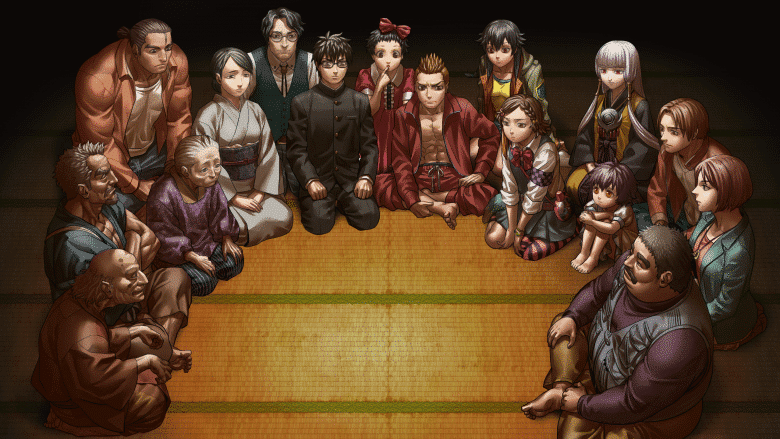
Importantly for this sort of game, the writing is generally good, if verbose. Racing Pool, now called Cajun Loop for people from New Orleans like my sister-in-law who won’t read this and won’t be receiving a Christmas gift in retaliation, may not be penned by a poet but it is nowhere near the incoherent mess of Lux Pain or the mind numbing plainness of the first Jake Hunter on DS. Due to the setting, which is necessarily in Japan, there are plenty of honorifics and even some kanji based puzzles that someone with more patience than I could likely understand well enough. I am generally in the school of thought that honorifics do not exist in English and thus effort to convey similar meanings without using them should be taken when localizing a game, but then the primary audience for this sort of game would likely be unhappy so I understand the translator’s predicament.
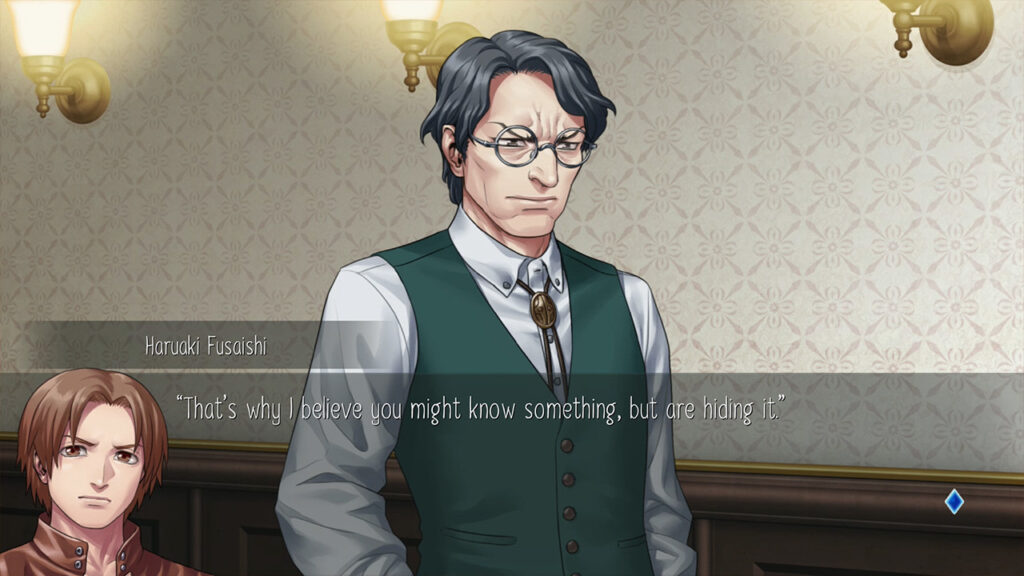
I am somewhat indignant about a lot of the characters’ behavior in Cajun Loop, hereby referred to as Raivoava Silmukka for the expansive Finnish videolamer readerbase. I could anger many people by asking if this is just general anime characterization, but am too tactful to do that. Really though, what’s with the unrelatable and often weird acting characters? Why do all women throw themselves at you? The embarrassing shades of dating sim are unpleasant to someone looking for a solidly written, well told story minus incel shit. The pervyness is what keeps me away from diving deeper into the genre – at least with Ace Attorney I know the game is going to be about murder cases and not devolve into a harem. Probably.
What are other good visual novels that have very little to no focus on things like your huge breasted dead partner inhabiting her still living little sister’s body and thereby increasing her bust size from beyond the grave? I wish Cing still existed but will have to settle for that upcoming Hitler game from their old designer, who also worked at Riverhill Soft for all the JB Harold fans out there. The real solution may be to play the odd non-overly sexualized Japanese visual novel here and there but mostly to shift focus to indies that can provide what I am looking for. Pentiment looks good, even if it is a Microsoft game.
Raivoava Silmukka, which will be shortened to RL for those with Irlen Syndrome, deserves credit for tasteful character designs. The women may all be attracted to you despite it being unrealistic (in my personal experience, no women are attracted to men), but the teen who likes you is at least clothed. And people say we aren’t making progress.
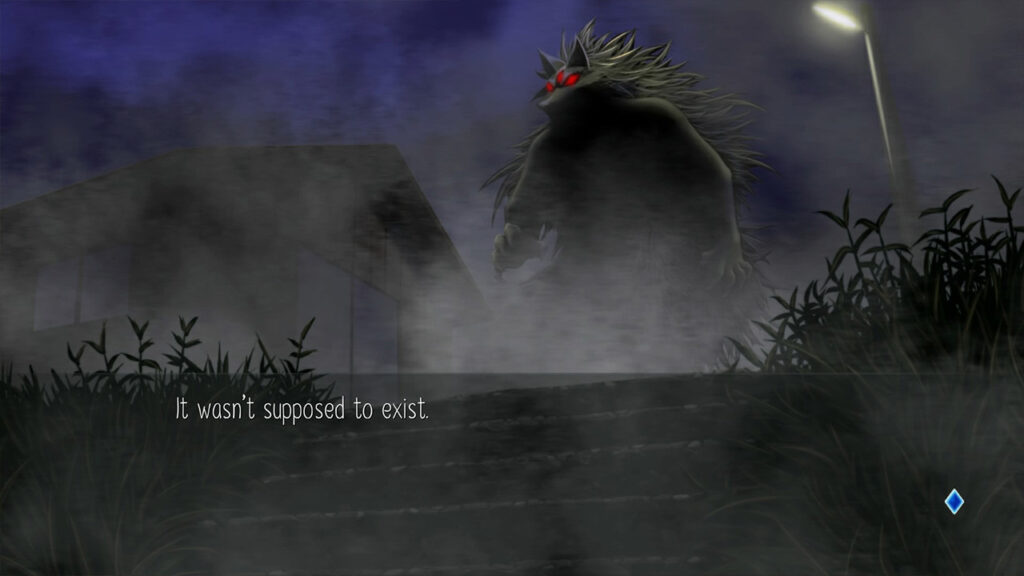
Though the general writing is good, the plot itself somewhat falls apart at a certain point and a specific twist fills me with unimaginable wrath. It is stupid in the way the twist in Heavy Rain is stupid – it’s not the same twist, but it’s as stupid. After you play the game you should go read fans arguing about it on the Steam forums and GameFAQS. The morality of the game is also somewhat questionable and feels fairly conservative in a Confucian know-and-accept-your-place-in-society kind of way. I was about to call it Eastern and offensive to Western mores but after further reflection on the newly expanded, internal paramilitary force of the US and the millions of people who don’t seem concerned, I had second thoughts.

The real failing of RL, which I will now call Ragopo for nostalgia’s sake, is that it proposes something of an anti-butterfly effect. It severely limits choices, thereby suggesting that only very few specific actions are capable of changing the flow of the future, which is somewhat hard to believe. Perhaps counterintuitively, this sort of tight limitation on choice works fine in a game like Chrono Trigger that has a scope of thousands of years, but when reliving a day or two over and over it makes sense to play with things, to push at the boundaries. And people know this – we have Groundhog Day (the movie, not the day, which we also have). The other grand failing to me is the focus on forward momentum and a throughline to the narrative. These are normally fine things, but the structure of the game would work best to allow well developed characters interact with each other in many different scenarios. Time repeating allows for the pieces to act and react in nearly infinite combinations and I think focusing on the characterizations and their interplay would have been very cool. Instead Ragopo focuses on fuzzy philosophy and convoluted twists.

A bold decision I wouldn’t really expect from anything but an expertly crafted indie title would’ve been to invoke the feeling your character experienced by making the player also feel like the loops are endless and maddening. Something in line with what Jonathan Blow talks about regarding game design (what you are doing in the game being what the game is about or defending neo-Nazi’s ‘freedom of speech’, I forgot which), or think of something like The Trial by Franky K. if you’re one of those losers who reads books.
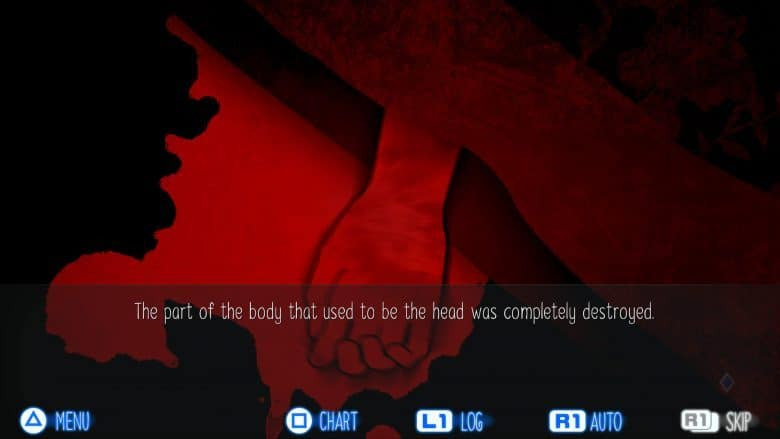
Despite describing the game being an exercise in choking back my choler, Ragopo, now Raging Loop to satisfy videolamer’s lawyer, is still fun to actually play through. The last third gets too wordy and then arguably literally loses the plot (fine, figuratively), but the overall atmosphere and remnants of tension the plot map don’t manage to drain from the events of the game compelled me to play through in relatively few but long sessions. Unsurprisingly, as it’s come up a dozen times, I feel about Raging Loop how I felt about 999 (though the ability to foster dread is infinitely stronger in the latter). It is utter nonsense that falls apart when given any scrutiny but the actual act of playing through it is a good time.
[…] started Steins;Gate because it has a reputation as a great visual novel and after Looping Rage, that’s what I needed. But about 3 minutes in I realized that S;G was not the first in its […]